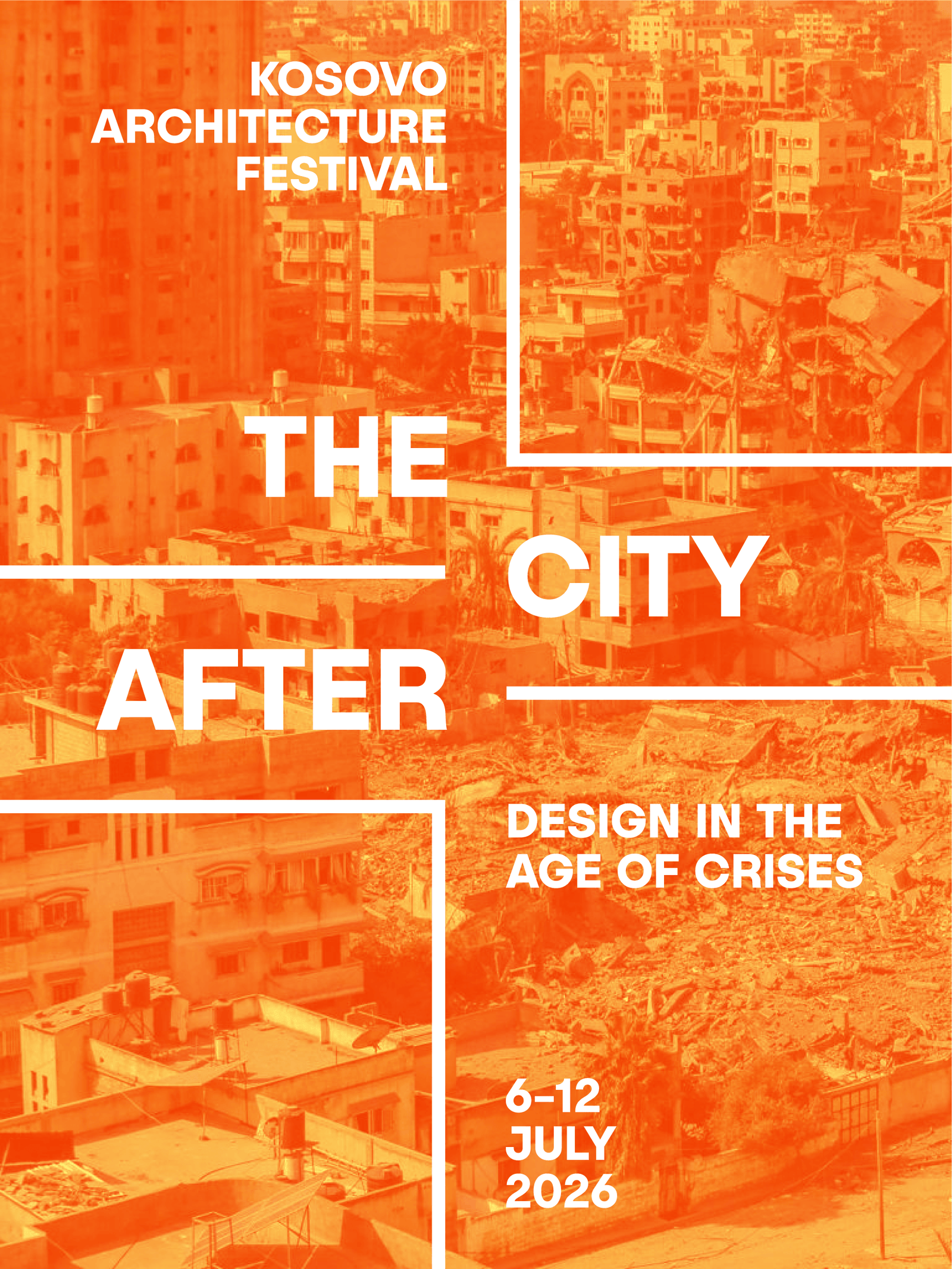
AL / Është publikuar programi i edicionit të 14-të të Festivalit të Arkitekturës në Kosovë, i cili do të mbahet nga 6 deri më 12 korrik.
EN/ The Program for the 14th edition of the Kosovo Architecture Festival to be held from the 6th till the 12th is announced.
AL/
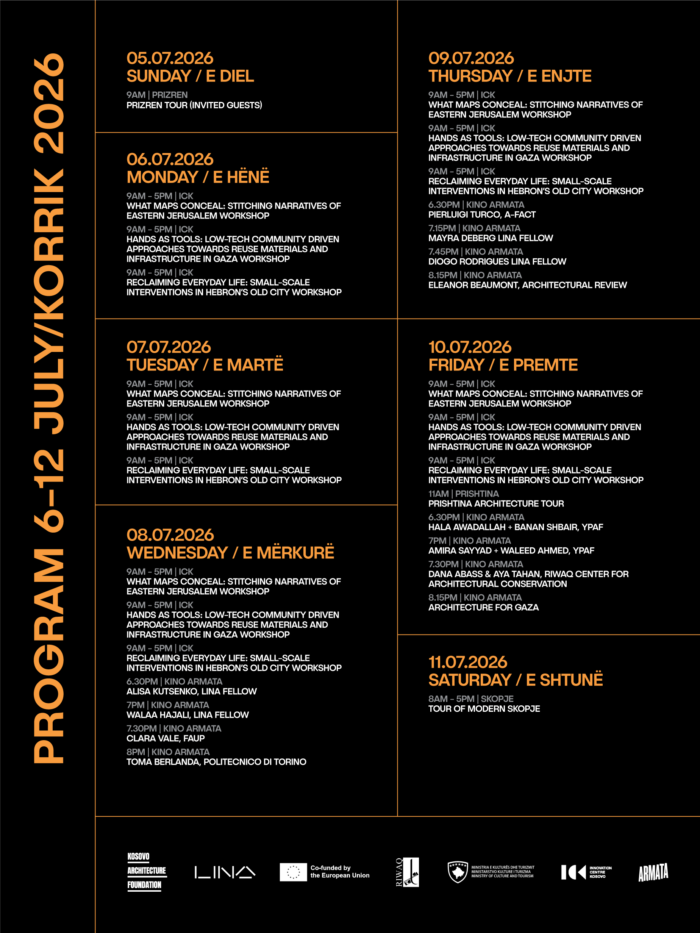
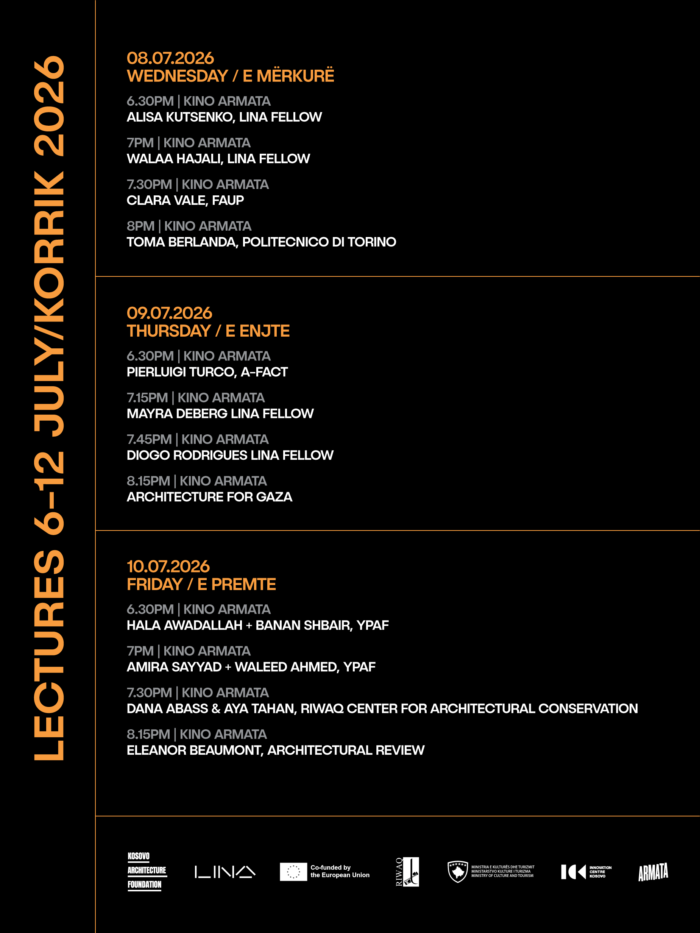
Ngjarjet e hapura për publikun e gjerë janë ligjëratat publike, të cilat do të mbahen më 8, 9 dhe 10 korrik në Kino Armata, duke filluar nga ora 18:30, si dhe Turi i Arkitekturës së Prishtinës, i cili do të zhvillohet të premten duke filluar nga ora 11:00, me nisje nga Monumenti i Vëllazërim-Bashkimit.
Tema e sivjetme, “The City After, Design in the Age of Crises”, do të sjellë në Prishtinë perspektiva të shumta nga e gjithë bota. Ligjëratat kryesore do të mbahen nga fellows të përzgjedhur të platformës LINA: Alisa Kutsenko, Walaa Hajali, Mayra Deberg dhe Diogo Rodrigues; si dhe nga Young Palestinian Architecture Fellows: Hala Awadallah, Banan Shbair, Amira Sayyad dhe Waleed Ahmed. Programi do të pasurohet gjithashtu me ligjërata nga emra të njohur të arkitekturës ndërkombëtare, përfshirë profesoreshën Clara Vale nga Universiteti i Portos, Toma Berlanda nga Politecnico di Torino, Eleanor Beaumont nga The Architectural Review, si dhe kolektivi Architecture for Gaza.
Përveç ligjëratave kryesore, programi i sivjetshëm do të përfshijë edhe tre punëtori të fokusuara në territoret palestineze, si dhe tre ture arkitekturore në Prizren, Prishtinë dhe Shkup.
EN /
Noted events open to the general public are the Public Lectures to be held on the 8th, 9th and 10th of July in Kino Armata starting from 6.30 PM, as well as the Prishtina Architecture Tour on Friday starting from 11 AM from the Brotherhood and Unity Monument.
This years’ theme and focus on “The City After, Design in the Age of Crises” will bring in numerous perspectives from around the globe. Keynote lectures this year feature the LINA platform selected fellows: Alisa Kutsenko, Walaa Hajali, Mayra Deberg & Diogo Rodrigues. Young Palestinian Architecture Fellows: Hala Awadallah, Banan Shbair, Amira Sayyad and Waleed Ahmed. As well as keynotes by renowned practitioners and figures in the world of Architecture: Professor Clara Vale from Porto University, Toma Berlanda from the Politecnico of Torino, Eleanor Beaumont from The Architectural Review, as well as the Architecture for Gaza collective.
Apart from the keynotes this years’ program will feature 3 workshops focused on Palestinian territories as well as 3 tours, that of Prizren, Prishtina and Skopje.
Our international alliance is looking for emerging creatives working at the intersection of architecture and spatial practices to better our common future. All kinds of bold thinkers and practitioners are invited to apply with a proposal illustrating their ideas. Up to 22 individuals and teams will be selected to attend the LINA Forum (Barcelona, Spain, October 2026, co-produced with Fundació Mies van der Rohe) to create connections and initiate collaborations. All applicants are eligible to collaborate in the LINA Architecture Programme activities throughout the upcoming year.
The call is open until 3 August 2026 at www.lina.community.
The application process is straightforward: apply with a proposal outline (as a short text), up to 5 images to better understand it, a short CV, and an expression of interest of what you’d like to do within the programme. A proposal can be either completed work or a new idea.
For more information, reach out to the LINA Team at hello@lina.community or attend any of the Q&A sessions taking place in the coming months.
LINA is co-financed by Creative Europe, the European Union’s funding programme for the cultural and creative sectors. Participation of LINA Fellows from Switzerland is supported by Pro Helvetia.
WHO ARE WE!
LINA is a European architecture platform: a network of 35 institutions working at the intersection of architecture and other fields related to spatial culture. We support and promote emerging thinkers and practitioners. Our collective goal is to steer design and building processes towards regenerative practices and principles of de-growth.
We are a community of people working towards a united creative vision who find common ground in our inclusive values. Our network is a creative flow of co-creation, collaboration, and mentoring, both among member organisations and in tandem with emerging creatives. Being part of LINA means being part of an experience in which we create and curate relationships, and bring people together with plan and ambition.
PURPOSE OF THE CALL
We will select between 20 and 22 applicants (individuals or teams) from the open call, and they will become Spotlight LINA Fellows for 2026–2027.
– Spotlight LINA Fellows will be invited to join us in Barcelona, Spain in October 2026 to attend the LINA Forum.
– During conversation and exchange at the LINA Forum, Spotlight LINA Fellows will discuss potential collaborations in the LINA Architecture Programme activities with LINA Members.
– Selected outcomes of collaborations between LINA Members and LINA Fellows will be presented at the LINA Festival in Ljubljana in April 2028.
Applicants who are not selected as one of the Spotlight LINA Fellows are still eligible to become LINA Fellows.
– Any applicant to the LINA Open Call can potentially collaborate with a LINA Member, by direct invitation.
– All applications to this call will be published on the LINA website to create a showcase of practices and ideas.
WHO WE ARE LOOKING FOR
We welcome emerging creative voices and innovative spatial practitioners who question the status quo. We are looking for individuals and collectives: we can help amplify their new and bold ideas that aim to better our common future.
We are seeking those who want to participate in meaningful activities such as mentoring, facilitation, residencies, research, writing, exhibiting, public engagement, programming, and much more. Although travel is not always a necessity, we are looking for those interested in international collaboration and developing their professional network. We want to promote people who care for the future of our planet and who share our ethical values of curiosity, cooperation, pluralism, fairness, and responsibility.
EN
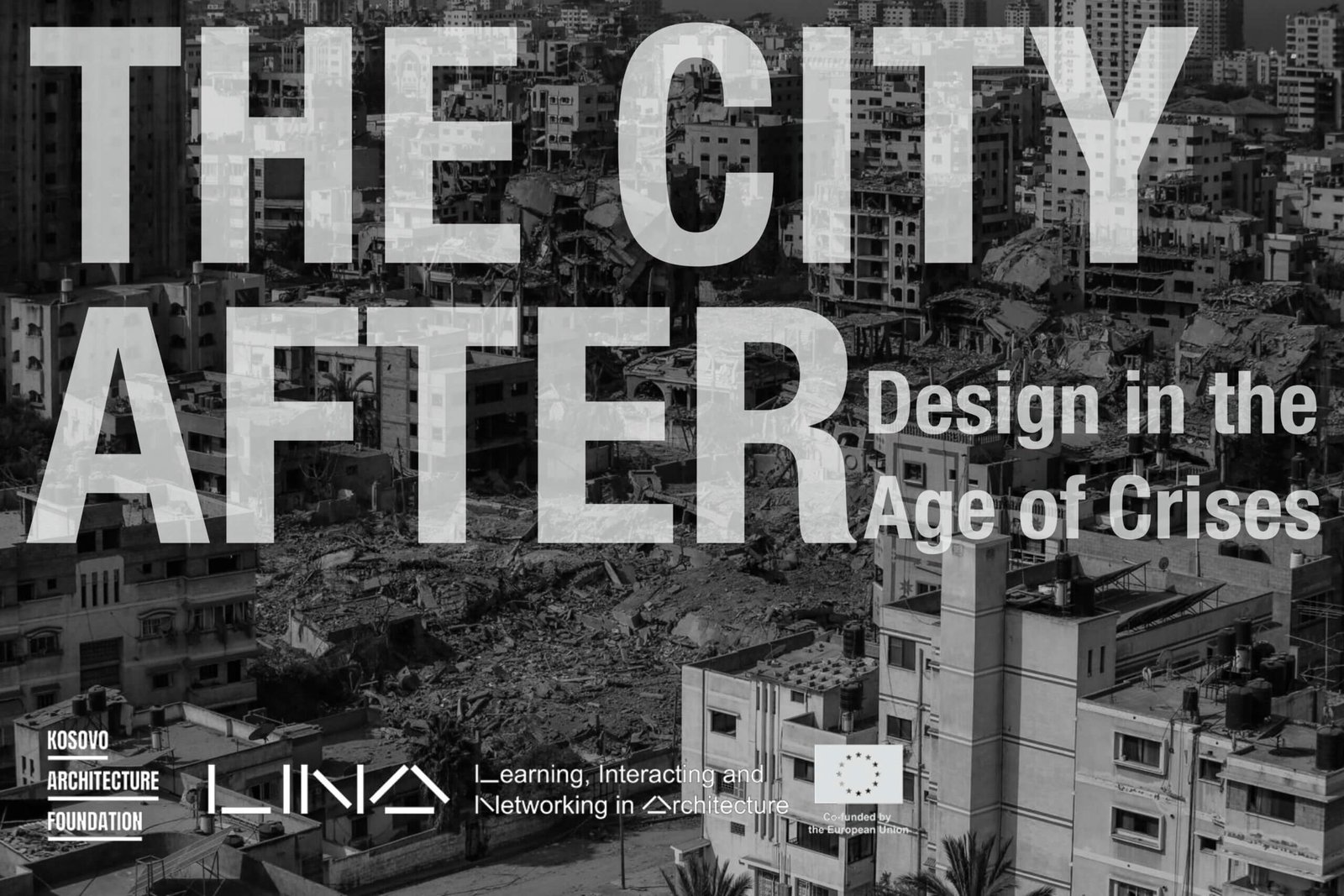
THE CITY AFTER
Design in an Age of Crises
Across the world, cities are increasingly shaped by crisis. Wars, climate disasters, economic instability, forced migration, and political upheaval are transforming the urban landscape with unprecedented speed and intensity. In this uncertain global context, architecture is confronted with a fundamental question: what comes after destruction, displacement, and disruption? What is the role of design when the future of the built environment can no longer be taken for granted?
The City After invites architects, urbanists, researchers, and citizens to reflect on the urgent task of rebuilding in an age defined by overlapping crises. Rather than focusing only on recovery, the theme asks how reconstruction can become an opportunity to rethink the social, spatial, and environmental foundations of urban life. What kinds of cities should emerge after conflict, disaster, or systemic breakdown? How can architecture contribute not only to physical reconstruction but also to collective healing, resilience, and new forms of civic life?
Across many regions of the world, the built environment is being reshaped by instability. Entire neighborhoods are damaged or abandoned, infrastructures are strained, and communities are displaced. In such conditions, rebuilding cannot simply aim to restore what existed before. Instead, reconstruction must grapple with deeper questions about justice, sustainability, memory, and the future of collective life.
KAF 2026 therefore positions architecture within a broader global dialogue about how our built environment will evolve in the aftermath of crises. Through workshops, lectures, exhibitions, and public discussions, the festival will explore how design can respond to instability with imagination, responsibility, and care. If crises increasingly define our era, architecture must help envision what comes next — and how the city after might become a more just, resilient, and hopeful place.
AL
Festivali i Arkitekturës në Kosovë 2026
THE CITY AFTER
Design in an Age of Crises
Në të gjithë botën, qytetet po formësohen gjithnjë e më shumë nga krizat. Luftërat, fatkeqësitë klimatike, paqëndrueshmëria ekonomike, migrimi i detyruar dhe trazirat politike po transformojnë peizazhin urban me një shpejtësi dhe intensitet të paparë. Në këtë kontekst të pasigurt global, arkitektura përballet me një pyetje themelore: çfarë vjen pas shkatërrimit, zhvendosjes dhe përçarjes? Cili është roli i dizajnit kur e ardhmja e mjedisit të ndërtuar nuk mund të merret më si e mirëqenë?
The City After (Qyteti Pas) fton arkitektët, urbanistët, studiuesit dhe qytetarët të reflektojnë mbi detyrën urgjente të rindërtimit në një epokë të përcaktuar nga krizat e mbivendosura. Në vend që të përqendrohet vetëm në rimëkëmbje, tema pyet se si rindërtimi mund të bëhet një mundësi për të rimenduar themelet shoqërore, hapësinore dhe mjedisore të jetës urbane. Çfarë lloje qytetesh duhet të shfaqen pas konfliktit, fatkeqësisë ose shkatërrimit sistemik? Si mund të kontribuojë arkitektura jo vetëm në rindërtimin fizik, por edhe në shërimin kolektiv, qëndrueshmërinë dhe format e reja të jetës qytetare?
Në shumë rajone të botës, mjedisi i ndërtuar po riformësohet nga paqëndrueshmëria. Lagje të tëra janë shkatëruar ose braktisur, infrastrukturat janë të mbingarkuara dhe komunitetet janë zhvendosur. Në kushte të tilla, rindërtimi nuk mund të synojë thjesht të rivendosë atë që ekzistonte më parë. Në vend të kësaj, rindërtimi duhet të përballet me pyetje më të thella në lidhje me drejtësinë, qëndrueshmërinë, kujtesën dhe të ardhmen e jetës kolektive.
KAF 2026 e pozicionon arkitekturën brenda një dialogu më të gjerë global rreth asaj se si do të evoluojë mjedisi ynë i ndërtuar pas krizave. Përmes punëtorive, ligjeratave, ekspozitave dhe diskutimeve publike, festivali do të hulumtoj se si dizajni mund t’i përgjigjet paqëndrueshmërisë me imagjinatë, përgjegjësi dhe kujdes. Nëse krizat e përcaktojnë gjithnjë e më shumë epokën tonë, arkitektura duhet të ndihmojë në parashikimin e asaj që vjen më pas – dhe se si qyteti pas saj mund të bëhet një vend më i drejtë, më i qendrueshëm dhe më shpresëdhënës.
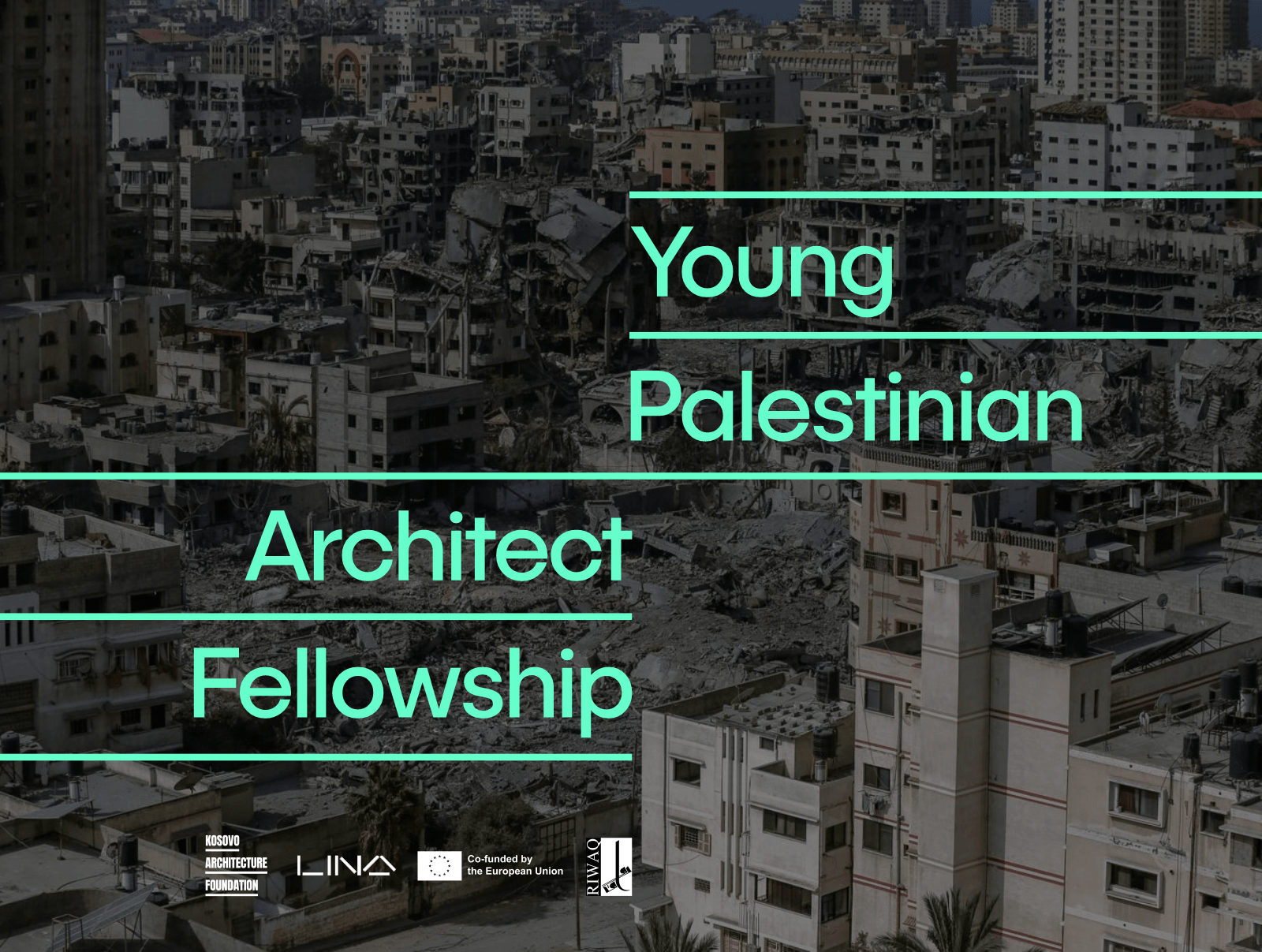
The Kosovo Architecture Foundation and RIWAQ cordially invite three Young Palestinian Architects to join a fellowship within the LINA architecture program, as part of the Kosovo Architecture Festival “The City After – Design in the Age of Crises” edition. The Palestinian fellows are invited to join a two months collaborative project between May-June, 2026, through a hybrid (online and face-to-face) program, including a one-week workshop in the city of Prishtina, Kosovo.
In collaboration with RIWAQ, the selected Palestinian fellows will have the opportunity to collectively develop a specific architectural project relevant to the Palestinian context, alongside three LINA fellows. Participants will develop the project online, followed by a face-to-face workshop in Kosovo, where selected fellows will present their work to the local public as part of the Kosovo Architecture Festival.
Applications are open until April 25,2026
Applicants must be Palestinian residents (West Bank, Jerusalem & Gaza) aged 24-30
Applicants must hold a minimum of Bachelor’s degree with focus on Design, Architecture, or Urban Planning.
Applicants must submit a 1-2 page bio, a portfolio and a proposed study topic for the fellowship to aya@riwaq.org by April 25, 2026.
The fellowship expenses are fully covered by the Kosovo Architecture Foundation (transport, accommodation, honorarium).
For questions, please contact us at aya@riwaq.org.
About KAF:
The Kosovo Architecture Foundation is one of the largest organizations of its kind in the SEE region. As one of the LINA founders and organizers of the Kosovo Architecture Festival (since 2013), KAF’s main focus is to present in front of the local public contemporary methodologies and visions in Architecture, Urbanism and Design, as well as increase the collaboration and knowledge exchange between local, European and Global young creatives.
About RIWAQ:
RIWAQ is a non-governmental, non- profit organization established in 1991, in Ramallah, Palestine. The main aim of RIWAQ was, and still is, the documentation, rehabilitation and development of the architectural heritage of Palestine through its main programs; the Restoration Program, the Regeneration of the 50 Most Significant Historic Centers, and the Community and Cultural Program.
About LINA:
LINA is a European platform connecting institutions with emerging practitioners and thinkers working at the intersection of architecture and spatial culture. It promotes emerging talent and aims to guide design and building processes toward regenerative practices and de-growth principles aligned with the European Green Deal.
Links:
www.kosovoarchitecture.org
riwaq.org
lina.community
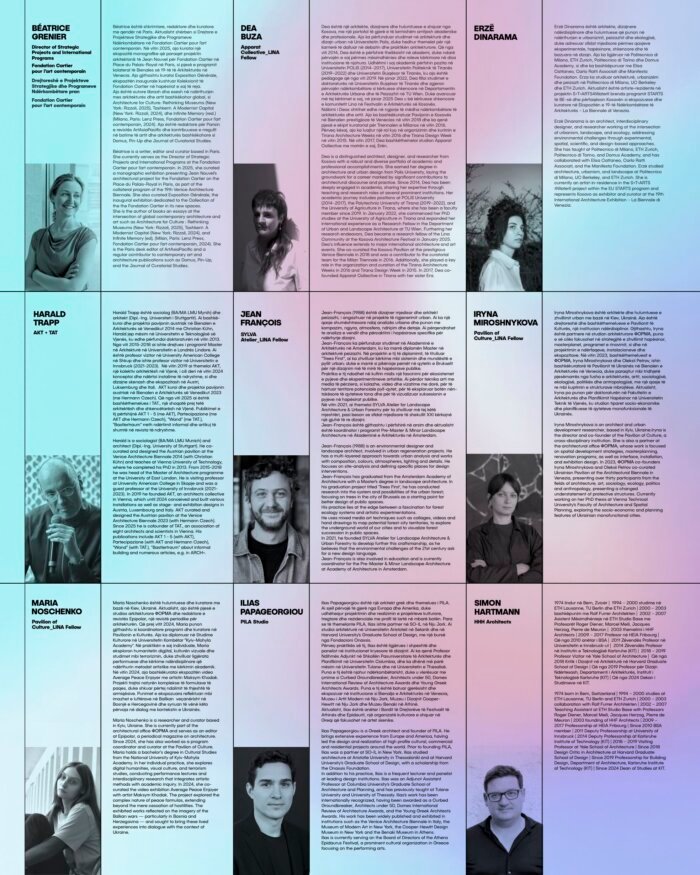
+ Keynote Speakers
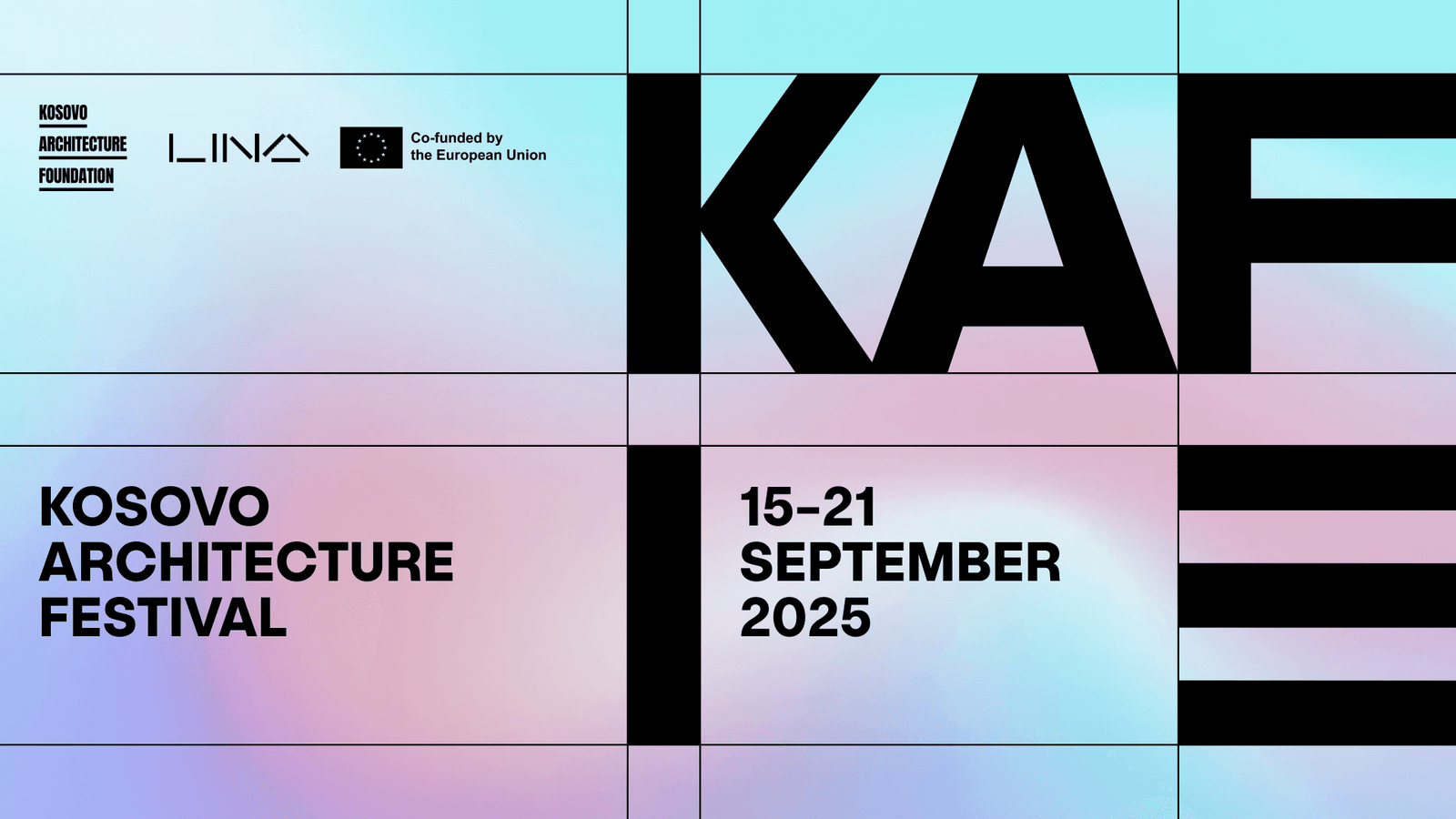
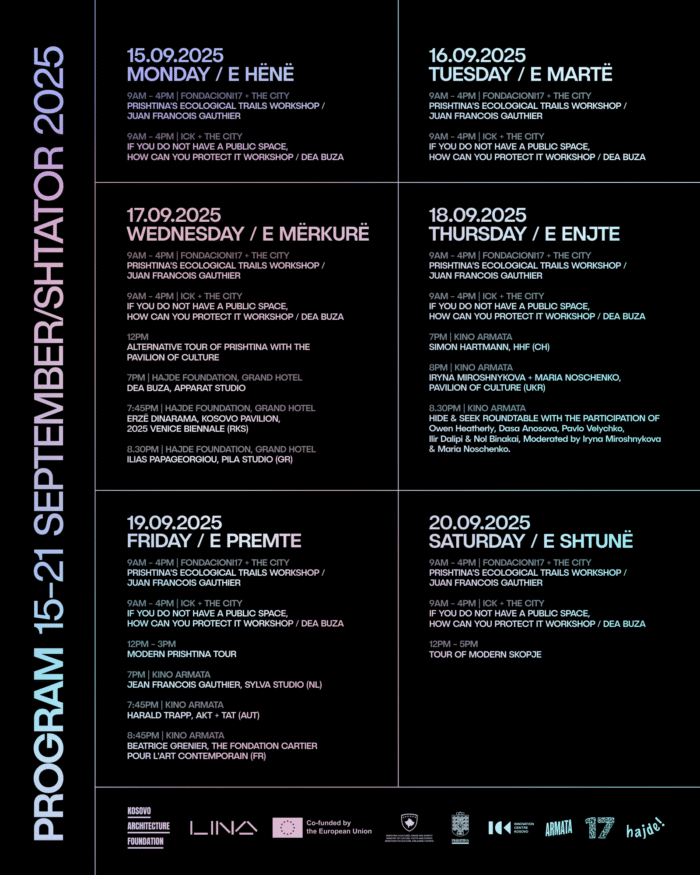
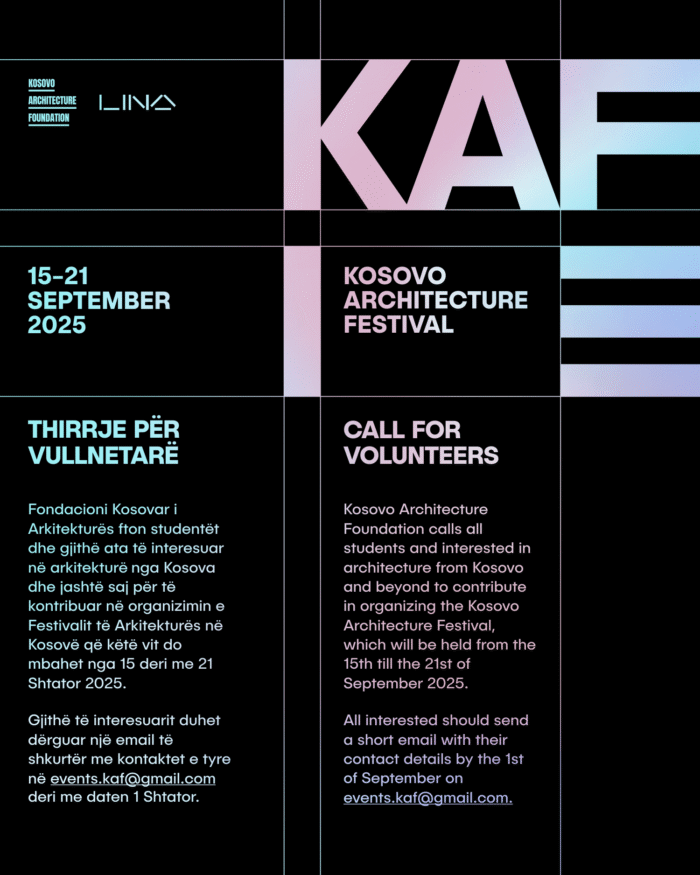
Fondacioni Kosovar i Arkitekturës fton studentët dhe gjithë ata të interesuar në arkitekturë nga Kosova dhe jashtë saj për të kontribuar në organizimin e Festivalit të Arkitekturë në Kosovë që këtë vit do mbahet nga 15 deri me 21 Shtator 2025.
Gjithë të interesuarit duhet dërguar një email të shkurtër me kontaktet e tyre në events.kaf@gmail.com deri me daten 1 Shtator.

The European architecture platform LINA is launching its 4th call looking for emerging creatives working at the intersection of architecture and spatial practices. We are joined by 33 member organisations from a total of 28 countries and a roster of talented alumni from past generations of creative thinkers and practitioners that have co-created our Europe-wide programme. Together, we are a community of people working towards a united creative vision who find common ground in our inclusive values. Our network is a creative flow of co-creation, collaboration, and mentoring, both among member organisations and in tandem with emerging creatives. Being part of LINA means being part of an experience in which we create and curate relationships, and bring people together with plan and ambition.
As a network of organisations we work at the intersection of architecture and other fields related to spatial culture, and as a platform, we support and promote emerging thinkers and practitioners. Our collective goal is to steer design and building processes towards regenerative practices and principles of de-growth.
Our international alliance is looking for emerging creatives working at the intersection of architecture and spatial practices to better our common future. All kinds of bold thinkers and practitioners are invited to apply with a proposal illustrating their ideas. 20 individuals and teams will be selected to attend the LINA Forum (Pristina, Kosovo, November 2025) to create connections and initiate collaborations. All applicants are eligible to collaborate in the LINA Architecture Programme activities throughout the upcoming year.
One representative of 20 Spotlight LINA Fellows (which can be individuals or groups) selected at this Open Call will be provided with accommodation and will be reimbursed for their travel (up to €350) to attend the LINA Forum in Pristina, Kosovo (November 2025).
They will receive promotional materials (photo and video portraits) and promotion on the platform’s communication channels.
With the support from EU, around 90 collaboration opportunities are then organised as part of activities of the LINA Architecture Programme, carried out by LINA Members. You can find a catalogue of previous collaborations here.
The call is open until 31 July 2025 at www.lina.community.
The application process is straightforward: apply with a proposal outline (as a short text), up to 5 images to better understand it, a short CV, and an expression of interest of what you’d like to do within the programme. A proposal can be either completed work or a new idea.
For more information, reach out to the LINA Team at hello@lina.community or attend any of the Q&A sessions taking place in the coming months.
| More information | Additional info | |
| Hana Cirman PR Coordinator00 386 40 471 458press@lina.community | www.lina.community |

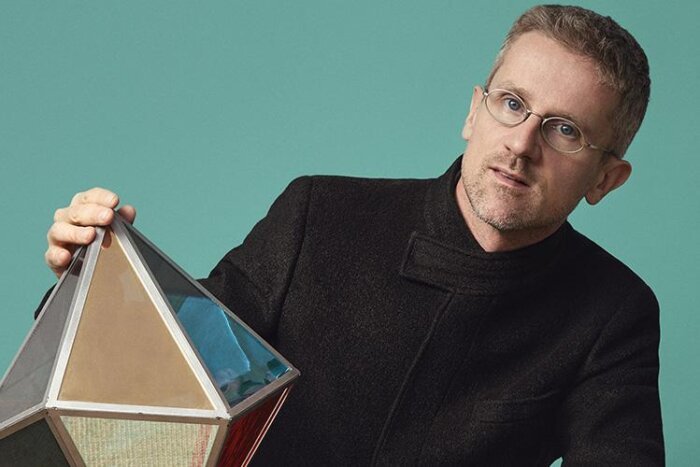
The 19th International Architecture Exhibition, titled Intelligens. Natural. Artificial. Collective., curated by Carlo Ratti and organised by La Biennale di Venezia, will open to the public from Saturday May 10 to Sunday November 23, 2025, at the Giardini, the Arsenale and at the Forte Marghera. The pre-opening will take place on May 8 and 9; the awards ceremony and inauguration will be held on Saturday May 10, 2025.
THE INTERNATIONAL EXHIBITION OF THE CURATOR
«Architecture has always been a response to a hostile climate. From the earliest “primitive hut,” human design has been led by the need for shelter and survival, driven by optimism: our creations have always strived to bridge the gap between a harsh environment and the safe, livable spaces we require.» Carlo Ratti stated.
«Today, that dynamic approach is being taken to a new level – as climate becomes less forgiving. In the fires of Los Angeles, in the floods of Valencia and Sherpur, in the droughts of Sicily, we have witnessed first-hand how water and fire are attacking us with unprecedented ferocity. The year 2024 marked a grim milestone as Earth registered its hottest temperatures on record, pushing global averages beyond the Paris Agreement’s 1.5°C target. In just two years, climate change has accelerated in ways that defy even the best scientific models.»
«For decades, architecture’s response to the climate crisis has been centered on mitigation—designing to reduce our impact on the climate. But that approach is no longer enough. The time has come for architecture to embrace adaptation: rethinking how we design for an altered world.»
«Adaptation demands a fundamental shift in our practice. This year’s Exhibition Intelligens. Natural. Artificial. Collective. invites different types of intelligence to work together to rethink the built environment. The very Latin title Intelligens contains the word gens (“people”) – inviting us to experiment beyond today’s limited focus on AI and digital technologies.»
«In the time of adaptation, architecture is at the center and must lead with optimism. In the time of adaptation, architecture needs to draw on all forms of intelligence – natural, artificial, collective. In the time of adaptation, architecture needs to reach out across generations and across disciplines – from the hard sciences to the arts. In the time of adaptation, architecture must rethink authorship and become more inclusive, learning from science.»
«Architecture must become as flexible and dynamic as the world we are now designing for».
CURATORIAL HIGHLIGHTS
A) Intelligens serves as a dynamic laboratory, uniting experts across various forms of intelligence. For the first time, the Exhibition features over 750 participants: architects and engineers, mathematicians and climate scientists, philosophers and artists, chefs and coders, writers and woodcarvers, farmers and fashion designers, and many more. Adaptation demands inclusivity and collaboration.
B) Curating on such a large scale required a fundamental shift in approach. The selection process has been open and bottom-up, guided by an interdisciplinary curatorial team. The Space for Ideas, our open call for projects from May 7 to June 21, 2024, generated an overwhelming global response. The flood of submissions was both thrilling and daunting, but it allowed us to discover fresh, lesser-known voices that might otherwise have been missed.
C) The resulting participant pool spans generations—from seasoned professionals still innovating at ninety to recent graduates just beginning their careers. Pritzker Prize winners, former La Biennale di Venezia Curators, Nobel laureates, Royal Professors appear alongside emerging architects and researchers. This inclusion reflects our commitment to a diverse range of perspectives.
D) This richness of contributions calls for a new approach to authorship. Intelligens challenges the tradition of the architect as the sole creator, with other professionals relegated to supporting roles. We propose a more inclusive authorship model, inspired by scientific research. In the time of adaptation, all voices driving design must be recognized and credited.
E) In the era of adaptation, La Biennale di Venezia must collaborate with other institutions. Intelligens has forged connections with other global Institutions, the UN’s COP30 in Belem, C40, the Davos Baukultur Alliance, the Soft Power Club, and many others. Its public program, GENS, will host a chorus of events and conversations, engaging audiences both large and small.
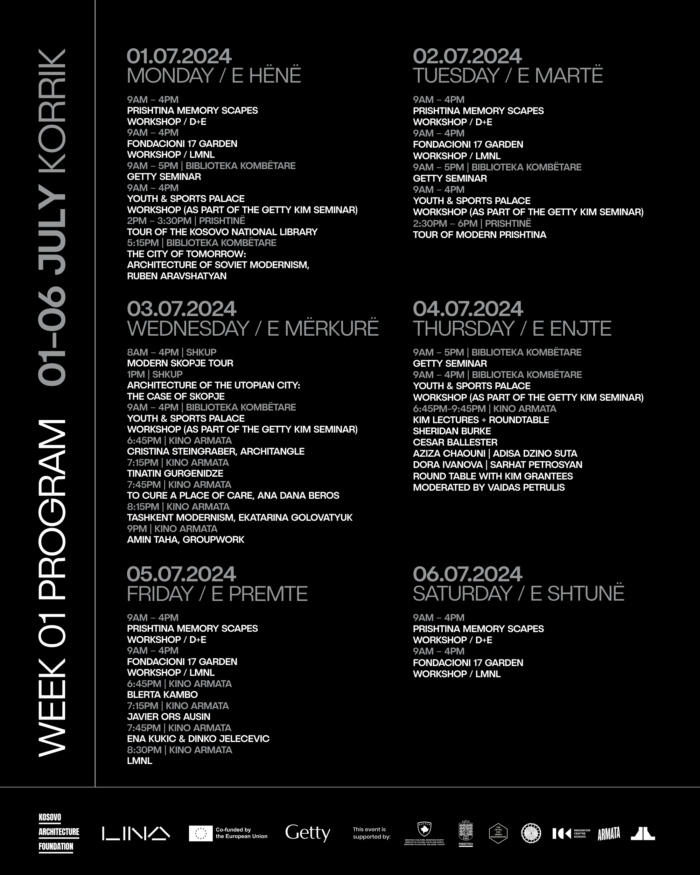
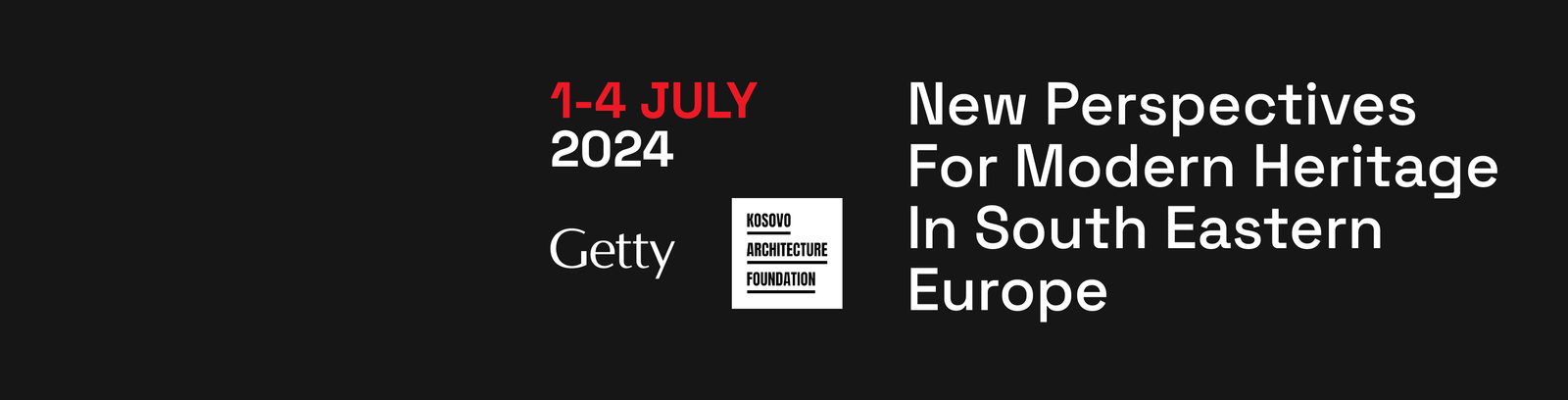
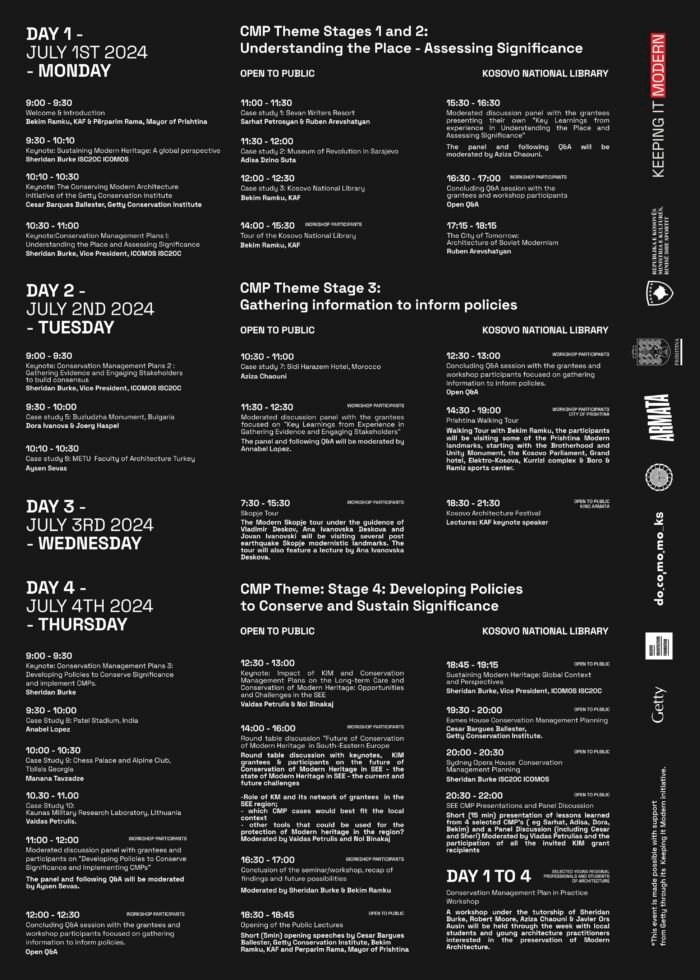
The Keeping It Modern, New Perspectives for Modern Heritage in South-Eastern Europe program is finally announced today. Below is the full program of activities.