
AL/
Ekspozita e CCP-së do jetë e hapur nga 5 Korriku deri me 13 Korriku në hapësirat e Lapidariumit te Muzeut të Kosovës, nga ora 11 deri ne 16:00. Hapja e ekspozitës dhe e festivalit te sivjetëm do bëhet me 4 Korrik nga ora 18.00.
EN/
The CCP exhibition will stay open from the 5th till the 13th of July at Museum of Kosovo Lapidarium, daily from 11am to 4pm. the opening of the exhibition and the festival will be on the 4th of July starting from 6PM.
Winning projects show promise for communities, innovation and care for the environment
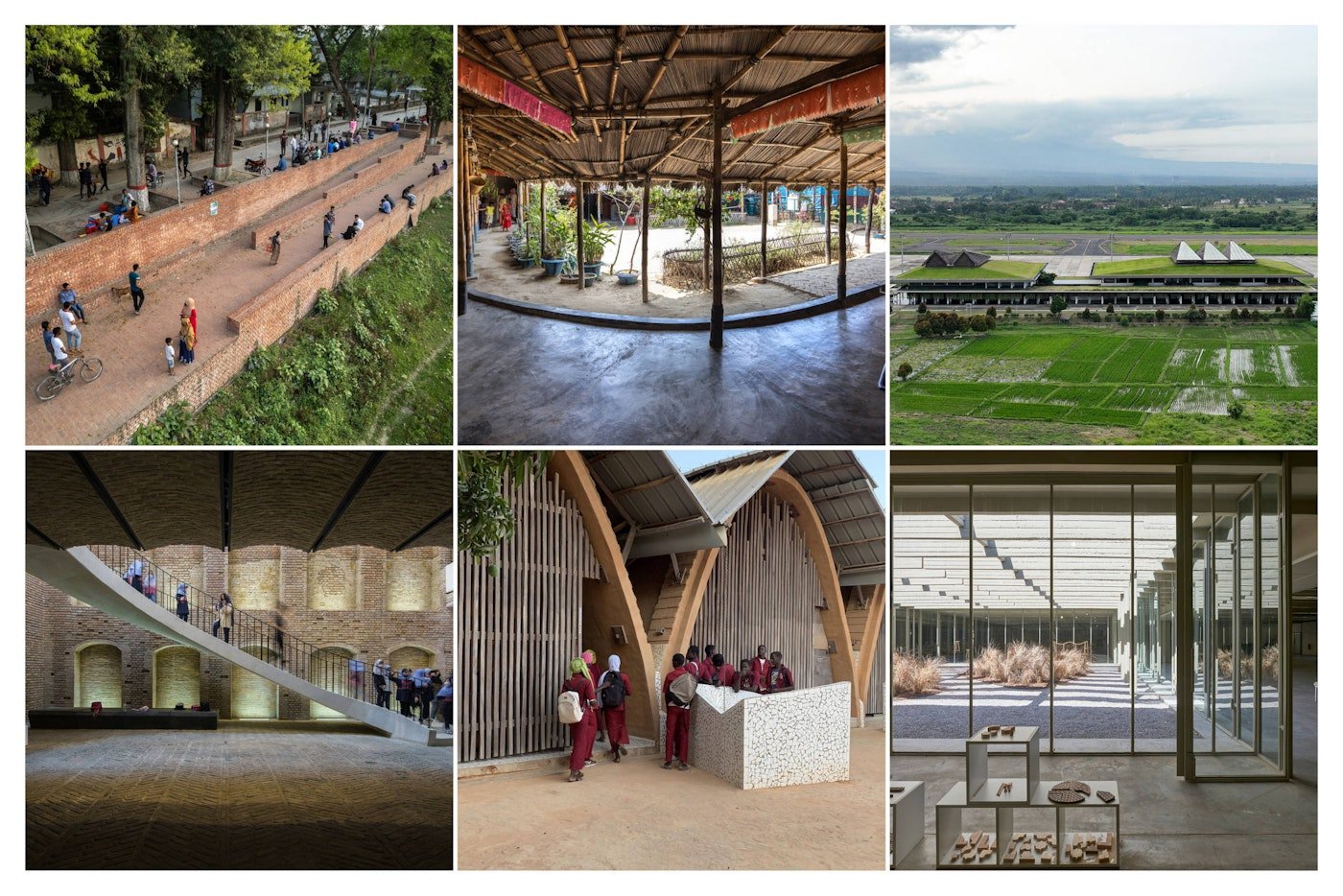
Geneva, Switzerland, 22 September 2022 – The winners of the 2022 Aga Khan Award for Architecture (AKAA) were announced today. The six Award winners, who will share the $1 million award, one of the largest in architecture, show promise for communities, innovation and care for the environment.
Bangladesh
Through consistent community participation and appropriation, extensive involvement of women and marginalised groups, and a local workforce, the seemingly simple undertaking of cleaning up the access to the Nabaganga river in Jhenaidah led to a thoughtful and minimal landscaping project with local materials and construction techniques, thus transforming a derelict informal dump site into an attractive and accessible multifunctional space that is valued by Jhenaidah’s diverse communities. As such, the project managed to reverse the ecological degradation and health hazards of the river and its banks, and induce effective ecological improvement of the river, in one of the most riverine countries on earth. [Extract, Jury Citation]
The six temporary community spaces of the Rohingya Refugee Response programme provide a dignified, sensitive and ingenious response to emergency needs related to the major influx of Rohingya refugees into Bangladeshi host communities, with particular attention to the safety of women and girls. The concept and design of the six spaces are the result of appropriate planning, solid partnerships and inclusive processes involving the diverse refugee and host communities, such as defining spatial and functional needs. [Extract, Jury Citation]
Indonesia
Arising from a sea of a paddy fields, the building extends the language of the landscape into a concentrated event that coalesces architecture, functionality and setting in a seamless yet discernible disposition. Modern and efficient in all aspects, but at home in its place, Banyuwangi International Airport may be a game-changer in airport architecture, especially considering that the Indonesian government is set to build some 300 airports in the near future. [Extract, Jury Citation]
Iran
In the dense urban neighbourhood that is Tehran’s historical centre, this untypical reuse and conservation project has transformed the Argo Factory – a former brewery whose activities were moved 10 years before the Iranian Revolution, for pollution reasons, to a site outside the city – into a private museum for contemporary art. From the ruins of the original building, the existing brewery was renovated and new surfaces built with a subtle approach and design. A variety of spaces for exhibitions, talks and films were developed over four levels, and a new artist residence was built adjacent to the museum. [Extract, Jury Citation]
Lebanon
The renovation of the Niemeyer Guest House is an inspiring tale of architecture’s capacity for repair, at a time of dizzying, entangled crisis around the world, and in Lebanon in particular, as the country faces unprecedented political, socio-economic and environmental collapse. Located on the outskirts of Tripoli – one of the oldest and most beautiful port cities, once renowned for its craft but today ravaged by extreme poverty, migration and lack of public space – the rehabilitation of the Guest House is part of the Rachid Karami International Fair (RKIF), the unfinished masterpiece of the architect Oscar Niemeyer. [Extract, Jury Citation]
Senegal
A campus replete with infrastructure, buildings, landscapes and furnishings, the Kamanar Secondary School is unique in that it addresses the multiple scales of urbanism, landscape, architecture and building technologies with equal commitment and virtuosity. The site’s topography and flora are the key founding conditions of this project, prompting the introduction of a grid of classroom pods organised around pre-existing tree canopies, adopting their shade as social spaces that serve the students and teachers alike. [Extract, Jury Citation]
The Aga Khan Award for Architecture was established in 1977 by His Highness the Aga Khan, 49thhereditary Imam of the Ismaili Muslims, to identify and encourage building concepts that successfully address the needs and aspirations of communities in which Muslims have a significant presence. The Award’s selection process emphasises architecture that not only provides for people’s physical, social and economic needs, but that also stimulates and responds to their cultural aspirations.
This year marks AKAA’s 45th anniversary. In a meeting in February 2022, an independent Master Jury shortlisted 20 projects from a pool of 463 projects nominated for the 15th Award Cycle (2020-2022). Subsequently, after on-site reviews of the shortlist by a team of experts, the jury awarded six projects amongst them.
The venue for the Award ceremony
Ceremonies to honour the winning projects and mark the close of each triennial cycle are held in settings selected for their architectural and cultural importance to the muslim world. In 2022, the ceremony will be held in Muscat, Sultanate of Oman, in conjunction with the Aga Khan Music Awards ceremony.
Previous venues encompass many of the most illustrious architectural achievements in the Muslim world, including Shalimar Gardens in Lahore (1980), Topkapi Palace in Istanbul (1983), the Alhambra in Granada (1998) and Emperor Humayun’s Tomb in Delhi (2004).
For a full online press kit, which includes briefs on each of the winning projects, high-resolution images and other information, please see: https://the.akdn/2022AwardWinners
The 2022 Award Master Jury
The nine members of the independent Master Jury who selected the 20 shortlisted projects are: Nada Al Hassan, an architect specialising in the conservation of architectural and urban heritage; Amale Andraos, Professor at the Columbia University Graduate School of Architecture, Planning and Preservation; Kader Attia, an artist who explores the wide-ranging effects of western cultural hegemony and colonialism; Kazi Khaleed Ashraf, director-general of Bengal Institute for Architecture, Landscapes and Settlements, in Dhaka, Bangladesh; Sibel Bozdoğan, a Visiting Professor of Modern Architecture and Urbanism at the Department of the History of Art and Architecture, Boston University; Lina Ghotmeh, a French-Lebanese architect who leads a practice where every project learns from a vernacular past to build a new “déjà-là”; Francis Kéré, an AKAA laureate and internationally renowned Burkinabè architect who received the Award in 2004 for his first project, an elementary school in Gando, Burkina Faso; Anne Lacaton, founder of Lacaton & Vassal in Bordeaux in 1989, who focuses on the generosity of space and economy of means; Nader Tehrani, founding principal of NADAAA, a practice dedicated to design innovation, collaboration and a dialogue with the construction industry.
The 2022 Award Steering Committee
The Aga Khan Award for Architecture is governed by a Steering Committee chaired by His Highness the Aga Khan. The other members of the Steering Committee are Sheikha Mai Bint Mohammed Al Khalifa, President, Shaikh Ebrahim bin Mohammed Al Khalifa Center for Culture and Research, Manama; Emre Arolat, Founder, EAA – Emre Arolat Architecture, Istanbul; Meisa Batayneh, Principal Architect, Founder, maisam architects and engineers, Amman; Sir David Chipperfield, Principal, David Chipperfield Architects, London; Souleymane Bachir Diagne, Director, Institute of African Studies, Columbia University, New York; Nasser Rabbat, Aga Khan Professor, Massachusetts Institute of Technology, Cambridge; Marina Tabassum, Principal, Marina Tabassum Architects, Dhaka; and Sarah M. Whiting, Dean, Graduate School of Design, Harvard University, Cambridge. Farrokh Derakhshani is the Director of the Award.
The 2022 Award book
A monograph that includes essays on issues raised by the Master Jury’s selections of the shortlist and the winners for the 2022 Award will be published by Architangle in October 2022. Printed on paper that is FSC® and Blue Angel certified, 100% recycled and climate neutral, Inclusive Architecture, edited by Sarah M. Whiting, presents descriptions and illustrations of the 20 shortlisted projects, including the six Award recipients, with contributions by Kazi Khaleed Ashraf, Sibel Bozdoğan, Souleymane Bachir Diagne, Farrokh Derakhshani, Nasser Rabbat, Nader Teherani and Sarah M. Whiting.
More information is available here
Press contact:
Semin Abdulla
E-mail: semin.abdulla@akdn.org
Website: https://the.akdn/architecture
NOTES:
The Aga Khan Award for Architecture recognises examples of architectural excellence in the fields of contemporary design, social housing, community improvement and development, historic preservation, reuse and area conservation, as well as landscape design and improvement of the environment.
Particular attention is given to building schemes that use local resources and appropriate technology in innovative ways and to projects likely to inspire similar efforts elsewhere. It should be noted that the Award not only rewards architects, but also identifies municipalities, builders, clients, master artisans and engineers who have played important roles in the project. In the past 15 triennial cycles of the Award, 128 projects have been awarded and nearly 10,000 building projects have been documented.
To be eligible for consideration in the 2022 Award cycle, projects had to be completed between 1 January 2015 and 31 December 2020, and should have been in use for at least one year. Projects commissioned by His Highness the Aga Khan or any of the institutions of the Aga Khan Development Network (AKDN) are ineligible for the Award.
The Aga Khan Award for Architecture is part of the Aga Khan Development Network (AKDN). Founded and guided by His Highness the Aga Khan, the AKDN works in 30 countries to improve the quality of life and to create opportunity for people of all faiths and origins. Its agencies operate over 1,000 programmes and institutions – some more than a century old. The Network’s approach to development spans a range of cultural, social, economic and environmental endeavours. The mandates of its agencies include education and health, agriculture and food security, micro-finance, human habitat, crisis response and disaster reduction, protection of the environment, art, music, architecture, urban planning and conservation, and cultural heritage and preservation. AKDN employs approximately 96,000 people, the overwhelming majority of whom are based in developing countries. AKDN’s annual expenditures for non-profit development activities is approximately $1 billion.

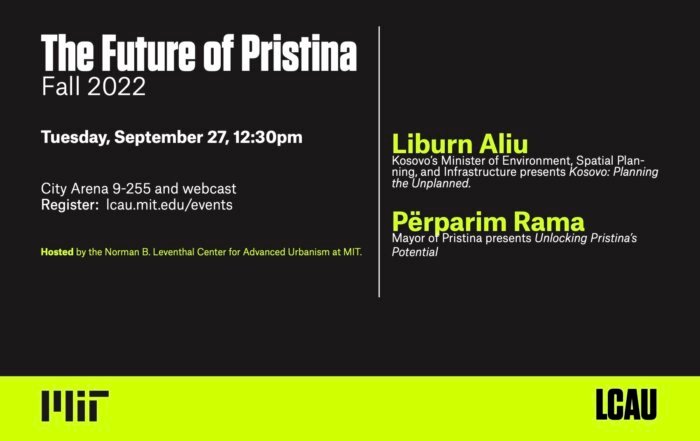
Please join us next Tuesday for The Future of Pristina, with presentations from Liburn Aliu, Kosovo’s Minister of Environment, Spatial Planning and Infrastructure and Përparim Rama, Mayor of Pristina, and introductions from Bekim Ramku, Director of Kosovo Architecture Foundation, 2016 SPURS Fellow.
Tuesday, 27-September, 12:30pmCity Arena, 9-255 and webcast [Register here for webcast]Liburn Aliu is a trained architect with a background in built heritage conservation and construction. From 2014 to 2018 he served as the head of the Pristina City Planning Department where he was praised for introducing transparent planning procedures and halting all illegal constructions in the city. In March 2021 he was named Kosovo’s Minister of Environment, Spatial Planning, and Infrastructure. In Kosovo: Planning the Unplanned? he will be speaking about his territorial approach to forging sustainable development in Kosovo.
An architect by profession Përparim Rama was elected as the Pristina Mayor in December 2021. He ran on a campaign to make Pristina a more pedestrian, green, sustainable as well as a fun city. In his presentation, Unlocking Pristina’s Potential, Mayor Rama will be speaking about the challenges Pristina faces but also the opportunities that the capital city of the country with the youngest population in Europe offers.
This presentation is part of the “Urban Data Kosovo” project implemented jointly by the Kosovo Architecture Foundation and the Norman B. Leventhal Center for Advanced Urbanism. The project is supported through the US Embassy “University Grant” administered by KUSAlumni.

EN/
Workshop with MVRDV.Next
12th – 16th of September, Prishtina
Instructors: Kristina Knauf, Leo Stuckardt
The collection and interpretation of geospatial data impacts decision-making processes on all scales and across disciplines – from open, multimillion-user initiatives such as Open Street Maps to private, multimillion-dollar tech platforms.
For planners, urbanists, and architects in particular, these new forms of intelligence offer opportunities to understand the complexities of a site, to identify urgencies, and to prioritise design responses accordingly. However, localised data scarcities (the lack of information collected about certain places) and a lack of data literacy (the ability to interpret and manipulate information) risk unbalancing data-driven urban planning and decision making. The workshop Prishtina DataScapes addresses these two challenges.
What are datascapes, how can they be found, and how can they be explored?
What data is missing?
How can we understand our built environment by combining different datasets?
What types of data visualisation are needed?
What insights can help to generate new visions for Pristina?
What stories can be told?
Throughout the four-day workshop ‘Prishtina DataScapes’, participants will explore different means of urban data collection and learn fundamental techniques for data management and processing in qGIS (Geospatial Information Systems). Following the framework proposed by the director of MIT’s Civic Data Design Lab Sarah Williams – ‘Build it! Hack it! Share it!’ – the workshop aims to build a comprehensive stack of urban data for Pristina, cross-reference select data to gain new insights into the city, and explore visualisation techniques to communicate results to the public.
All interested should send their cv’s & contacts to workshops.kaf@gmail.com by 4PM, 10th of September 2022.
AL/
Prishtina DataScapes
Puntori me MVRDV.Next
12 – 16 shtator, Prishtinë
Instruktorë: Kristina Knauf, Leo Stuckardt
Mbledhja dhe interpretimi i të dhënave gjeo-hapësinore ndikon në proceset e vendimmarrjes në të gjitha shkallët dhe në të gjitha disiplinat – nga iniciativat e hapura me shumë milionë përdorues, si Open Street Maps, deri te platformat e teknologjisë private, shumëmilionëshe.
Për planifikuesit, urbanistët dhe arkitektët në veçanti, këto forma të reja të informatave ofrojnë mundësi për të kuptuar kompleksitetin e një vendi, për të identifikuar urgjencat dhe për të prioritizuar përgjigjet e projektimit në përputhje me rrethanat. Megjithatë, mungesat e të dhënave të lokalizuara (mungesa e informacionit të mbledhur për vende të caktuara) dhe mungesa e njohurisë në përpunimin e tyre (aftësia për të interpretuar dhe manipuluar informacionin) rrezikojnë të çekuilibrojnë planifikimin urban dhe vendimmarrjen e drejtuar nga të dhënat. Punëtoria Prishtina DataScapes trajton këto dy sfida.
Çfarë janë datascapes, si mund të gjenden dhe si mund të hulumtohën?
Çfarë të dhënash mungojnë?
Si mund ta kuptojmë mjedisin tonë të ndërtuar duke kombinuar grupe të ndryshme të dhënash?
Cilat lloje të vizualizimit të të dhënave nevojiten?
Cilat njohuri mund të ndihmojnë në gjenerimin e vizioneve të reja për Prishtinën?
Çfarë historish mund të tregohen?
Përgjatë punëtorisë katërditore ‘Prishtina DataScapes’, pjesëmarrësit do të eksplorojnë mjete të ndryshme të mbledhjes së të dhënave urbane dhe do të mësojnë teknikat themelore për menaxhimin dhe përpunimin e të dhënave në qGIS (Sistemet e Informacionit Gjeohapësinor). Duke përcjellë metodologjinë e propozuar nga drejtoresha e Civic Data Design Lab pran MIT, Sarah Williams – ‘Build it! Hack it! Share it!’ – punëtoria synon të ndërtojë një bazë gjithëpërfshirëse të të dhënave urbane për Prishtinën, të krijoj reference tërthore të të dhënave të përzgjedhura për të shfaqur njohuri të reja mbi qytetin dhe të eksplorojë teknikat e vizualizimit për të komunikuar rezultatet me publikun.
Të gjithë të interesuarit duhet të dërgojnë CV-të dhe kontaktet e tyre në workshops.kaf@gmail.com deri më 10 shtator 2022, ora 16:00.

“Negotiating storytelling: Heritage constructs as contested narrative devices” Manifesta 14 x Research training group DFG 277 Identity and Heritage 5.9.2022, 19-21h, Kino ARMATA. In which ways do heritage constructs operate as collective practices of storytelling? Which narratives do they behold or erase? How do narrative methodologies mold the collective memory?The Research Training group Identity and heritage from the TU Berlin, Bauhaus-Universität Weimar and the Technical Universities of Dessau and Erfurt have been engaging with the critical analysis of heritage constructions since 2016 through the research of specific case studies. During their visit to Pristhina, this panel discussion will bring into dialogue their experience within academic contexts with the on-going work by Manifesta on the resignification of Pristhina’s heritage and the role contemporary art has on contesting hegemonic narratives. If, following the words of Catherine Nichols, the writing of history should no longer be left to the historical sciences, What new role should academia play and which lessons are to be drawn from activism and contemporary art in producing better narratives?The panel will introduce the work of the research group from germany through 5 inputs that will be discussed as framed in the dialogue already started by Manifesta 15. Topics such as counteracting historical sources, acknowledging the biased emplotment of historiography, delegating interpretive authority, the destabilization of knowledge, the preservation of narratives and narrators, the institutional response to social changes, the understanding of heritage as social construction or the relevance of an expanded interdisciplinarity in the actualization of academic work will be addressed. How do we challenge historiography? How to tell stories otherwise?Research training group DFG 277 “Identity and Heritage” with Bekim Ramku, Director of Kosovo Architecture Foundation,Paul Domela, Head of Business, Manifesta Biennale and Alush Gashi, Kino Armata

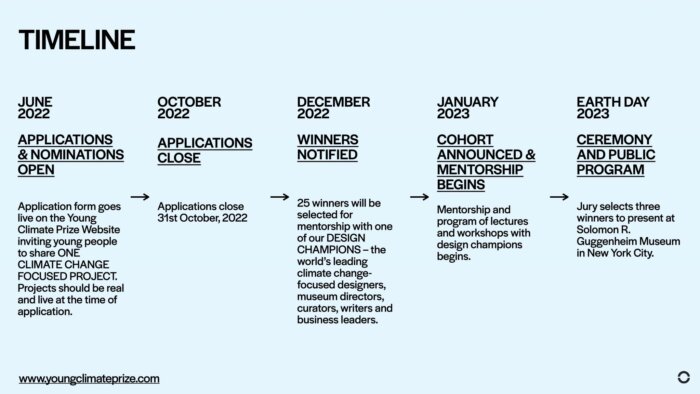
The World Around Young Climate Prize is a project that will provide mentorship and support for the self-started projects of 25 under-25s whose practice is deeply invested in addressing climate change in their communities. We are open to applicants from a range of fields including architecture, engineering, agriculture, activism, digital design as well as other creative industries.
The idea of the prize is to support the generation born into the climate crisis in the most impactful way we can. After a global open call, The World Around will provide a bespoke academy and mentorship program led by some of the best designers. and thinkers of our time (our “Design Champions”) for a cohort of 25. Ultimately three finalists will be selected to present their work and ideas at our next major event at the Guggenheim Museum in New York in 2023.
I’m excited to share that the prize is now open for applications and you can also nominate someone directly. We have already received some inspiring submissions from all over the world, and I would love your help in connecting us to your networks to drive further nominations, applications and visibility for the project before the deadline on October 31st 2022.

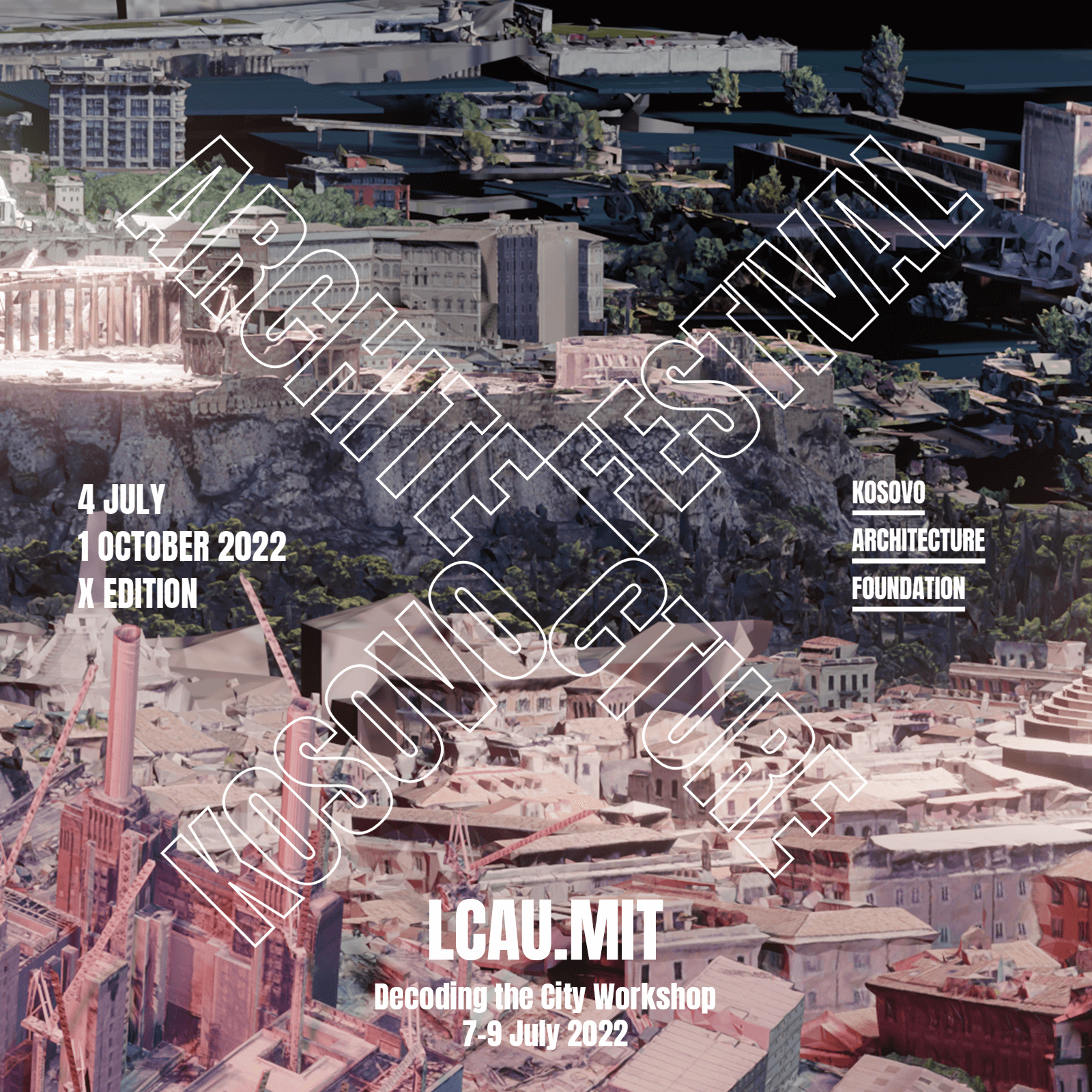
Past unfortunate events have left Prishtina with an absence of critical urban data, which has hampered any attempts at urban analysis. This has left Kosovo with the challenge of making informed decisions around urban development. While the process of data collection has traditionally been the responsibility of central government authority, new technology and workflows have created the opportunity for architects, urbanists, and end-users to circumvent a central authority and collect their own data; creating the necessary foundations to better understand the built environment and Decode the City.
This workshop will introduce three novel approaches to urban data collection across several scales, ranging from high-resolution photogrammetry modeling, 3D mapping, and GIS data collection. All of these workflows can be accessed through a standard smartphone and laptop. The participants will go through several exercises to collect urban data, followed by manipulating the collected urban data, and eventually combining them as a single collective virtual environment that will be shared and explored on the web.
This workshop is part of the “Urban Data Kosovo” project supported by the University Grand of the US Embassy in Kosovo, administered by KUSA. The workshop will be tutored by the Leventhal Center for Advanced Urbanism researcher Niko McGlashan.

20 projects in 16 countries, from Indonesia to Cape Verde
Geneva, Switzerland, 2 June 2022 – The Aga Khan Award for Architecture (AKAA) today announced 20 shortlisted projects for the 2022 Award cycle. The projects will compete for a share of the US$ 1 million prize, one of the largest in architecture.
The 20 shortlisted projects were selected by an independent Master Jury from a pool of 463 projects nominated for the 15th Award Cycle (2020-2022).
The Aga Khan Award for Architecture was established by His Highness the Aga Khan in 1977 to identify and encourage building concepts that successfully address the needs and aspirations of communities in which Muslims have a significant presence. Since it was launched 45 years ago, 121 projects have received the award and nearly 10,000 building projects have been documented. The AKAA’s selection process emphasises architecture that not only provides for people’s physical, social and economic needs, but that also stimulates and responds to their cultural aspirations.
Photographic representations of the 20 shortlisted entries will go on display in an exhibition in King’s Cross, London from 2 June to 30 June, as part of the King’s Cross Outdoor Art Project, coinciding with the London Architecture Festival.
Bahrain
Bangladesh
Cape Verde
India
Indonesia

Iran
Lebanon
Kuwait

Morocco
Niger
Palestine

Senegal
Sri Lanka
Tunisia
Turkey
United Arab Emirates

The shortlisted projects have undergone rigorous reviews, at the site of each project, by independent experts, including architects, conservation specialists, planners and structural engineers. The Master Jury meets again this summer to examine the on-site reviews and determine the final recipients of the Award.
The nine members of the independent Master Jury who selected the 20 shortlisted projects are: Nada Al Hassan, an architect specialising in the conservation of architectural and urban heritage; Amale Andraos,Professor at the Columbia University Graduate School of Architecture, Planning and Preservation; Kader Attia, an artist who explores the wide-ranging effects of western cultural hegemony and colonialism; Kazi Khaleed Ashraf, director-general of Bengal Institute for Architecture, Landscapes and Settlements, in Dhaka, Bangladesh; Sibel Bozdoğan, a Visiting Professor of Modern Architecture and Urbanism at the Department of the History of Art and Architecture, Boston University; Lina Ghotmeh, a French-Lebanese architect who leads a practice where every project learns from a vernacular past to build a new “déjà-là”; Francis Kéré, an AKAA laureate and internationally renowned Burkinabè architect who received the Award in 2004 for his first project, an elementary school in Gando, Burkina Faso; Anne Lacaton, founder of Lacaton & Vassal in Bordeaux in 1989, who focuses on the generosity of space and economy of means;Nader Tehrani, founding principal of NADAAA, a practice dedicated to design innovation, collaboration and a dialogue with the construction industry. For more information, please see the biographies of the Master Jury.
The Aga Khan Award for Architecture is governed by a Steering Committee chaired by His Highness the Aga Khan. The other members of the Steering Committee are Sheikha Mai Bint Mohammed Al Khalifa,President, Bahrain Authority for Culture and Antiquities, Manama; Emre Arolat, Founder, EAA – Emre Arolat Architecture, Istanbul; Meisa Batayneh, Principal Architect, Founder, maisam architects and engineers, Amman; Sir David Chipperfield, Principal, David Chipperfield Architects, London; Souleymane Bachir Diagne, Director, Institute of African Studies, Columbia University, New York; Nasser Rabbat, Aga Khan Professor, Massachusetts Institute of Technology, Cambridge; Marina Tabassum, Principal, Marina Tabassum Architects, Dhaka; and Sarah M. Whiting, Dean, Graduate School of Design, Harvard University, Cambridge. Farrokh Derakhshani is the Director of the Award.
For the full AKAA press announcement & links to all the project go to the Aga Khan Award for Architecture Link.
EN/
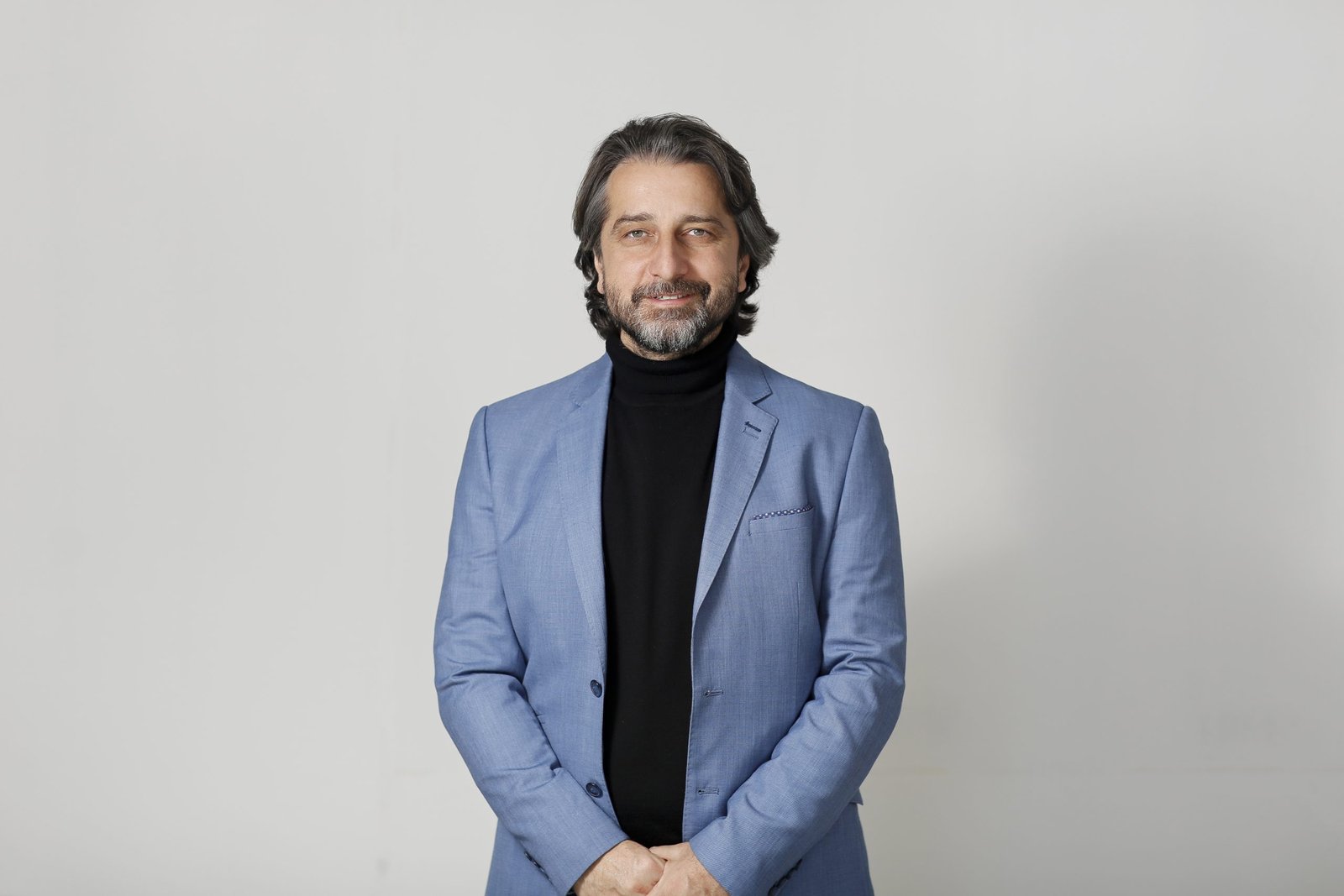
Përparim Rama was born in Prishtina on January 20, 1976. His father, Kadrush Rama was a well-known Albanian painter, and his mother Nazmije Rama worked as an educator.
In 1992, when he was only 16 years old, Përparim Rama moved to Great Britain, and was granted asylum due to the aggravated political situation in his homeland.
He completed his undergraduate studies in architecture at London South Bank University from 1995 to 1998. From 2001 to 2003 he continued the second part of his studies at the Royal Institute of British Architects. Having completed his Bachelor studies, he pursued a Master DipArch degree at the University of East London. He was recognized as a distinguished Master by CECA (Center for Evolutionary Computing in Architecture.
He initially worked as a consultant at London Southampton Airport. He has extensive experience as a mentor in the School of Architecture at the University of Nottingham and has supervised Doctorate Candidates in Generative Architecture and SMART building design in the MA and PHD program at the SmartLab Media Institute.
In 2012, at the Venice Biennale of Architecture, Rama represented Kosovo for the first time in history with the ‘Filigree Maker’ Pavilion, which was positively welcomed by the international media.
Rama was a consultant to the National Research Fund of the State of Qatar on the country’s current and future urban and architectural projects. He is also the leader of the master plan project team for the development of a 10 hectares sustainable village in Dhërmi, southeast coast of Albania. Përparim Rama was a specialist advisor for the development of spatial planning tools and architecture in the municipalities of Newham Council and Tower Hamlets in London. He has led the drafting of the regulatory plan for Kosovo’s capital, Prishtina. He is a periodic advisor/critic at the University of East London and a Periodic Critic at the Architectural Association of the United Kingdom.
He is also known for his involvement in the spatial planning of the 2012 London Olympics, for engaging in building the vision of Doha, the capital of Qatar, for major projects in New York, Dublin, Basel, Prague and Damascus, Syria.
He is the winner of the most prestigious award in the world for designing coffee places in the “World Interior News” competition within the Saatchi gallery in 2013.
Përparim Rama was elected Mayor of Prishtina in the 2021 mayoral elections and is currently serving as Mayor.
AL/
Përparim Rama – Kryetar i Komunës së Prishtinës.
Përparim Rama është arkitekt dhe urbanist i njohur shqiptar, i cili është vlerësuar me çmime ndërkombëtare.
Ai u lind në Prishtinë më 20 janar të vitit 1976. Në moshën 16 vjeçare u shpërngul në Britani të Madhe. Pjesën e parë të studimeve universitare Bachelor i ka filluar në vitin 1995, në SBU London Bank University për Arkitekturë dhe i ka përfunduar në vitin 1998. Nga viti 2001 deri në vitin 2003 vazhdoi pjesën e dytë të studimeve në Institutin Mbretëror të Arkitektëve Britanik. Pas studimeve bachelor, nga viti 2003 vazhdoi studimet për Master DipArch në “University of East London”. Nga CECA (Centre for Evolutionary Computing in Architecture) u shpall Master i dalluar.
Në vitin 2012, në Bienalen e Arkitekturës në Venecia, Rama përfaqësoi Kosovën për herë të parë në histori me Pavilionin ‘’Punuesi i filigranit’’
Përparim Rama njihet për angazhimin e tij në planifikim hapësinor të Lojërave Olimpike në Londër, në vitin 2012; për angazhimin e tij në ndërtimin e vizionit të Doha’s, kryeqytetit të Katarit; për projekte madhore në New York, Dublin, Bazel, Pragë e deri në Damask të Sirisë.
Në vitin 2013 Përparim Rama bashkë me ekipin e tij në “World Interiors News Annual Award 2013” morën çmimin e parë duke mposhtur 1,600 kandidatë nga mbarë bota.
Përparim Rama fitoi zgjedhjet për kryetar komune të Prishtinës në vitin 2021, dhe aktualisht është kryetar i kryeqytetit.