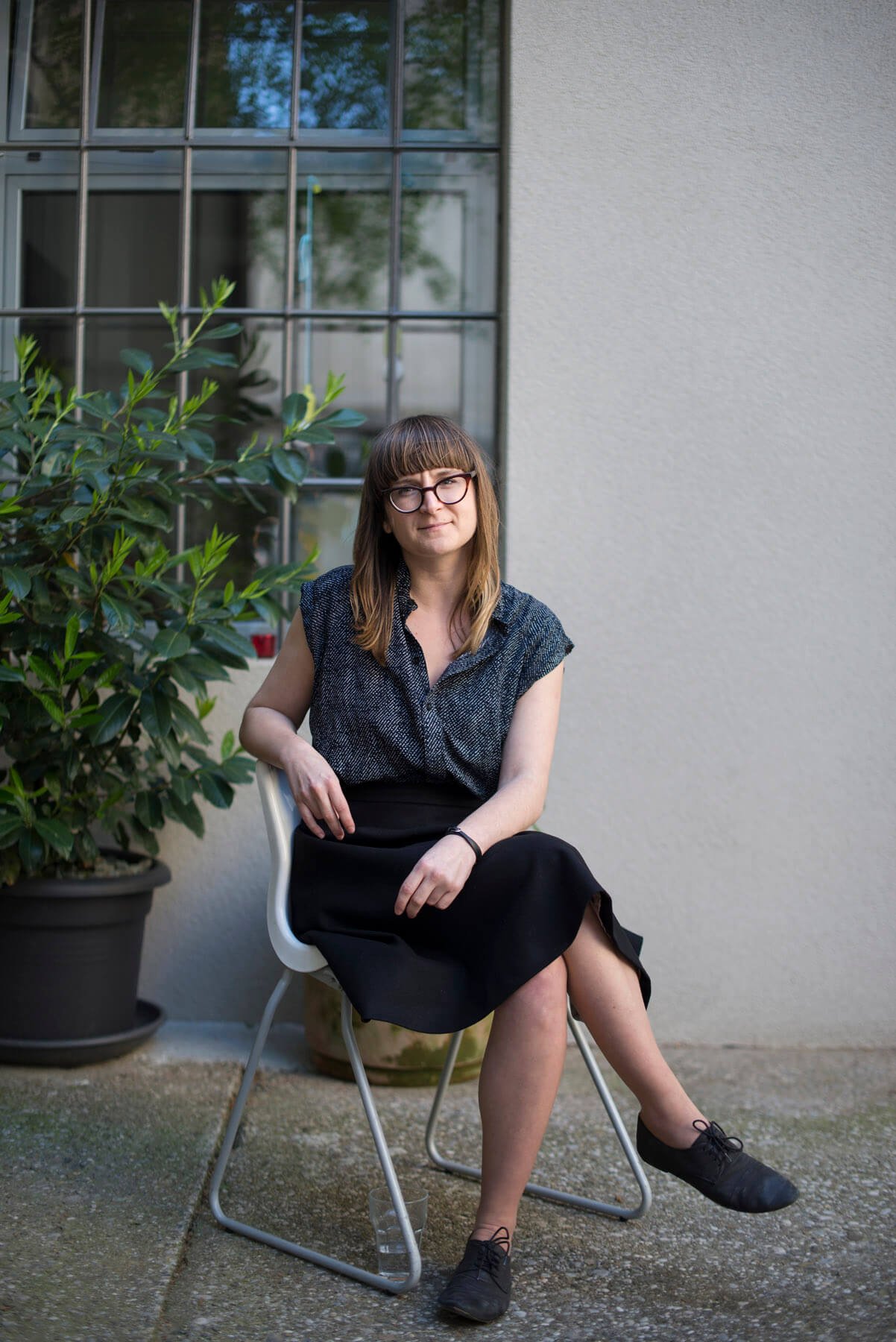
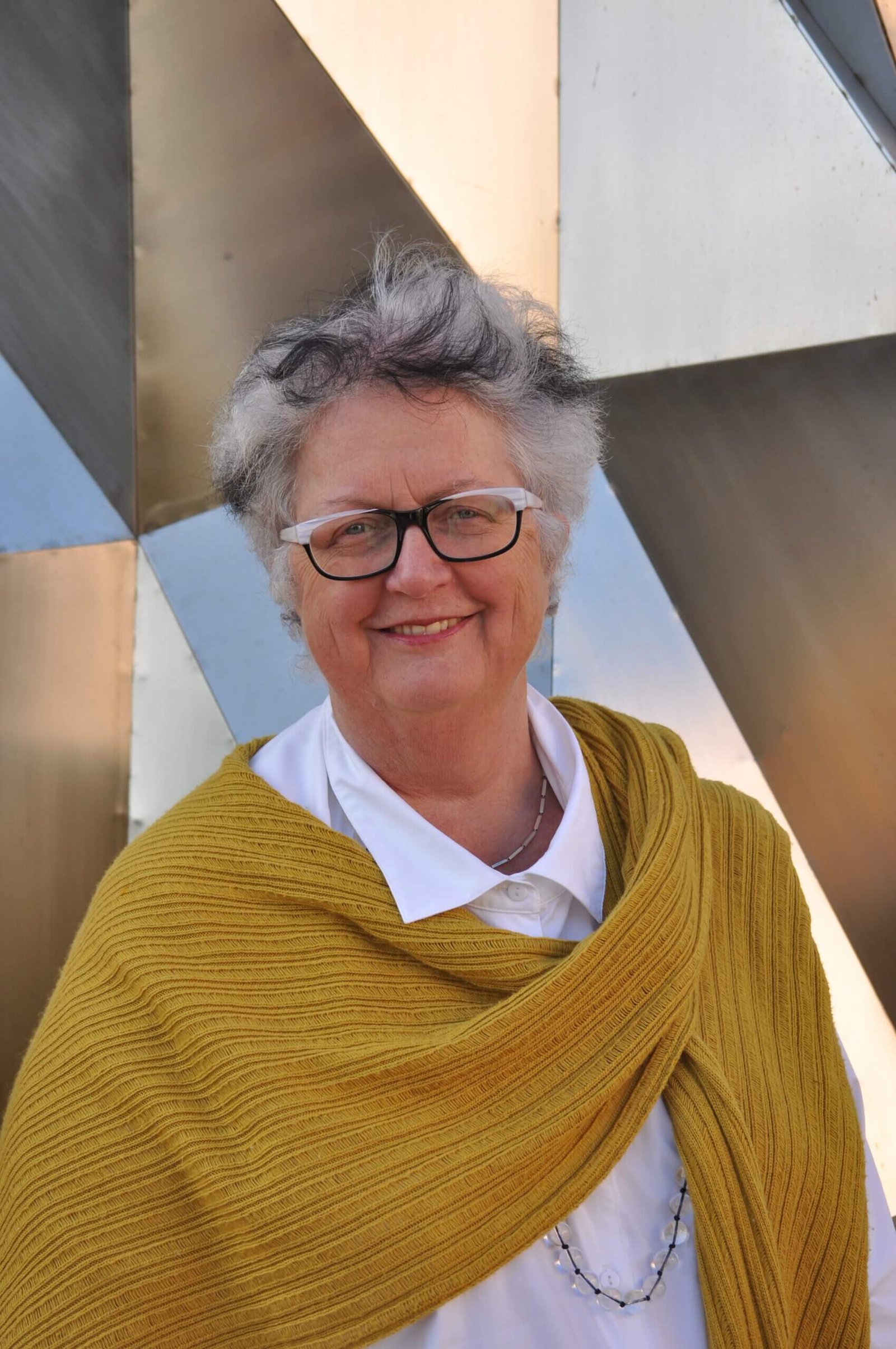
Cristina Steingräber, a historian of art and architecture based in Berlin, is the cofounder and CEO of ArchiTangle, an independent publisher and digital tech start-up dedicated to socially engaged architectural practice and urbanism. Her academic and professional efforts focus on interdisciplinary knowledge transfer on how architecture can engage with other disciplines in shaping the built environment.
Initially a curator at the National Gallery in Berlin (Nationalgalerie), Staatliche Museen zu Berlin (SMB), Steingräber was appointed head of the SMB’s publications department in 2004. Thereafter, Steingräber spent more than a decade as program director and CEO of Hatje Cantz, a leading global publisher in the visual arts, photography, and architecture (2006–17). She possesses deep industry expertise, and as an expert in architecture history, bookmaking, and a technology enthusiast, Steingräber, with her firm, is introducing the integration of traditional print and cutting-edge technology through blockchain-based digital book extensions, adding a new dimension to knowledge transfer in the field. She holds a PhD in art and architectural history from Kiel University (CAU) alongside an MBA in Economics, focusing on innovation and digital transformation, from the prestigious TUM School of Management at the Technical University of Munich (TUM). In 2023, Steingräber established a foundation. The aim of the ArchiTangle Foundation is to improve living conditions globally through digital knowledge transfer in the built environment. The Foundation supports projects in the fields of architecture, urbanism, housing, and human rights. It carries out its own projects and supports charitable initiatives by other organizations. Steingräber is frequently engaged as an invited lecturer, critic, and jury member in the fields of art, architecture and business development.

ArchiTangle is an independent book publisher and tech start-up. By combining traditional print books with innovative digital formats, ArchiTangle aims to disseminate and preserve architectural knowledge, ensuring its accessibility for future generations.
The core of ArchiTangle’s program focuses on publishing books that highlight architectural projects with substantial social impact, thus upholding cultural and ethical values in architecture. These publications explore how architecture can address pressing issues—such as urban and rural development, social justice, community engagement, and responsible building practices—and shape the built environment. By partnering with renowned institutions, architects, and artists, ArchiTangle produces publications that showcase innovative design while provoking thoughtful discourse on the role of architecture in society.
A key feature of ArchiTangle’s offerings is the deep-tech innovation Book+, which provides additional digital content to complement traditional print publications. The content is stored using cutting-edge blockchain technology. This exceptional approach ensures that information remains tamper-proof and accessible for generations to come, adding a new dimension to architectural publishing. Book+ enriches the readers’ understanding of the context, scope, and significance of the featured projects, providing ongoing insights and preserving the integrity of the data like never before.
ArchiTangle’s commitment extends beyond the physical book, offering comprehensive publishing services that manage the entire process—from consulting, research, and content creation to graphic design, editing, and production. The goal is to make architectural publications cultural assets by maintaining the highest standards of quality in content and by focusing on sustainable material selection.
from the 1st till the 4th of July 2024, one of the most esteemed personalities in the world of Modern Architecture preservation, Mrs. Sheridan Burke will be holding several keynotes as part of the Keeping It Modern – New Perspectives for Modern Heritage in the SEE region, culminating with a keynote at the Kosovo Architecture Festival on the 4th of July at Kino Armata starting from 18:30.
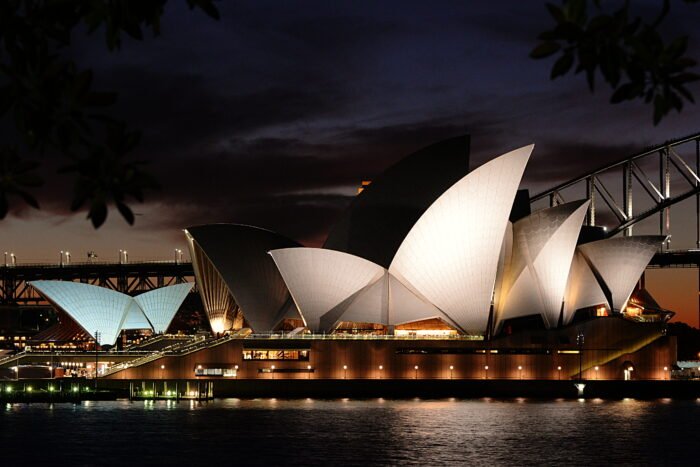
Sheridan is a heritage consultant, based in Sydney, Australia, trained in planning and architecture. She has worked for government, corporates and NGOs in cultural heritage management for more than 35 years, building extensive experience in developing practical, strategic outcomes for the future of heritage places- from the Eames House in Los Angeles to the Abraj Al Kuwait water towers in Kuwait.
Twentieth Century heritage advocacy is her specialist field of interest, publishing widely and contributing to the development and delivery of the ICOMOS international Heritage Alerts program and the Keeping It Modern program for the Getty Conservation Institute since 2014. She is currently an adviser and instructor for the GCI’s Modern Architecture Conservation course, first offered in 2023.
Sheridan is a founding president of the ICOMOS International Scientific Committee on Twentieth Century Heritage; and has served in many executive roles on the ICOMOS international Board, currently as its Advisory Committee Vice President. As a cultural heritage advisor for ICOMOS she has undertaken UNESCO World Heritage missions in Africa, Asia and the Americas.
Sheridan is an appointed expert member of several NSW Planning Panels and a former chair of the State Heritage Register Committee and deputy chair of the NSW Heritage Council. She is currently chair of the Eryldene Trust in Sydney, managing an historic house and garden through climate change challenges.
Sheridan has been a member of the Sydney Opera House Conservation Council for 16 years and also sits on its Design Advisory Panel, engaging with major projects from redrafting the site Conservation Plan to the recent capital works projects of the SOH’s Decade of Renewal -improving access to all public areas of the House , refurbishing the opera and concert halls, establishing the Centre for Creativity and integrating new venue, food and beverage opportunities as well as the recent update of the site’s Strategic Building Plan and development of its Heritage Action Plan.
EN/
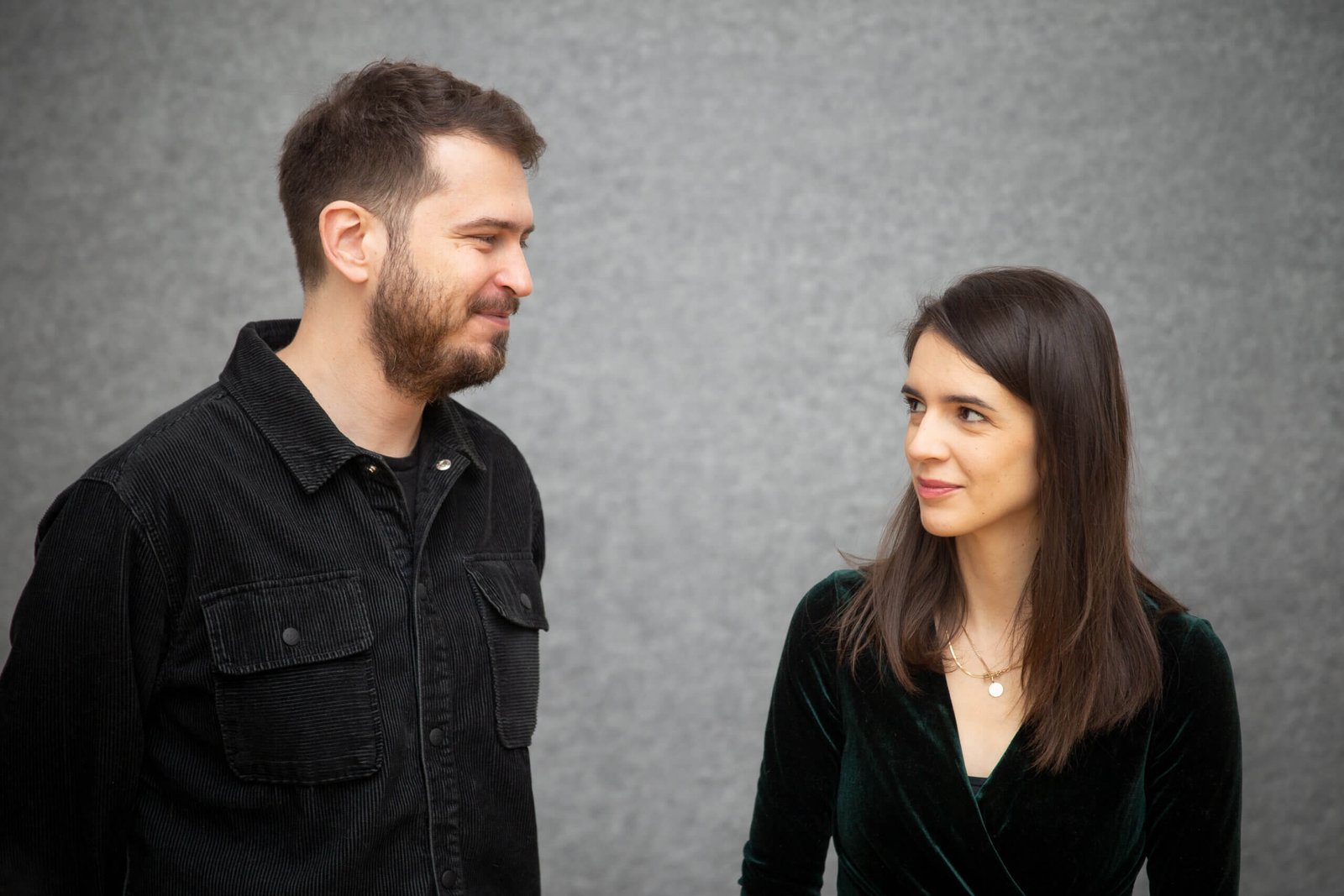
E+D are Ena Kukić and Dinko Jelečević, whose work in architecture explores existing spatial fragments of collective memory and creates new ones. They consider projects holistically, incorporating the existing context, historical backdrop, and the needs of the local community, with a primary focus on revitalizing and adapting typologies for collective use. Their accolades include the prestigious EU Mies Young Talent Award, finalist recognition at the Archiprix Biennale, two National Collegium Artisticum awards, and numerous prizes in public competitions.
Ena Kukić is an architectural designer and researcher based in Graz, Austria. She lectures at the Institute of Construction and Design Principles at Graz University of Technology, where she teaches design studios and model making. In her design studios, she focuses on typologies of exhibition and education, and her model-making course has centered on Yugoslav monuments over three consecutive years, investigating the architectural language of commemoration in a modernist context. Ena’s research, as a Ph.D. candidate at the Institute of Design and Building Typology at the same university, revolves around engaging with the spatial framework of collective memory, exploring the creation, transmission, and reflection of narratives juxtaposed with architectural backdrops. Born in 1990 in Sarajevo, Ena studied architecture in her hometown as well as in Barcelona and Graz, concentrating on architectural typologies and their contribution to the intergenerational transmission of memory. Her Master’s Thesis in memorial architecture (War Tunnel Museum in Sarajevo) won the 2018 Austrian GAD Award, and she was selected as a finalist at the Archiprix International Biennale 2019. She actively participates in public discourse on the interconnection of architecture and politics, frequently publishing articles and taking part in scientific events, most recently at Princeton University during the conference on Svetlana Kana Radević.
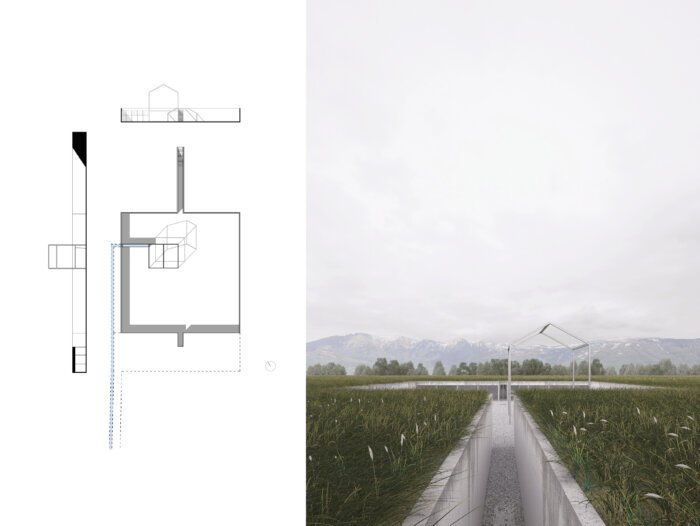
Dinko Jelečević is an architectural designer also based in Graz, Austria. He works as an architect in an office, currently developing a project for the liminal space of the city. Additionally, within his private practice, he has been creating architectural visualizations of unbuilt spaces for numerous international offices for the past five years. Born in 1990 in Zvornik, Bosnia and Herzegovina, Dinko studied architecture in Sarajevo, Barcelona, and Graz, simultaneously working as a freelance visual artist. His Master’s Thesis at Graz University of Technology (Vraca Forum in Sarajevo) won the 2023 EU Mies Young Talent Award, showcasing his interest in an adaptive reuse approach to existing structures.
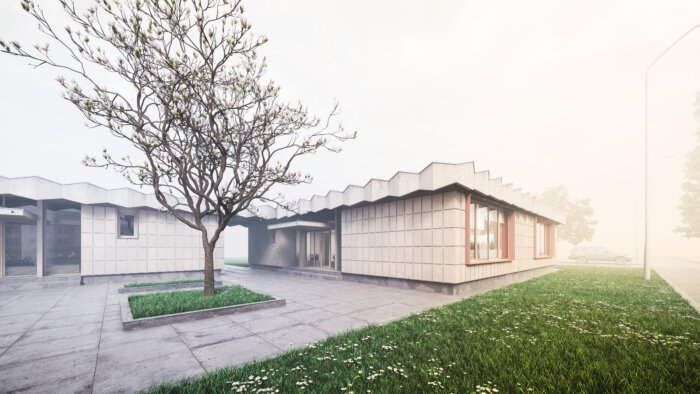
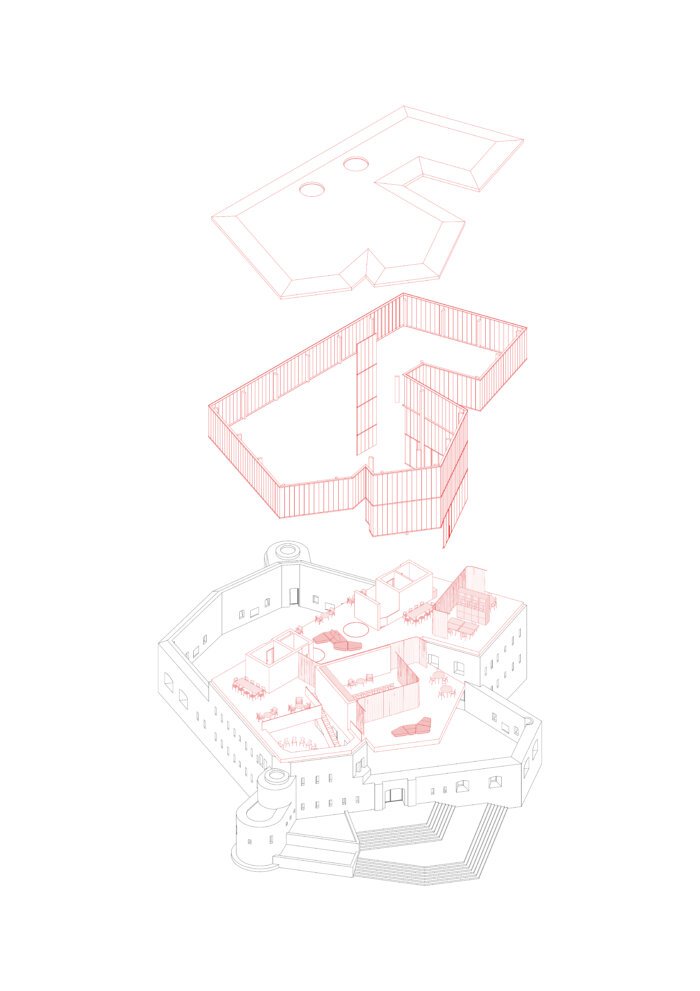
Ena and Dinko have developed several design proposals for the revitalization of industrial heritage in Bosnia and Herzegovina, winning the renowned national Collegium Artisticum Award for Best Newcomers in 2018 and Best Concept Design in 2019. The most significant project was the Center for Contemporary Culture KRAK in the northwest Bosnian town of Bihać, where a workers’ club from the Yugoslav era was transformed into a cultural hub, serving as an art hotspot in the Balkans. Other notable proposals include a memorial park in Sarajevo, the adaptive reuse of a water tower in Bihać, and a community center in Kirchbach.
Apart from design projects, they also engage in research, primarily focusing on specific places and objects throughout the Balkans. Important research projects include K67 Kiosks, the Alipašino Polje housing block in Sarajevo, and Yugoslav monuments.
AL/
E+D janë Ena Kukić dhe Dinko Jelečević, puna e të cilëve në arkitekturë eksploron fragmente ekzistuese hapësinore të kujtesës kolektive dhe krijon të reja. Ata i qasen projekteve në mënyrë holistike, duke përfshirë kontekstin ekzistues, sfondin historik dhe nevojat e komunitetit lokal, me fokus kryesor në rivitalizimin dhe adaptimin e tipologjive për përdorim kolektiv. Ndër vlerësimet e tyre përfshihen çmimi prestigjioz EU Mies Young Talent Award, përzgjedhja si finalistë në Archiprix Biennale, dy çmime kombëtare Collegium Artisticum, si dhe shumë çmime në konkurse publike.
Ena Kukić është arkitekte dhe hulumtuese me bazë në Graz, Austri. Ajo ligjëron në Institutin e Ndërtimit dhe Parimeve të Dizajnit në Universitetin Teknik të Graz-it, ku udhëheq studio dizajni dhe kurse të punimit të maketeve. Në studiot e saj të dizajnit fokusohet në tipologjitë e ekspozimit dhe edukimit, ndërsa kursi i maketimit për tre vite radhazi është përqendruar në monumentet jugosllave, duke hulumtuar gjuhën arkitektonike të përkujtimit në kontekstin modernist. Hulumtimi i Enës, si kandidate për doktoraturë në Institutin e Dizajnit dhe Tipologjisë së Ndërtimit në të njëjtin universitet, sillet rreth angazhimit me kornizën hapësinore të kujtesës kolektive, duke eksploruar krijimin, transmetimin dhe reflektimin e narrativave në raport me sfondet arkitektonike. E lindur në vitin 1990 në Sarajevë, Ena studioi arkitekturë në qytetin e saj të lindjes, si dhe në Barcelonë dhe Graz, duke u përqendruar në tipologjitë arkitektonike dhe kontributin e tyre në transmetimin ndërbrezor të kujtesës. Tema e saj e diplomës master në arkitekturën memoriale (Muzeu i Tunelit të Luftës në Sarajevë) fitoi Çmimin Austriak GAD 2018, ndërsa ajo u përzgjodh finaliste në Archiprix International Biennale 2019. Ajo merr pjesë aktive në diskursin publik mbi ndërlidhjen e arkitekturës dhe politikës, duke publikuar shpesh artikuj dhe duke marrë pjesë në aktivitete shkencore, së fundmi në Universitetin Princeton gjatë konferencës mbi Svetlana Kana Radević.
Dinko Jelečević është arkitekt me bazë gjithashtu në Graz, Austri. Ai punon si arkitekt në një zyrë, aktualisht duke zhvilluar një projekt që trajton hapësirat liminale të qytetit. Përveç kësaj, në praktikën e tij private, për pesë vitet e fundit ka krijuar vizualizime arkitektonike të hapësirave të papërfunduara për shumë zyra ndërkombëtare. I lindur në vitin 1990 në Zvornik, Bosnje dhe Hercegovinë, Dinko studioi arkitekturë në Sarajevë, Barcelonë dhe Graz, paralelisht duke punuar si artist vizual i pavarur. Tema e tij e diplomës master në Universitetin Teknik të Graz-it (Vraca Forum në Sarajevë) fitoi EU Mies Young Talent Award 2023, duke dëshmuar interesin e tij për qasjen e ripërdorimit adaptiv të strukturave ekzistuese.
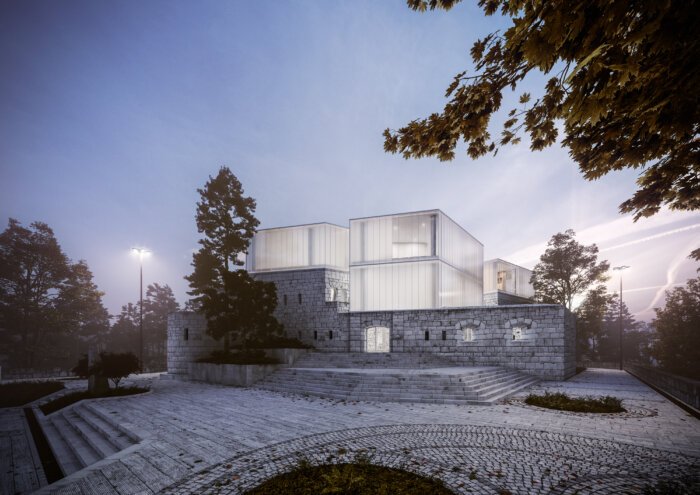
Ena dhe Dinko kanë zhvilluar disa propozime dizajni për rivitalizimin e trashëgimisë industriale në Bosnje dhe Hercegovinë, duke fituar çmimin e njohur kombëtar Collegium Artisticum për “Debutuesit më të mirë” në vitin 2018 dhe për “Konceptin më të mirë të dizajnit” në vitin 2019. Projekti më i rëndësishëm ishte Qendra për Kulturë Bashkëkohore KRAK në qytetin veriperëndimor boshnjak të Bihać-it, ku një klub punëtorësh i periudhës jugosllave u transformua në një qendër kulturore, duke shërbyer si pikë e rëndësishme arti në Ballkan. Propozime të tjera të rëndësishme përfshijnë një park memorial në Sarajevë, ripërdorimin adaptiv të një kulle uji në Bihać, si dhe një qendër komunitare në Kirchbach.
Përveç projekteve të dizajnit, ata angazhohen edhe në hulumtim, duke u fokusuar kryesisht në vende dhe objekte specifike në të gjithë Ballkanin. Projekte të rëndësishme kërkimore përfshijnë kioskat K67, bllokun e banimit Alipašino Polje në Sarajevë, si dhe monumentet jugosllave.
EN/
Alper Derinboğaz, Salon Alper Derinbogaz
Time and Place: 8PM, 7th of July, 2023, Kino Armata
Alper Derinbogaz is an architect and academic seeking communal relationships between the environment and spatial elements through scientific strategies. His experiments vary from installations to cultural projects, including the new City Museum nearing compilation. Derinboğaz leads one of “the best young architecture practices” Salon as listed by ArchDaily besides his studio in ITU.
Derinbogaz is a Fulbright Scholar and winner of the UCLA graduate award beside European “40 under 40”. His research has been exhibited in biennales and museums including the Koolhaas curated Venice Architecture Biennale in 2014 with his work Modalities of the Spontaneous, an in-depth study of the urban developments in relationship with geography. His projects won awards at international architecture competitions from Songdo Library in Korea to Kaunas Science Island in Lithuania. He was selected as one of the 40 top young architects in Europe and in Archdaily’s Best Young Practices. His works and research are recognized as “inventive” investigating the possibilities of the physical environment.
Salon, founded by Alper Derinbogaz, is an architectural practice focusing on continuities between humans, spaces, and the Earth. We produce designs and studies in the fields of architecture, art, interior design, and urbanism.
By focusing on research processes as the catalyst for an evolving engagement with the constructed world, we speculate on critical solutions for architecture.
Collaboration and openness are crucial to our work. We value ideas and criticism. The collaborative character of our design and research methods results in developing contemporary solutions for architectural, interior, and urban conditions. We value innovation, investigate contemporary programs, execute the latest fabrication technologies, and transform complex digital designs into buildings.
About the Lecture
Future Habitats
Geospaces traces relationships between topography, geology, genetics, ecologies, and construction technologies, arguing that a hybrid approach to making will shape our future habitats.
In this lecture, Derinboğaz will discuss the key ideas of his upcoming book “Geopaces” that raises the question, “What if we see buildings as iterations of nature rather than artificial objects?” This lecture will seek to find foundational ways to rethink and reshape the relationship between humans and our environment, looking at the emergence of natural forms, the history of human habitation, and the future of fabrication technologies.
Today, the established conception of architecture is based on a misguided hierarchy between nature and humans. While claiming to reinvent space in the past century, we have further reinforced the notion of buildings as stand-alone objects, raised above the environment. Deeper connections with the earth and nature through computational technologies can guide us in building a better future. Exceptional concepts can be generated from this in order to create architectural continuities. This pursuit of new tectonics evolves from the discovery of materialization and fabrication, which are at the core of our architectural research.
Through research of methods that aim to learn from on-site building, a bridge can be established between the over-classified phases of architectural production. Generating various methodologies specific to each project can lead to a radical streamlining of making architecture a part of the ecology again. As a manifestation of creating spaces in continuity with nature and earth, Alper Derinboğaz has been leading studios at the intersection of practice and research under the roof of ‘Geospaces’ since 2011.

AL/
Alper Derinboğaz, Salon Alper Derinbogaz
Koha dhe Vendi: 7 korrik, 2023, ora 20:00 ne Kino Armata
Alper Derinboğaz është një arkitekt dhe akademik që kërkon marrëdhënie ndërvepruese midis mjedisit dhe elementeve hapësinore përmes strategjive shkencore. Eksperimentet e tij variojnë nga instalacionet tek projektet kulturore, duke përfshirë Muzeun e ri të Qytetit në afërsi të përfundimit. Derinboğaz drejton një nga “praktikat më të mira të reja të arkitekturës” të quajtura Salon siç renditet nga ArchDaily, krahas studios së tij në ITU.
Salon, i themeluar nga Alper Derinboğaz, është një studio e arkitekturës që fokusohet në vazhdimësi midis njerëzve, hapësirave dhe Tokës. Ne prodhojmë dizajne dhe studime në fushat e arkitekturës, artit, dizajnit të brendshëm dhe urbanizmit. Duke u fokusuar në proceset kërkimore si katalizator për një angazhim në zhvillim me botën e ndërtuar, ne spekulojmë për zgjidhje kritike për arkitekturën. Bashkëpunimi dhe një “mendje e hapur” janë vendimtare për punën tonë. Ne vlerësojmë idetë dhe kritikat. Karakteri bashkëpunues i metodave tona të projektimit dhe kërkimit rezulton në zhvillimin e zgjidhjeve bashkëkohore për kushtet arkitekturore, të brendshme dhe urbane. Ne vlerësojmë inovacionin, hetojmë programet bashkëkohore, ekzekutojmë teknologjitë më të fundit të fabrikimit dhe transformojmë dizajne komplekse dixhitale në ndërtesa.

Rreth Ligjerates
Future Habitats
Gjeohapësirat gjurmojnë marrëdhëniet midis topografisë, gjeologjisë, gjenetikës, ekologjive dhe teknologjive të ndërtimit, duke argumentuar se një qasje hibride ndaj krijimit do të formësojë habitatet tona të ardhshme.
Në këtë leksion, Derinboğaz do të diskutojë idetë kryesore të librit të tij të ardhshëm “Geospaces” që shtron pyetjen, “Po sikur të shohim ndërtesat si përsëritje të natyrës dhe jo objekte artificiale?” Ky leksion do të kërkojë të gjejë mënyra themelore për të rimenduar dhe riformuar marrëdhëniet midis njerëzve dhe mjedisit tonë, duke parë shfaqjen e formave natyrore, historinë e banimit njerëzor dhe të ardhmen e teknologjive të fabrikimit.
Sot, koncepti i vendosur i arkitekturës bazohet në një hierarki të gabuar midis natyrës dhe njerëzve. Me pretendimin për të rishpikur hapësirën në shekullin e kaluar, ne kemi përforcuar më tej nocionin e ndërtesave si objekte të pavarura, të ngritura mbi mjedisin. Lidhjet e thella me tokën dhe natyrën përmes teknologjive llogaritëse mund të na udhëheqin në ndërtimin e një të ardhmeje më të mirë. Nga kjo mund të krijohen koncepte të jashtëzakonshme për të krijuar vazhdimësi arkitekturore. Ky kërkim i tektonikës së re evoluon nga zbulimi i materializimit dhe fabrikimit, të cilat janë në thelb të kërkimit tonë arkitektonik.
Nëpërmjet kërkimit të metodave që synojnë të marrin mësim nga ndërtimi në terren, mund të vendoset një urë ndërmjet fazave të mbiklasifikuara të prodhimit arkitekturor. Gjenerimi i metodologjive të ndryshme specifike për çdo projekt mund të çojë në një riorganizim radikal për ta bërë arkitekturën përsëri pjesë të ekologjisë. Si një manifestim i krijimit të hapësirave në vazhdimësi me natyrën dhe tokën, Alper Derinboğaz ka udhëhequr studiot në kryqëzimin e praktikës dhe kërkimit nën çatinë e ‘Geospaces’ që nga viti 2011.

EN/
Roland Krebs, superwien urbanism zt gmbh
Time and Place: 9PM, 7th of July 2023, Kino Armata
Roland Krebs is an urban planner and designer from Vienna (Austria) who develops strategic action plans for cities to tackle urban growth. Since 1999, he has gained international experience in urban planning and design projects in Latin America and the Caribbean, Central and South Asia, Central and Southeast Europe, and Africa. He studied urban and regional planning at the Vienna University of Technology (TU WIEN) and graduated in strategic management (MBA) at the Universidad de Belgrano (UB) in Argentina, before receiving a postgraduate degree at Universitat Oberta de Catalunya (UOC) in Barcelona (Spain) in cooperation with Oficina del Historiador de La Habana (Cuba). Roland is a member of the chambers of architects in Vienna and Berlin and is currently Lead Expert at URBACT, the European Union’s cities program. Roland teaches urban planning and design at the TU WIEN, the University of Art and Design in Linz, and the University of Applied Sciences FH Campus Architecture and Green Buildings in Vienna. He is a co-founder of superwien and board member of wonder- land—platform for European architecture.
Superwien is a studio for urbanism and sustainable architecture based in Vienna (Austria). The company, founded by Roland Krebs and Stefan Mayr in 2017, is dedicated to supporting public institutions in their search for sustainable urban projects. Superwien is experienced in participatory and dialogue-oriented planning techniques within the framework of metropolitan and regional development plans, urban strategy plans, and master plans, as well as public space and placemaking projects. As consultants to multilateral organizations such as the World Bank, Asian Development Bank, European Bank for Reconstruction and Development, Inter-American Development Bank, the United Nations Development Program, and URBACT, the studio provides support for urban strategies and master plans of emerging cities in Latin America and the Caribbean, Central and South Asia, Sub-Saharan Africa, and the Western Balkans. In Western Europe, superwien is working on urban design, urban planning, master planning, and metropolitan planning projects—with a sound track record of winning architecture and urban design competitions.
About the Lecture:
Future Public Spaces – Urban Design in Times of Crisis
What does it take to renew or articulate a public space? When we strive for integrated urban development, we must acknowledge that public spaces can play many roles. They can be places for transit, or places for economic activity, social encounter, recreation, and much more. They also provide essential opportunities for the integration of green and blue infrastructures, which are becoming increasingly important for climate change adaptation. Needs for public space, and the demands made on them, are diverse; moreover, they are very specific to the local spatial and social conditions in which people live. Hence action at the neighborhood level is critical; it should involve interaction and co-creation with local residents to find out what they actually need. At the beginning of the COVID-19 pandemic, superwien was commissioned to develop innovative designs for urban public spaces in three cities: Dhaka (Bangladesh), Maputo (Mozambique), and Santo Domingo (Dominican Republic). The main objective of this applied research (in cooperation with four academic partners) was to strengthen the capacity of local government to carry out participatory urban design projects.
Recently, the team of superwien also worked in Prishtina over the last year and designed a catalgoue of proposals for the city and how it could develop in the next ten year toward a climate-friendly and creatvie metropolis in the network of thriving cities in the Western Balkans. https://vimeo.com/780651429

AL/
Roland Krebs, superwien urbanism zt gmbh
Koha dhe Vendi: 21:00 7 Korrik 2023, Kino Armata
Roland Krebs është një planifikues dhe projektues urban nga Vjena (Austri) i cili zhvillon plane zbatuese strategjike për qytetet për të trajtuar rritjen urbane. Që nga viti 1999, ai ka fituar përvojë ndërkombëtare në projektet e planifikimit dhe projektimit urban në Amerikën Latine dhe Karaibe, Azinë Qendrore dhe Jugore, Evropën Qendrore dhe Juglindore dhe Afrikë. Ka studiuar planifikimin urban dhe rajonal në Universitetin e Teknologjisë të Vjenës (TU WIEN) dhe u diplomua në menaxhim strategjik (MBA) në Universitetin Belgrano (UB) në Argjentinë, përpara se të merrte një diplomë pasuniversitare në Universitetin Oberta de Catalunya (UOC) në Barcelonë (Spanjë) në bashkëpunim me Oficina del Historiador de La Habana (Kubë). Roland është anëtar i dhomave të arkitektëve në Vjenë dhe Berlin dhe aktualisht është Ekspert Kryesor në URBACT, programi i qyteteve të Bashkimit Evropian. Roland jep mësime për planifikimin dhe dizajnin urban në TU WIEN, në Universitetin e Artit dhe Dizajnit në Linz dhe në Universitetin e Shkencave të Aplikuara FH Arkitekturë në Kampusin dhe Ndërtesat e Gjelbërta në Vjenë. Ai është një bashkëthemelues i superwien dhe anëtar bordi i platformës së tokës së mrekullive për arkitekturën evropiane.
Superwien është një studio për urbanizëm dhe arkitekturë të qëndrueshme me qendër në Vjenë (Austri). Kompania, e themeluar nga Roland Krebs dhe Stefan Mayr në 2017, është e përkushtuar për të mbështetur institucionet publike në kërkimin e tyre për projekte të qëndrueshme urbane. Superwien ka përvojë në teknikat e planifikimit me pjesëmarrje dhe të orientuar drejt dialogut brenda kuadrit të planeve të zhvillimit metropolitan dhe rajonal, planeve strategjike urbane dhe masterplaneve, si dhe projekteve të hapësirës publike dhe krijimit të vendeve. Si konsulentë të organizatave shumëpalëshe si Banka Botërore, Banka Aziatike për Zhvillim, Banka Evropiane për Rindërtim dhe Zhvillim, Banka Ndër- Amerikane për Zhvillim, Programi i Kombeve të Bashkuara për Zhvillim dhe URBACT, studio ofron mbështetje për strategjitë urbane dhe masterplanet e qyteteve në zhvillim në Amerikën Latine dhe Karaibe, Azinë Qendrore dhe Jugore, Afrikën Sub-Sahariane dhe Ballkanin Perëndimor. Në Evropën Perëndimore, superwien po punon për dizajn urban, planifikimit urban, masterplanit dhe planifikimit metropolitane – me një histori të shëndoshë të konkurseve fituese të arkitekturës dhe dizajnit urban.
Rreth Ligjëratës
Hapësirat publike të së ardhmes – Dizajni Urban në kohë krize
Çfarë nevojitet për të rinovuar apo artikuluar një hapësirë publike? Kur përpiqemi për zhvillim urban të integruar, duhet të pranojmë që hapësirat publike mund të luajnë shumë role. Ato mund të jenë vende për tranzit, ose vende për aktivitet ekonomik, takime shoqërore, rekreacion dhe shumë më tepër. Ato ofrojnë gjithashtu mundësi esenciale për integrimin e infrastrukturave te gjelbërta dhe të kaltërta, të cilat po bëhen gjithnjë e më të rëndësishme për përshtatjen ndaj ndryshimeve klimatike. Nevojat për hapësirë publike dhe kërkesat e bëra ndaj tyre janë të ndryshme; për më tepër, ato janë shumë specifike për kushtet lokale hapësinore dhe sociale në të cilat jetojnë njerëzit. Prandaj, veprimi në nivelin e lagjes është kritik; ai duhet të përfshijë ndërveprim dhe bashkë-krijim me banorët vendas për të zbuluar se çfarë kanë në të vërtetë nevojë. Në fillim të pandemisë COVID-19, superwien u angazhua të zhvillonte dizajne inovative për hapësirat publike urbane në tre qytete: Dhaka (Bangladesh), Maputo (Mozambik) dhe Santo Domingo (Republika Domenikane). Objektivi kryesor i këtij hulumtimi (në bashkëpunim me
katër partnerë akademikë) ishte për të forcuar kapacitetin e qeverisjes vendore për të realizuar projekte të dizajnit urban pjesmarës.
Kohët e fundit, ekipi i superwien punoi gjithashtu në Prishtinë gjatë vitit të kaluar dhe hartoi një katalog propozimesh për qytetin dhe se si ai mund të zhvillohet në dhjetë vitet e ardhshme drejt një metropoli miqësor ndaj klimës dhe në rrjetin e qyteteve të lulëzuara në Ballkanin Perëndimor.


EN/
Poliksen Qorri-Dragaj & Hamdi Qorri
Time and Place: 8PM, 7th of July 2023, Kino Armata
Poliksen Qorri-Dragaj is an urban planner and research assistant at the Chair of Urban Planning at the RPTU Kaiserslautern-Landau, Germany. She studied architecture with specialization in urban planning at the Karlsruhe Institute of Technology. After graduating her studies in 2014, she worked as an urban planner at the planning office berchtoldkrass in Karlsruhe.
Her teaching focuses on urban design with an emphasis on urban climate adaptation, resilient urban development and mobility. As part of her PhD, she is researching the spatial effects of war and migration in Kosovar cities. Poliksen Qorri-Dragaj is currently participating in the research project “ReConstructionModules and Integrated Urban Development Ukraine” of RPTU Kaiserslautern-Landau, BTU Cottbus, TH Lübeck and TU Berlin, which is funded by the German Academic Exchange Service (DAAD). It offers teaching and exchange formats on topics related to the reconstruction of destroyed Ukrainian cities.
As an urban planner, her work ranges from classical framework planning and development concepts to mission statement development, interdisciplinary urban climate adaptation planning and overarching spatial analyses. Among others, Poliksen Qorri-Dragaj has led the following selected projects for berchtoldkrass:
Klimaanpassungskonzept / Climate Adaptation Concept, Freiburg im Breisgau: Due to its geographical location in the Upper Rhine Graben, the city of Freiburg i. Br. is one of the places with the highest average temperatures in Germany and is already feeling the effects of climate change on the well-being and health of its inhabitants. In order to actively and proactively counteract the future significantly increasing pressures, the climate adaptation concept was developed. The project was awarded in the “Climate Adaptation” category at the “Climate-Active Municipalities 2019” competition organized by the Federal Ministry for the Environment and the German Institute of Urban Affairs. It is nominated for the German Urban Development Prize 2023 in the category “Special Prize – Shaping Climate Change”, announced by the German Academy for Urban Development and Regional Planning (DASL)
Entwicklungsperspektive / Spatial development perspective Winterthur 2040: In recent years, the City of Winterthur has focused on carrying out long-term planning for areas with high pressure to act. The urban planning model shows how the city of Winterthur can develop sustainably by 2040. Future challenges for the city will be identified and the corresponding scope for development explored.
Mission Statement Baiersbronn Unterdorf: The project is accompanied by a broad public participation. The basic framework of the concept consists of three components: a “guideline” with the principles for the development, a “plan” for the concretization of the measures and a “script” for the presentation of the process. In the various projects Poliksen Qorri-Dragaj develops visualization strategies to represent urban planning concepts in digital and analog form.
About the Lecture
RKS² | TRANSCENDENT LOCALITY
Up to the present day, migration plays a significant role in the social development of Kosovo. It manifests itself in different forms, which differ in motives, manner and duration. The exhibition deals with a special form of migration, which illustrates that the migratory process is not completed with the simple move to another country. It often takes place in different phases, some of which end in a return to the home country. This return can be temporary, seasonal or permanent, but what they all have in common is that they ensure that connections and networks of different kinds are created between the homeland and the hostland. This form of migration can be described with the concept of translocality, a model of life that is becoming more and more prevalent – people living in multiple places at the same time, maintaining connections between hostland and homeland through communication, transfer of knowledge, information, material and immaterial goods.
In the course of the tense political situation and an ever-worsening marginalization of the Albanian population during the breakdown of the Yugoslavian Republic, hundreds of thousands of people sought refuge and protection abroad. In some cases, this flight would often last for decades without return.
During this conflict- and war-related migration wave in the late 1980s to the late 1990s, people fleeing found temporary arrival mostly in OECD countries, regulated in the form of a residence permit as politically persecuted persons. This legal status did not provide for a return to the homeland as long as the reason for flight had not been resolved and lifted. For many refugees, this represented a state of waiting and lingering, because the reason for migration was not a self-determined one – on the contrary, it was violently imposed from the outside.
The perceived locality of this migration group is the starting point for a spatial-philosophical narrative: transcendent locality. The concept of transcendence is variously described and defined from ancient to contemporary philosophy. Common to all meanings is that transcendence implies the process of crossing a boundary that separates two fundamentally different spheres.
For the individuals living in migration, the circumstance of not being able to return to their homeland for an indefinite period represented a deep caesura in their lives. On the one hand, the migrated individuals were physically present in the hostlands. superficially managing their everyday life and functioning in their new environment. But on the other hand, the emotional presence was a different matter: due to the conflict, attention and thoughts revolved around the abandoned homeland, fears and insecurities often did not allow the individuals to arrive in the hostland. They were located in an intermediate state between the physical present and the abandoned before. In this state, boundaries between the immanent being in the present and the transcendent being in the mind blur – the migrated individual is in a transcendent locality.
This project explores the impact of transcendent locality on immanent space in the short and long term: how the return of migrants after the war has affected Kosovar cities and how the social migration networks, which developed in the hostlands, impact on urban space in the form of translocal urbanism. It opens discussions on how urban planning can respond to these specific conditions in order to create urban resilience and liveable cities.
//
The installation serves as a metaphor for the idea of transcendence – the physical representation of a subjective state. It consists of an outer and an inner frame made of aluminium, in the middle of which a further frame made of neon tubes is located. All of these are multiplied horizontally.
Fragments
The installation is modularly assembled from individual parts. In the context of the project, this is how the transcendent locality is also composed. Individual fragments of memories and stories from the homeland are complemented by new impressions and experiences in the hostland and embed the transcendent locality in it. Memories and new impressions mean that this place is subject to a constant dynamic and never reaches a final state.
In between
Through migration, the center of life is left behind and, with increasing time, is supplemented by a second home in the hostland – this can be seen as a gain. Translocality, however, also strengthens the state of being in between.
The exterior and interior frames pick up on this motif as fixed constructions, in which the feeling of being in between is picked up by the neon.
Multiplication
The subjective confrontation and reflection with one’s own transcendent and immanent location in the context of migration is repeated again and again and becomes a constant companion.
The installation as a physical construct and as a metaphor depends very much on the individual perspective. Viewed from a distance, fragments, layers and spaces in between result in a coherent picture and, conversely, dissolve into their individual parts with increasing proximity – similar to the transcendent locality, which transforms into translocality and no longer lets people leave the intermediate state of proximity and distance between two places of being at home.

AL/
Poliksen Qorri-Dragaj & Hamdi Qorri
Koha dhe Vendi: 8 Korrik 2023, nga ora 20:00 ne Kino Armata
Poliksen Qorri Dragaj është urbaniste dhe asistente kërkimore në Katedrën e Planifikimit Urban në RPTU Kaiserslautern-Landau, Gjermani. Ajo ka studiuar arkitekturë me specializim në planifikim urban në Institutin e Teknologjisë në Karlsruhe. Pas diplomimit të studimeve në vitin 2014, ajo punoi si planifikuese urbane në zyrën e planifikimit berchtoldkrass në Karlsruhe.
Mësimdhënia e saj fokusohet në dizajnin urban me një theks në përshtatjen e klimës urbane, zhvillimin urban resilient dhe mobilitetit. Si pjesë e doktoratës së saj, ajo është duke hulumtuar efektet hapësinore të luftës dhe migrimit në qytetet kosovare. Poliksen Qorri-Dragaj aktualisht po merr pjesë në projektin kërkimor “ReConstructionModules and Integrated Urban Development Ukraine” të RPTU Kaiserslautern-Landau, BTU Cottbus, TH Lübeck dhe TU Berlin, i cili financohet nga Shërbimi Gjerman i Shkëmbimeve Akademike (DAAD). Ai ofron formate mësimore dhe shkëmbimi për tema që lidhen me rindërtimin e qyteteve të shkatërruara të Ukrainës.
Si një planifikuese urbane, puna e saj varion nga konceptet e planifikimit dhe zhvillimit klasik deri te zhvillimi i koncepteve urbane, planifikimi ndërdisiplinor i përshtatjes së klimës urbane dhe analizat gjithëpërfshirëse hapësinore. Ndër të tjera, Poliksen Qorri-Dragaj ka udhëhequr projektet e mëposhtme të përzgjedhura për berchtoldkrass:
Klimaanpassungskonzept / Koncepti i Përshtatjes Klimatike, Freiburg im Breisgau: Për shkak të vendndodhjes së tij gjeografike në Rhine Graben të Epërm, qyteti i Freiburg i. Br. është një nga vendet me temperaturat mesatare më të larta në Gjermani dhe tashmë po ndjen efektet e ndryshimeve klimatike në mirëqenien dhe shëndetin e banorëve të saj. Për të kundërshtuar në mënyrë aktive dhe proaktive presionet në rritje të konsiderueshme në të ardhmen, u zhvillua koncepti i përshtatjes klimatike. Projekti u vlerësua në kategorinë “Përshtatja klimatike” në konkursin “Bashkitë Aktive në Klimë 2019” organizuar nga Ministria Federale për Mjedisin dhe Instituti Gjerman i Çështjeve Urbane. Është nominuar për Çmimin Gjerman për Zhvillimin Urban 2023 në kategorinë “Çmimi Special – Formësimi i Ndryshimeve Klimatike”, shpallur nga Akademia Gjermane për Zhvillim Urban dhe Planifikim Rajonal (DASL)
Entwicklungsperspektive / Perspektiva e zhvillimit hapësinor Winterthur 2040: Në vitet e fundit, qyteti i Winterthur-it është fokusuar në kryerjen e planifikimit afatgjatë për zonat me presion të lartë për të vepruar. Modeli i planifikimit urban tregon se si qyteti i Winterthur-it mund të zhvillohet në mënyrë të qëndrueshme deri në vitin 2040. Sfidat e ardhshme për qytetin do të identifikohen dhe do të eksplorohet hapësira përkatëse për zhvillim.
Deklarata e Misionit Baiersbronn Unterdorf: Projekti shoqërohet nga një pjesëmarrje e gjerë publike. Kuadri bazë i konceptit përbëhet nga tre komponentë: një “udhëzues” me parimet e zhvillimit, një “plan” për konkretizimin e masave dhe një “skrip” për paraqitjen e procesit. Në projektet e ndryshme Poliksen Qorri-Dragaj zhvillon strategji vizualizimi për të përfaqësuar konceptet e planifikimit urban në formë dixhitale dhe analoge.
Rreth Ligjerates
Deri më sot, migrimi ka pasur rol të rëndësishëm në zhvillimin social të Kosovës. Manifestohet në forma të ndryshme, të cilat dallojnë për kah motivet, mënyra dhe kohëzgjatja. Ekspozita trajton një formë të veçantë të migrimit, e cila ilustron se procesi i migrimit nuk përfundon me shpërnguljen e thjeshtë në një vend tjetër. Shpesh zhvillohet në faza të ndryshme, disa prej të cilave përfundojnë me kthimin në vendlindje. Ky kthim mund të jetë i përkohshëm, sezonal ose i përhershëm, por e përbashkëta e tyre është se ato bëjnë të mundur krijimin e lidhjeve dhe rrjeteve të llojeve të ndryshme midis vendlindjes dhe vendit emigrues. Kjo formë migrimi mund të përshkruhet me konceptin e translokalitetit, një model jete që po bëhet gjithnjë e më i përhapur – njerëzit që jetojnë në shumë vende në të njëjtën kohë, duke ruajtur lidhjet midis vendlindjes dhe vendit emigrues përmes komunikimit, transferimit të njohurive, informacionit, të mirave materiale dhe jomateriale.
Në rrjedhën e situatës së tensionuar politike dhe një margjinalizimi të përkeqësuar të popullsisë shqiptare gjatë shpërbërjes së Republikës Jugosllave, qindra mijëra njerëz kërkuan strehim dhe mbrojtje jashtë vendit. Në disa raste, kjo ikje shpesh do të zgjaste për dekada pa kthim.
Gjatë kësaj vale të migrimit për shkak të konfliktit dhe luftës në fund të viteve ‘80 deri në fund të viteve ‘90, njerëzit që iknin gjetën strehim të përkoshëm kryesisht në vendet e OBZE-së, të rregulluar në formën e një leje qëndrimi si persona të përndjekur politikë. Ky status ligjor nuk parashihte kthim në vendlindje për sa kohë nuk i ishte dhënë zgjdihje dhe fund arsyes së ikjes. Për shumë refugjatë, kjo përfaqësonte një gjendje pritjeje dhe ngecjeje, sepse arsyeja e migrimit nuk ishte nga vetëdëshira– përkundrazi, ajo ishte e imponuar me dhunë nga jashtë.
Lokaliteti i perceptuar i këtij grupi migrues është pikënisja për një narrativë hapësinore-filozofike: lokalitet transcendent. Koncepti i transcendencës përshkruhet dhe përkufizohet në mënyra të ndryshme që nga filozofia e lashtë e deri në atë bashkëkohore. E përbashkët për të gjitha kuptimet është se transcendenca nënkupton procesin e kapërcimit të një kufiri që ndan dy sfera thelbësisht të ndryshme.
Për individët që jetonin në migrim, rrethana e moskthimit në vendlindje për një periudhë të pacaktuar përfaqësonte një cezurë të thellë në jetën e tyre. Nga njëra anë, individët e që migronin ishin fizikisht të pranishëm në vendet emigruese, duke menaxhuar në mënyrë sipërfaqësore jetën e tyre të përditshme dhe funksionimin në mjedisin e tyre të ri. Por nga ana tjetër, prania emocionale ishte një çështje tjetër: për shkak të konfliktit, vëmendjes dhe mendimeve që silleshin rreth vendlindjes së braktisur, frika dhe pasiguritë shpesh nuk i lejonin individët të arrinin në vendet e huaja. Ata ndodheshin në një gjendje të ndërmjetme midis të tashmes fizike dhe asaj të braktisur më parë. Në këtë gjendje, kufijtë midis qenies imanente në të tashmen dhe qenies transcendente në mendje mjegullohen – individi migrues e gjenë veten në një lokalitet transcendent.
Ky projekt hulumton ndikimin e lokalitetit transcendent në hapësirën imanente në periudhën afatshkurtër dhe afatgjatë: si ka ndikuar kthimi i migrantëve pas luftës në qytetet kosovare dhe si rrjetet sociale të migrimit, të cilat u zhvilluan në vendet emigruese, ndikojnë në hapësirën urbane në formën e urbanizmit translokal. Ai hap diskutime se si planifikimi urban mund t’i përgjigjet këtyre kushteve specifike në mënyrë që të krijojë qëndrueshmëri urbane dhe qytete të jetueshme.

Instalacioni shërben si një metaforë për idenë transcendente – paraqitjen fizike të një gjendjeje subjektive. Ai përbëhet nga një kornizë e jashtme dhe e brendshme prej alumini, në mes të së cilës ndodhet një kornizë e mëtejshme e bërë nga tuba neoni. Të gjitha këto shumëzohen horizontalisht.
Fragmente
Instalacioni është montuar në mënyrë modulare nga pjesë të veçanta. Në kuadër të projektit, kështu është i përbërë edhe lokaliteti transcendent. Fragmente të veçanta kujtimesh dhe tregimesh nga vendlindja plotësohen me përshtypje dhe përjetime të reja në vendet emigruese dhe ngulitin lokalitetin transcendent në të. Kujtimet dhe përshtypjet e reja nënkuptojnë se ky vend i nënshtrohet një dinamike të vazhdueshme dhe nuk arrin kurrë një gjendje përfundimtare.
Në mes
Nëpërmjet migrimit, pjesa qëndrore e jetës lihet pas dhe, me kalimin e kohës, ajo plotësohet nga një shtëpi e dytë në vendin emigrues – kjo mund të shihet si gjë e dobishme. Translokaliteti, megjithatë, forcon njëtrajtshëm gjendjen e të qenit në mes.
Kornizat e jashtme dhe të brendshme i trajtojnë këto motive si konstruksione të fiksuara, në të cilat ndjesia e të qenit në mes vërehet nga neoni.
Shumëzimi
Përballja dhe reflektimi subjektiv me vendndodhjen e vet transcendente dhe imanente në kontekstin e migrimit përsëritet dhe bëhet një bashkëudhëtar i vazhdueshëm.
Instalacioni si konstrukt fizik dhe si metaforë varet shumë nga këndvështrimi individual. Shikuar nga larg, fragmentet, shtresat dhe hapësirat në mes rezultojnë në një pamje koherente dhe, në mënyrë të kundërt, shkrihen në pjesët e tyre individuale duke rritur afërsinë – e ngjashme me lokalitetin transcendent, i cili shndërrohet në translokalitet dhe nuk i lë më njerëzit të largohen nga gjendja e ndërmjetme e afërsisë dhe distancës midis dy vendeve të të qenit në shtëpi.

Ana Gallego, IAAC Barcelona
Time and Place: 7PM, 8th of July, Kino Armata
Ana Gallego is an architectural, urban designer and researcher at Urban Science Lab at IAAC, Institute for Advanced Architecture of Catalonia, carrying out innovative and sustainable projects at different scales. Her work has been selected, among other institutions, by the New European Bauhaus, the Mostra di Architettura di Venezia, MODEL. Festival de Arquitecturas and Barcelona Architecture Week. She has also collaborated with different European universities giving lectures on urban design. She is currently collaborating with various European institutions such as the Kosovo Foundation of Architecture, the Timisoara Architecture Biennale, among other educational institutes. She previously worked in different architectural and urban planning firms such AMB. Metropolitan Area of Barcelona, Miralles Tagliabue EMBT, Sol89 Arquitectos or Pargade Architectes.
About the Lecture
Many European cities have collapsed during the last decade; due to the densification of the population in large urban centers, cities have not been prepared to assimilate the changes brought about by the 21st century and its new needs. This densification has made urban space one of the main challenges of contemporary cities. Public space, or the elements of urban communication and relationship, the areas where human interaction occurs, have regained great importance, especially since the post-pandemic times, when we understood how it can affect the human being not to enjoy these spaces on a recurrent basis.
Due to this densification, where housing has crowded many of the spaces in the city, public spaces have been relegated to the background, in some cases, disappearing from our cities and thus changing the way we relate to each other. The lack of these public spaces has made it essential to take advantage of these areas in order to respond to the social needs and welfare of the entire population.
How can we improve these spaces to make them a source of health and well-being for citizens? How can we re—adapt this spaces to the climate crisis we are currently experimenting and will be increased in the following years? The following research makes an analysis of the urban voids of Prishtina and finds in these areas a new opportunity to create new focal points of health and well-being. The research begins by reviewing the importance of public space within the city and how it has been losing space over the years. It focuses on the importance of public space as a generator of public health for the whole society, analyzing the different components that are part of this concept and delves into neuroarchitecture, a discipline that also includes the perception of the human being in urban design for better implementation of solutions.
Following this theoretical framework, the research analyzes the city of Prishtina from the perspective of healthy cities and focuses on the study of its urban voids, which it catalogs and studies in detail. Additionally, in response to this research, a catalog of possible solutions and recent case studies are created to implement and bring to life these new public spaces in the city, addressing both the social point of view and the climate change that is already a reality today. The methodology followed in this research explores different points of view such as salutogenesis, neuroarchitecture and Urban data, generating new geographic information in GIS. As a final part of the research, a design workshop will be held with the students of the Prishtina Architecture faculty, where a specific prototype will be implemented, drawing from the solutions presented in this paper.

AL/
Ana Gallego, IAAC Barcelona
Koha dhe Vendi: 8 Korrik 2023, ora 19:00 në Kino Armata
Ana Gallego është një arkitekte, dizajnere urbane dhe hulumtuese në Urban Science Lab në IAAC, Instituti për Arkitekturë të Avancuar të Katalonisë, duke kryer projekte innovative dhe të qëndrueshme në shkallë të ndryshme. Puna e saj është përzgjedhur, ndaj institucioneve tjera, nga Bauhaus-i ri Evropian, Mostra di Architettura di Venezia, MODEL, Festivali i Arquitecturas dhe Java e Arkitekturës në Barcelonë. Ajo gjithashtu ka bashkëpunuar me Universitete të ndryshme Evropiane duke dhënë leksione mbi dizajnin urban. Ajo aktualisht është duke bashkëpunuar me institucione të ndryshme Evropiane si Fondacioni Kosovar i Arkitekturës, Bienalen e Arkitekturës Timisoara, ndër institute të tjera arsimore. Ajo ka punuar më parë në firma të ndryshme arkitektonike dhe urbanistike si AMB. Zona Metropolitane e Barcelonës, Miralles Tagliabue EMBT, Sol89 Arquitectos ose Pargade Architectes.
Rreth ligjëratës
Shumë qytete evropiane janë shkatërruar gjatë dekadës së fundit; për shkak të densifikimit të popullsisë në qendrat e mëdha urbane, qytetet nuk janë përgatitur për të asimiluar ndryshimet që solli shekulli XXI dhe kërkesat e reja.
Ky dendësim e ka bërë hapësirën urbane një nga sfidat kryesore të qyteteve bashkëkohore. Hapësira publike, apo elementët e komunikimit dhe marrëdhënieve urbane, zonat ku njerëzit ndërveprojnë, kanë rifituar një rëndësi të madhe, veçanërisht që nga koha e paspandemisë, kur u kuptua se si mund të ndikojë tek njeriu nëse nuk ka mundësinë të i shijojë këto hapësira.
Për shkak të këtij densifikimi, gjatë së cilës banesat kanë mbushur shumë nga hapësirat e qytetit, hapësirat publike janë lënë në plan të dytë, në disa raste duke u zhdukur nga qytetet tona dhe duke ndryshuar kështu mënyrën e marrëdhënieve mes njëri-tjetrit. Mungesa e këtyre hapësirave publike e ka bërë të domosdoshme shfrytëzimin e këtyre zonave për t’iu përgjigjur nevojave sociale dhe mirëqenies së të gjithë popullsisë.
Si mund t’i përmirësojmë këto hapësira për t’i bërë ato burim të shëndetit dhe mirëqenies për qytetarët? Si mund t’i ripërshtatim këto hapësira me krizën klimatike që po eksperimentojmë aktualisht, e cila do të rritet në vitet në vijim? Hulumtimi në vijim bën një analizë të zbrazëtirave urbane të Prishtinës dhe gjen në këto zona një mundësi të re për të krijuar pika të reja fokale të shëndetit dhe mirëqenies.
Hulumtimi fillon duke rishikuar rëndësinë e hapësirës publike brenda qytetit dhe se si janë zvogëluar këto hapësira gjatë viteve. Ai fokusohet në rëndësinë e hapësirës publike si një gjenerues i shëndetit publik për të gjithë shoqërinë, duke analizuar komponentët e ndryshëm që janë pjesë e këtij koncepti dhe thellohet në neuroarkitekturë, një disiplinë që përfshin edhe perceptimin e qenies njerëzore në dizajnin urban, për zbatim më të mire të zgjidhjeve.
Në vijim të kësaj kornize teorike, hulumtimi analizon qytetin e Prishtinës nga këndvështrimi i qyteteve të shëndosha dhe fokusohet në studimin e zbrazëtirave urbane, të cilat katalogohen dhe studiohen në detaje. Për më tepër, në përgjigje të këtij hulumtimi, është krijuar një katalog i zgjidhjeve të mundshme dhe studimeve të rasteve të fundit që mund të zbatohen për të sjellë në jetë këto hapësira të reja publike në qytet, duke adresuar si këndvështrimin social, ashtu edhe ndryshimin klimatik që tashmë është një realitet. Metodologjia e ndjekur në këtë hulumtim eksploron këndvështrime të ndryshme si salutogenesis, neuroarkitekturë dhe të dhëna urbane, duke gjeneruar informacione të reja gjeografik në GIS. Si pjesë e fundit e hulumtimit, do të mbahet një punëtori e dizajnit me studentët e Fakultetit të Arkitekturës në Prishtinë, ku do të zbatohet një prototip specifik, duke u nxjerrë nga zgjidhjet e paraqitura në këtë punim.

EN/
Adam Nathaniel Furman
Time and Place: 9PM, 6th of July 2023, Kino Armata
Adam is a British artist & designer of Argentine & Japanese heritage based in London. Trained in architecture, Adam’s atelier works in spatial design and art of all scales from video and prints to large public artworks, architecturally integrated ornament, as well as products, furniture, interiors, publishing and academia.
Adam’s work has been exhibited in London, Paris, New York, Milan, Melbourne, Rome, Tel Aviv, Mumbai, Vienna & Basel, amongst other places, is held in the collections of the Design Museum, the Sir John Soane’s Museum, the Carnegie Museum of Art, the National Gallery of Victoria, the Abet Museum, & the Architectural Association, and has been published widely.
The atelier has completed, and ongoing projects both internationally (Europe, the US, S America, the Middle East, East Asia) and in the UK. Adam has lectured at the RIBA, Harvard GSD, UC Berkeley, the Carnegie Museum of Art, the Vitra Design Museum & the Casa dell’Architettura Rome, amongst others, has taught courses at several universities as well as having been Studio Master of Productive Exuberance at Central St Martins in London, is co-director of Saturated Space at the AA (an influential research group on colour in Urbanism and Architecture), is a published author, a vocal advocate for diversity and representation in architecture, urbanism and design, and has been a judge for the Dezeen and FRAME awards, amongst others.
About the Lecture
Adam will be exploring themes that did not fit within mainstream architectural culture, coming from queer and multi-ethnic sources, Adam reflects back on a career journey that has tested the openness of the profession and its educational and awards structures to extreme differences in approach and taste.

AL/
Adam Nathaniel Furman
Koha dhe Vendi: 6 Korrik 2023, nga ora 21:00 ne Kino Armata
Adam Nathaniel Furman
Adam është një artist dhe dizajner britanik me origjinë argjentinase dhe japoneze me studio në Londër. Trajnuar në arkitekturë, atelieja e Adamit punon në dizajnin hapësinor dhe artin e të gjitha përmasave, nga video dhe printime deri te veprat e mëdha të artit publik, stolitë e integruara arkitekturisht, si dhe produkte, mobilje, ambiente të brendshme, botime dhe akademi.
Puna e Adamit është ekspozuar në Londër, Paris, Nju Jork, Milano, Melburn, Romë, Tel Aviv, Mumbai, Vjenë dhe Bazel, ndër të tjera, është shfaqur edhe në koleksionet e Muzeut të Dizajnit, Muzeut të Sir John Soane, Muzeu i Artit Carnegie, Galeria Kombëtare e Viktorias, Muzeu Abet, Shoqata Arkitekturore dhe është botuar botërisht.
Atelieja ka projekte në vazhdimësi dhe disa të realizuara në mbarë botën (Evropë, SHBA, Amerika Jugore, Lindja e Mesme, Azia Lindore) dhe në Mbretërinë e Bashkuar. Adam ka dhënë leksione në RIBA, Harvard GSD, UC Berkeley, Muzeu i Artit Carnegie, Muzeu i Dizajnit Vitra dhe Casa dell’Architettura në Romë, ndër të tjera, ka ligjëruar kurse në disa universitete, si dhe ka qenë Drejtues në Studion e Eksuberancës Produktive në Central St. Martins në Londër, është bashkëdrejtor i Saturated Space në AA (një grup kërkimor me ndikim mbi ngjyrat në Urbanizëm dhe Arkitekturë), është një autor i botuar, një avokat i zëshëm për diversitetin dhe përfaqësimin në arkitekturë, urbanizëm dhe dizajn, dhe ka qenë gjyqtar për çmimet Dezeen dhe FRAME, ndër të tjera.
Adami do të eksplorojë tema që nuk përshtaten me kulturën arkitekturore të zakonshme, që vijnë nga burime të çuditshme dhe shumë-etnike, Adami reflekton përsëri në një udhëtim karriere që ka testuar ekspozimin e profesionit dhe strukturat e tij arsimore dhe çmime ndaj dallimeve ekstreme në qasje dhe shije.

EN/
Damiano Cerrone, UrbanistAI + SPIN_Unit
Time and Place: 7PM, 7th of July 2023, Kino Armata
Damiano Cerrone is an urbanist, researcher and educator. He founded SPIN Unit, an urban research and innovation practice and UrbanistAI, a participatory design platform to reimagine the future of our cities. Cerrone is affiliated with and teaches at several international academic institutions. His practice focuses on harnessing the power of collective intelligence to generate new values based on local assets. His academic research focuses on the relationships between city form and wellbeing.
REIMAGINING THE SOCIAL ECOLOGY OF PRISTINA
Densifying cities remains the most successful practice to concentrate wealth, produce new values and increase social interactions. We are quickly reducing humans’ contact with natural elements rich in microbiota, leading to a depletion of our natural systems and our mental and physical wellbeing. Damiano decided to explore the challenge of much-needed urban transformations from a social-ecological perspective. Firstly, he will map the natural system in the city of Pristina. Secondly, he will use the collective intelligence of the city to reimagine the future of spaces under transformation with UrbanistAI.
Cocreation is at the core of designing the future of socially produced urban spaces and being hospitable to nature. Often, participation is delivered as a possibility for stakeholders to comment on plan proposals, holding citizens in the role of commentator. In the summer workshops, Damiano will organize several social imagination sessions using UrbanistAI to turn the table and provide a complete design agenda to participating architecture students, citizens and stakeholders.
The social ecology of cities is a share design effort that finds value in empowering nature in our collective imagination.
AL/
Damiano Cerrone
Koha dhe Vendi: 7 Korrik 2023, ora 19:00, ne Kino armata
Damiano Cerrone është një urbanist, studiues dhe edukator. Ai themeloi SPIN Unit, një praktikë hulumtimi dhe inovacioni urban, si dhe UrbanistAI, një platformë pjesëmarrese e projektimi për të rimenduar të ardhmen e qyteteve tona. Cerrone është lidhur dhe jep mësim në disa institucione akademike ndërkombëtare. Praktika e tij fokusohet në shfrytëzimin e fuqisë së inteligjencës kolektive për të gjeneruar vlera të reja bazuar në asetet lokale. Hulumtimi i tij akademik fokusohet në marrëdhëniet midis formës së qytetit dhe mirëqenies.
RIMENDIMI I EKOLOGJISË SOCIALE TË PRISHTINËS

Dendja e qyteteve mbetet praktika më e suksesshme për të përqendruar pasurinë, për të prodhuar vlera të reja dhe për të rritur ndërveprimet sociale. Ne po reduktojmë shpejt kontaktin e njerëzve me elementë natyrorë të pasur me mikrobiotë, duke çuar në një varfërim të sistemeve tona natyrore dhe në mirëqenien tonë mendore dhe fizike.
Damiano vendosi të eksplorojë sfidën e transformimeve urbane shumë të nevojshme nga një këndvështrim social-ekologjik. Së pari, ai do të hartojë sistemin natyror në qytetin e Prishtinës. Së dyti, ai do të përdorë inteligjencën kolektive të qytetit për të riimagjinuar të ardhmen e hapësirave në transformim me anë të UrbanistAI.
Bashkëkrijimi është thelbi i projektimit të së ardhmes së hapësirave urbane të prodhuara nga shoqëria dhe të qenit mikpritës ndaj natyrës. Shpesh, pjesëmarrja ofrohet si një mundësi për palët e interesuara për të komentuar propozimet e planit, duke i mbajtur qytetarët në rolin e komentuesit. Në punëtoritë verore, Damiano do të organizojë disa seanca të imagjinatës sociale duke përdorur UrbanistAI për të kthyer tabelën dhe për të ofruar një axhendë të plotë të projektimit për pjesëmarrësit si studentët e arkitekturës, qytetarët dhe palët e interesuara.
Ekologjia sociale e qyteteve është një përpjekje e përbashkët e dizajnit që gjen vlerë në fuqizimin e natyrës në imagjinatën tonë kolektive.


EN/
Jonathan Hermann, Stereo Architektur
Time and Place: 8PM, 6th of July 2023, Kino Armata
Jonathan is the Co-founder of Stereo Architektur based in Basel and Zürich.
Born on November 9, 1985, in Basel, Jonathan embarked on his architectural journey in 2005 when he enrolled at the Federal Institute of Technology in Lausanne (EPFL). After completing his studies in 2011, he gained experience during his two-year tenure at Buchner Bründler Architekten in Basel.
In 2014, Jonathan, along with Claudio Meletta and Martin Risch, established Stereo Architektur.
Recognizing the importance of addressing the pressing challenges of housing affordability and sustainability, Jonathan became a board member of the Mietshäuser Syndikat cooperative in 2018. This role allowed him to actively contribute to the development of non-profit and affordable housing options.
Passionate about the intersection of architecture and environmental responsibility, Jonathan co-founded the association Countdown 2030 in 2019. Through this initiative, he works alongside like-minded individuals to highlight the role of architecture in combating the climate crisis and promoting sustainable building practices.
Jonathan’s expertise and dedication have been recognized by the architectural community, as he was invited to join the Bund Schweizer Architekinnen und Architekten (BSA) in 2022.
Stereo Architektur was established in 2014 by Jonathan Hermann, Claudio Meletta and Martin Risch. The architectural office operates both in Basel and Zurich. The firm is engaged in planning and executing projects of various scales and actively participates in architectural competitions.
Stereo Architecture places a strong emphasis on non-profit housing and the pursuit of environmentally friendly architectural solutions. The climate crisis is not only seen as a major contemporary problem but as an incentive to develop a true architecture of our time.
In 2021, the Abakus cooperative building in Basel was completed. The project offered the opportunity to combine the two main interests of Stereo Architecture and translate them into a built manifesto. The following year, the Abakus cooperative building won the Arc Award 2022 in the sustainability category. The project was formative for the firm’s current work, particularly in terms of the expanded understanding of the role of architects.
In 2023, the office won the competition for cooperative housing on Walkenweg in Basel and is now planning a housing development with 140 apartments as well as shared and public spaces. Today, Stereo Architektur has grown into a team of around 10 architects.
About the Lecture:
Community Building
Cooperative housing in times of real estate speculation and climate crisis.
How do we develop sustainable housing projects for a future-proof city for all. How must the various actors work together to develop consistent solutions. These questions will be explored using examples from our practice at Stereo Architektur.
Architecture is the translation process of content-related convictions into a built form. The starting point is the use and thus not least its political dimension. The task is to find answers to the pressing questions of the present.
In order to meet these demands, our understanding of our role as architects must be expanded: The project begins with the formulation of the fundamental questions. From the necessity to overcome conventions, freedom for novelty emerges. The goal is to create vibrant and accessible places with added social value.

AL/
Jonathan Hermann, Stereo Architektur
Koha dhe Vendi: 6 Korrik 2023, nga ora 20:00 ne Kino Armata
Jonathan është bashkëthemelues i Stereo Architektur me bazë në Bazel dhe Cyrih.
I lindur më 9 nëntor 1985, në Bazel, Jonathan filloi udhëtimin e tij arkitektonik në 2005 kur u regjistrua në Institutin Federal të Teknologjisë në Lozanë (EPFL). Pas përfundimit të studimeve në vitin 2011, ai fitoi përvojë gjatë qëndrimit të tij dyvjeçar në Buchner Bründler Architekten në Bazel. Në vitin 2014, Jonathan, së bashku me Claudio Meletta dhe Martin Risch, themeluan Stereo Architektur.
Duke njohur rëndësinë e adresimit të sfidave urgjente të përballueshmërisë dhe qëndrueshmërisë së banimit, Jonathan u bë anëtar bordi i kooperativës Mietshäuser Syndikat në 2018. Ky rol e lejoi atë të kontribonte në mënyrë aktive në zhvillimin e opsioneve të strehimit jofitimprurës dhe të përballueshëm.
I pasionuar pas ndërthurjes së arkitekturës dhe përgjegjësisë mjedisore, Jonathan bashkëthemeloi shoqatën Countdown 2030 në 2019. Nëpërmjet kësaj nisme, ai punon së bashku me individë që ndajnë të njejtin mendim për të nxjerrë në pah rolin e arkitekturës në luftimin e krizës klimatike dhe promovimin e praktikave të qëndrueshme të ndërtimit.
Ekspertiza dhe përkushtimi i Jonathanit janë njohur nga komuniteti arkitektonik, pasi ai u ftua të bashkohej me Bund Schweizer Architekinnen und Architekten (BSA) në 2022.
Stereo Architektur u krijua në 2014 nga Jonathan Hermann, Claudio Meletta dhe Martin Risch. Zyra arkitekturore operon si në Bazel ashtu edhe në Cyrih. Firma është e angazhuar në planifikimin dhe ekzekutimin e projekteve të përpjesave të ndryshme dhe merr pjesë aktive në konkurset arkitekturore.
Stereo Architektur i kushton një theks të fortë banimit social dhe ndjekjes së zgjidhjeve arkitekturore miqësore me mjedisin. Kriza klimatike nuk shihet vetëm si një problem i madh bashkëkohor, por si nxitje për të zhvilluar një arkitekturë autentike të kohës sonë.
Në vitin 2021 përfundoi ndërtesa e kooperativës Abakus në Bazel. Projekti ofroi mundësinë për të kombinuar dy interesat kryesore të Stereo Architektur dhe për t’i përkthyer ato në një manifesto të ndërtuar. Një vit më pas, ndërtesa e kooperativës Abakus fitoi çmimin Arc Award 2022 në kategorinë e qëndrueshmërisë. Projekti ishte formues për punën aktuale të firmës, veçanërisht për sa i përket kuptimit të zgjeruar të rolit të arkitektëve.
Në vitin 2023, zyra fitoi konkursin për banim kooperativë në Walkenweg në Bazel dhe tani po planifikon një zhvillim banimi me 140 apartamente si dhe hapësira të përbashkëta dhe publike. Sot, Stereo Architektur është rritur në një ekip prej rreth 10 arkitektësh.
Rreth Ligjëratës
Ndërtesë e Komunitetit
Banimi kooperativ në kohë spekulimesh me pasuri të paluajtshme dhe krizë klimatike.
Si të zhvillojmë projekte banimi të qëndrueshme për të gjithë, për një qytet të së ardhmës. Si duhet të punojnë së bashku vepruesit e ndryshëm për të zhvilluar zgjidhje të qëndrueshme. Këto pyetje do të eksplorohen duke përdorur shembuj nga praktika jonë në Stereo Architektur.
Arkitektura është procesi i përkthimit të bindjeve të lidhura me përmbajtjen në një formë të ndërtuar. Pika e fillimit është përdorimi dhe rrjedhimisht dimensioni i tij politik. Detyra është të gjesh përgjigje për pyetjet urgjente të së tashmes.
Për të përmbushur këto kërkesa, kuptimi ynë për rolin tonë si arkitektë duhet të zgjerohet: Projekti fillon me formulimin e pyetjeve themelore. Nga nevoja për të anashkaluar rregullat, lind liria për risi. Qëllimi është të krijohen vende energjike dhe të aksesueshme me vlerë të shtuar sociale.