Open Call for: Individuals with a background in Architecture, urbanism, art, environmental, social or political studies (students and young professionals)
Workshop Dates: 6-10 July
Mentors: Amira Sayyad, Walaa Hajali
Activities: Narrative collection, mapping, sketching, collage-making, and a mini exhibition.
About the workshop:
“…In Jerusalem, the municipality is more dangerous than the army!”
Abu Kamal (58), Palestinian resident of East Jerusalem
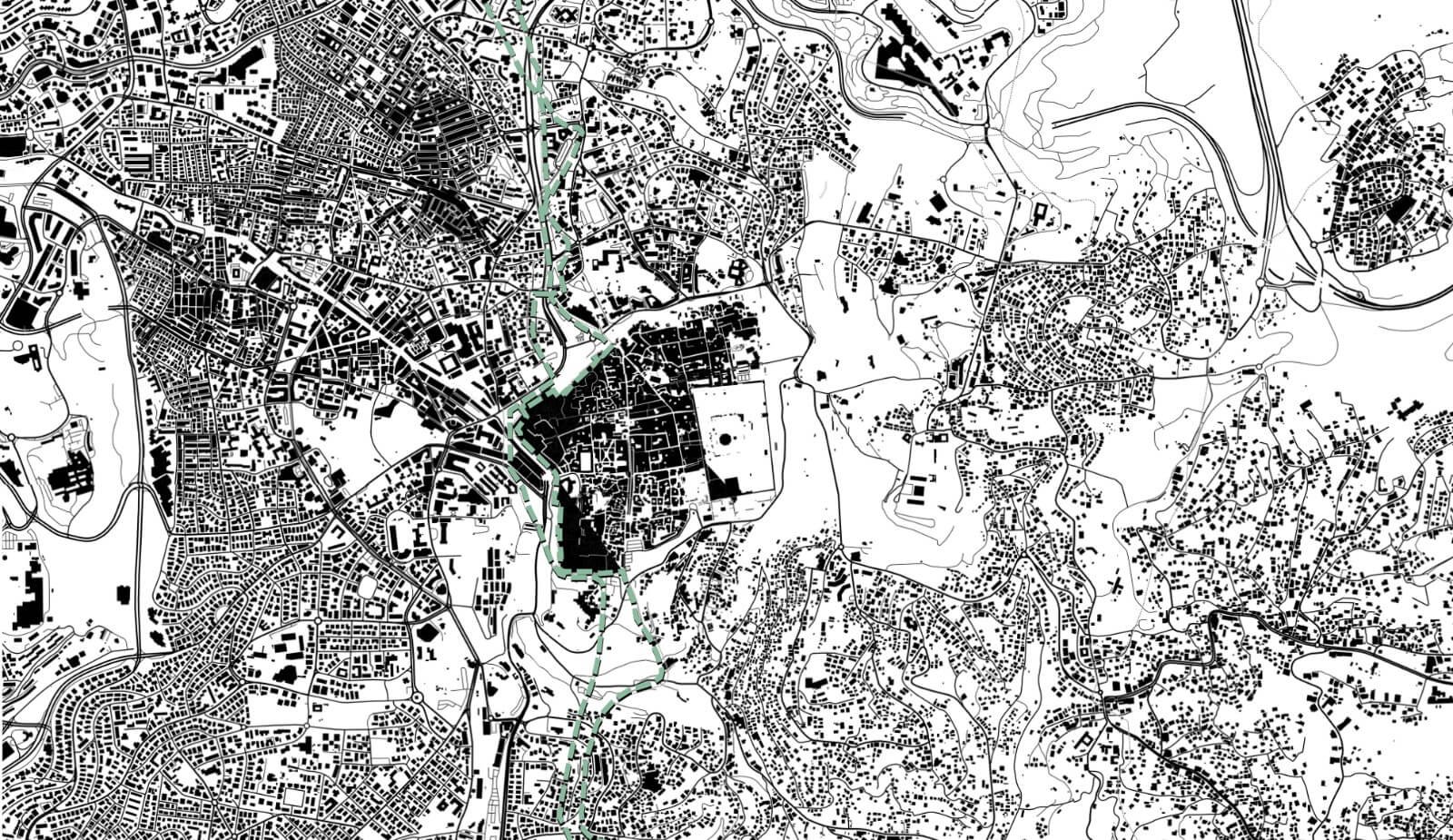
What stories do official maps tell, and what stories do they leave out? What becomes invisible through planning and visible through counter-planning? The workshop explores narrative mapping as an alternative spatial tool for rethinking eastern Jerusalem’s fragmented urban condition. Working across official planning documents and local Palestinian narratives, participants examine how space is represented, produced, and contested in the city. Spatial stories will be translated into comparative maps that expose spatial and environmental injustice, overlaps, and gaps between institutional and lived understandings of space. Storytelling is approached as an active spatial practice through which the experience of the city lived. The stories are read as spatial constructs shaped by the right to the city, memory, and collective practices of reclamation.
We invite participants who are interested in the art of observation and in how lived environment experience can be translated into spatial practices. Together, we will engage with the political realities that shape how space is imagined, produced, and experienced. By doing so, we will explore integrated approaches to spatial thinking that connect environmental, social, and political dimensions of urban life, uncovering the human realities of Palestinians that often remain absent from official narratives.
All interested participants must send an email by the 29th of June with the subject line “What Maps Conceal” attaching a CV or samples of their work, specifying their year and field of study, and providing their contact information (email and phone number) to workshops.kaf@gmail.com.
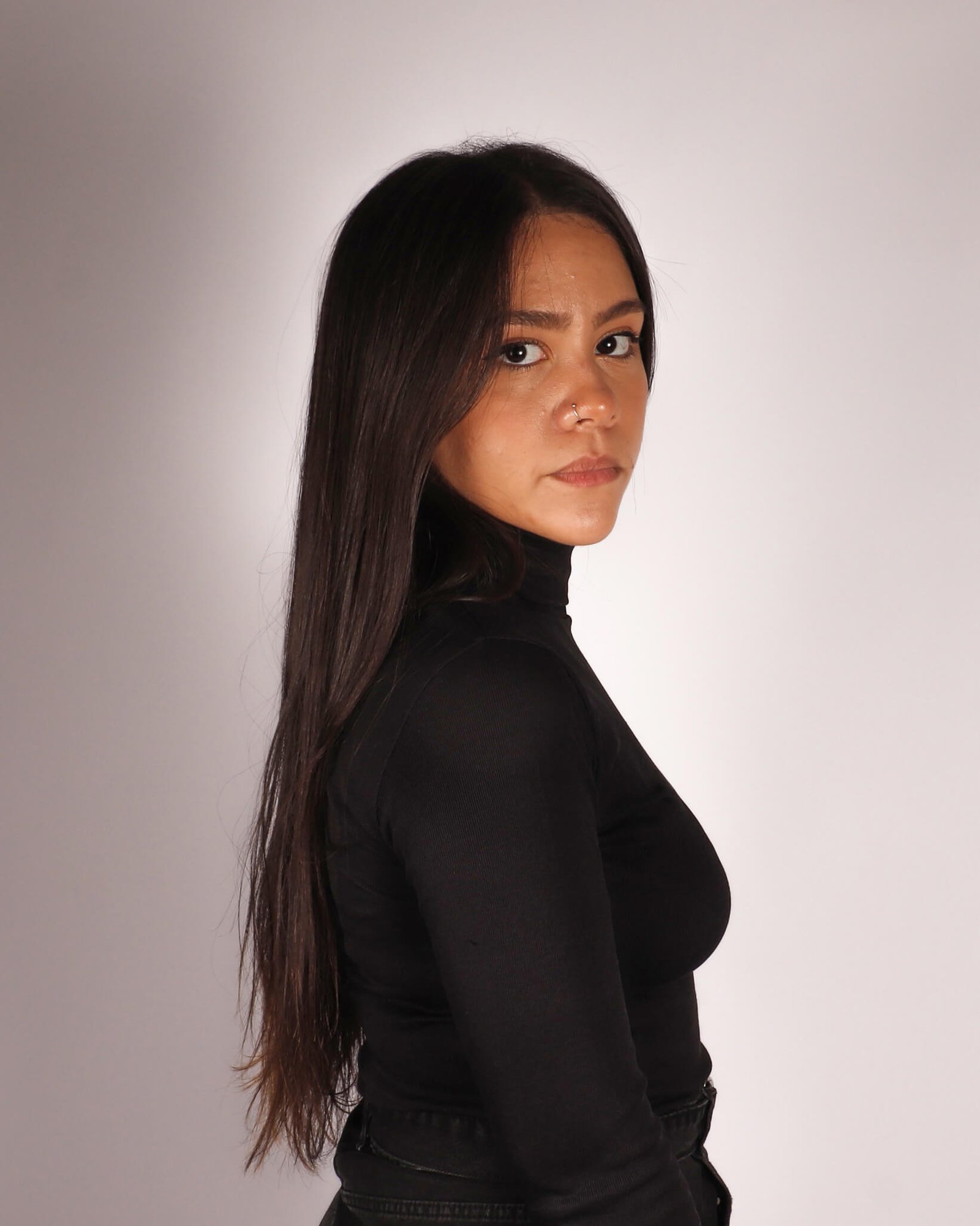
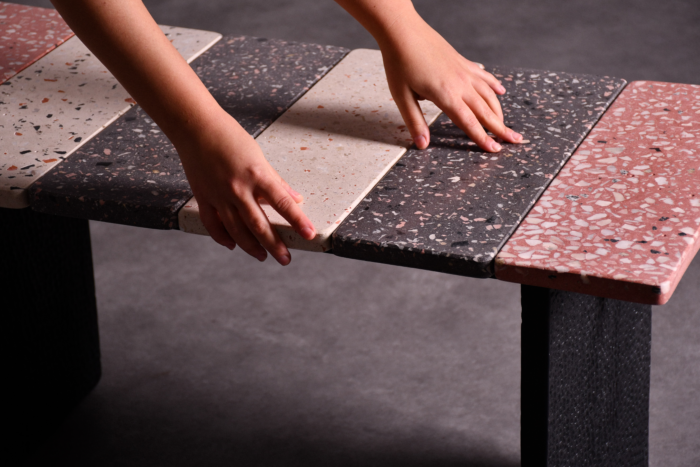
Mayra Deberg is a Brazilian architect and urban planner whose work explores alternative responses to the environmental challenges of the construction industry, particularly the depletion of natural resources and the generation of waste. She holds a Master’s degree in Industrial and Product Design from the Faculty of Fine Arts of the University of Porto, where she developed the thesis “A Design Contribution to the Issue of Construction Waste: Reinterpreting the Traditional Terrazzo Technique in Decorative Objects.” The project received recognition in international competitions such as the Green Concept Award, iF Design Student Award, and Distributed Design, and was exhibited at Vienna Design Week, the Art and Design Biennale in Funchal, MaterialDistrict, MUDE – Design Museum, and other design and cultural platforms.
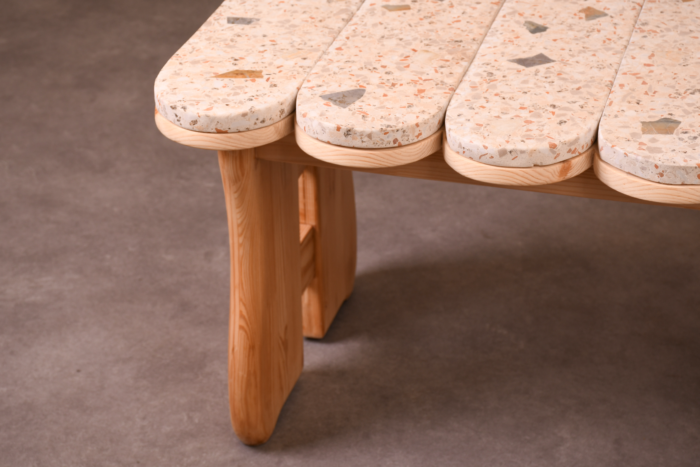
She is currently pursuing a PhD in Design at the Faculty of Fine Arts of the University of Porto, supported by a doctoral scholarship from the Fundação para a Ciência e a Tecnologia. Her research continues this investigation through a reflection on the materiality and memory embedded in construction and demolition waste, exploring how residual matter can be reintegrated into architectural components through circular design strategies. Alongside her academic work, she has developed projects, exhibitions, workshops, and publications that connect material experimentation, craftsmanship, digital manufacturing, and sustainable approaches to design. She is also a member of Portugal Manual, a platform that promotes brands and products created by artisans, artists, and designers based in Portugal.
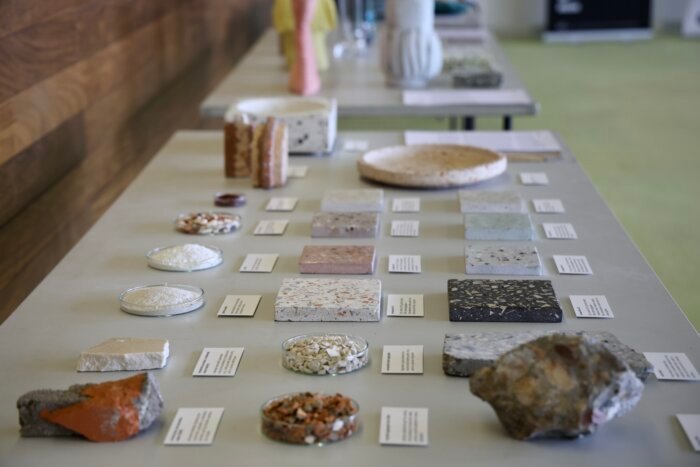
Institution // The Faculty of Fine Arts of the University of Porto is a higher education institution dedicated to teaching and research in art, design, and visual culture. It combines studio-based practice with theoretical and critical inquiry, fostering interdisciplinary approaches that engage material experimentation, contemporary technologies, and cultural reflection within the fields of art and design.
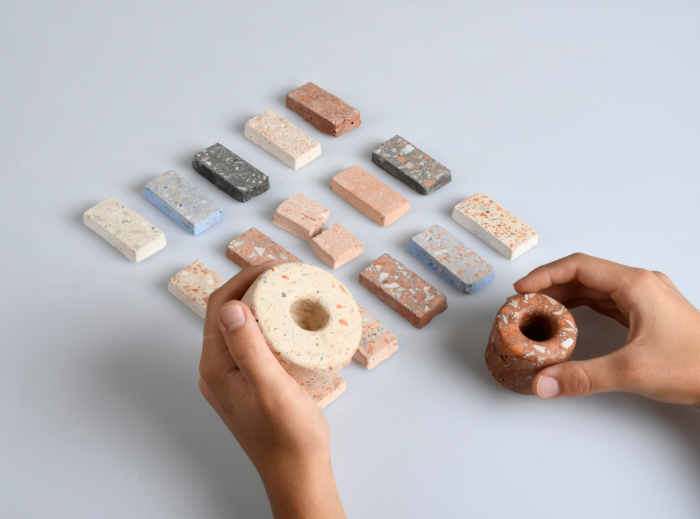
During the Kosovo Architecture Festival 2026 Mayra will be co-mentoring a 5 days workshop focused on Palestinian territories together with Young Palestinian Architecture Fellows, as well as hold a keynote lecture.
AL /
Mayra Deberg është arkitekte dhe urbaniste braziliane, puna e së cilës hulumton zgjidhje alternative ndaj sfidave mjedisore të industrisë së ndërtimit, veçanërisht shterimit të burimeve natyrore dhe gjenerimit të mbetjeve. Ajo mban një diplomë Masteri në Dizajn Industrial dhe të Produkteve nga Fakulteti i Arteve të Bukura i Universitetit të Portos, ku zhvilloi tezën „Një kontribut i dizajnit në çështjen e mbetjeve të ndërtimit: Riinterpretimi i teknikës tradicionale Terrazzo në objekte dekorative“. Ky projekt mori vlerësime në gara ndërkombëtare si Green Concept Award, iF Design Student Award dhe Distributed Design, si dhe u ekspozua në Javën e Dizajnit në Vjenë (Vienna Design Week), Bienalen e Artit dhe Dizajnit në Funchal, Material District, muzeun MUDE – Design Museum dhe platforma të tjera kulturore e të dizajnit.
Aktualisht po ndjek studimet e doktoratës (PhD) për Dizajn në Fakultetin e Arteve të Bukura të Universitetit të Portos, e mbështetur nga një bursë doktorate nga Fundação para a Ciência e a Tecnologia. Kërkimi i saj shkencor vazhdon këtë hulumtim përmes një reflektimi mbi materia litetin dhe kujtesën e ngulitur në mbetjet e ndërtimit dhe rrënimit, duke eksploruar se si lënda mbetjeve mund të riintegrohet në komponentët arkitektonikë përmes strategjive të dizajnit qarkullues. Krahas punës së saj akademike, ajo ka zhvilluar projekte, ekspozita, punëtori dhe botime që lidhin eksperimentimin me materialet, artizanatin, prodhimin digjital dhe qasjet e qëndrueshme ndaj dizajnit. Ajo është gjithashtu anëtare e Portugal Manual, një platformë që promovon markat dhe produktet e krijuara nga artizanët, artistët dhe dizajnerët me bazë në Portugali.
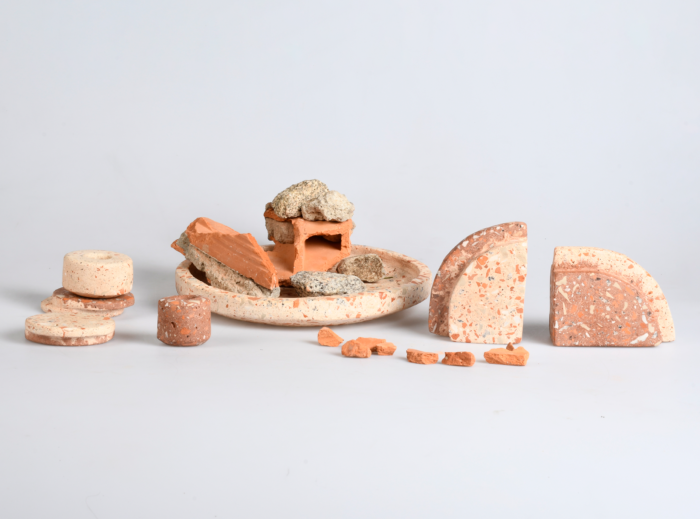
Institucioni // Fakulteti i Arteve të Bukura i Universitetit të Portos është një institucion i arsimit të lartë i dedikuar mësimdhënies dhe kërkimit shkencor në art, dizajn dhe kulturë vizuale. Ai ndërthur praktikën e bazuar në studio me kërkimin teorik dhe kritik, duke nxitur qasje ndërdisiplinore që angazhojnë eksperimentimin me materialet, teknologjitë bashkëkohore dhe reflektimin kulturor brenda fushave të artit dhe dizajnit.
Gjatë Festivalit të Arkitekturës në Kosovë 2026 (KAF 2026), Mayra do të jetë bashkë-mentore e një punëtorie 5-ditore të fokusuar në territoret palestineze, së bashku me Arkitektët e Rinj Palestinezë (Young Palestinian Architecture Fellows), si dhe do të mbajë një ligjëratë kryesore (keynote lecture).
Diogo Matos Rodrigues is an architect, designer, and researcher whose work explores the intersections of spatial agency, participatory design, and collaborative “Design and Build” initiatives. He is currently a doctoral candidate at the Faculdade de Arquitectura da Universidade do Porto (FAUP) and a research fellow of the Foundation for Science and Technology (FCT). His thesis, “Design and Build: An Integrated Approach to Self-Building, Co-creation, and Technology to Face the Housing Crisis,” investigates how democratizing technical knowledge can address global housing challenges.Diogo holds a Master’s degree from FAUP, where his dissertation, “Learning in Architecture: Working in Collective(s),” analyzed the pedagogical and social impact of architectural collectives. His commitment to social and ecological issues led him to the International Visitor Leadership Program (IVLP) by the U.S. Department of State, focusing on climate change challenges, for which he later received the IVLP Impact Award in 2023. He is the founder and president of Associação Ponto Parágrafo, an NGO dedicated to the pedagogical, ecological, and political importance of architecture in relation to youth and communities. Through this platform, he has organized numerous workshops, ranging from modular pavilion self-construction in rural Portugal to rammed earth and adobe experimentation at FAUP. His practice bridges vernacular wisdom with emerging digital tools, such as digital fabrication, to create sustainable and accessible built solutions.In addition to his academic and NGO work, Diogo has a significant background in architectural activism and editorial leadership, having served as the director of Dédalo Magazine. For the Kosovo Architecture Festival, he is coordinating a workshop with Palestinian architects, focusing on architecture as a tool for resilience and social reconstruction in conflict-affected territories.

Institution // Associação Ponto Parágrafo is a non-profit organization focused on the intersection of architecture, education, and social agency. Based in Portugal, the NGO promotes the “building-site school” (estaleiro-escola) model, where students and communities collaborate on real-world interventions. The practice specializes in Design and Build methodologies, emphasizing sustainable construction techniques—such as earth and timber—and participatory design processes. By bridging the gap between academic research and local territory, Ponto Parágrafo seeks to empower communities through “constructive sovereignty” and non-speculative housing models.

During the Kosovo Architecture Festival 2026, Diogo will be co-tutoring a 5 day workshop with the Young Palestinian Architecture Fellows with a focus on Palestinian territory, as well as hold a keynote lecture.
AL /
Diogo Matos Rodrigues është një arkitekt, dizajner dhe kërkues shkencor, puna e së cilit eksploron ndërthurjen e veprimit hapësinor, dizajnit pjesëmarrës dhe iniciativave bashkëpunuese „Dizajno dhe Ndërto“ (Design and Build). Ai është aktualisht kandidat për doktoratë në Fakultetin e Arkitekturës të Universitetit të Portos (FAUP) dhe bashkëpunëtor kërkimor i Fondacionit për Shkencën dhe Teknologjinë (FCT). Teza e tij, „Dizajno dhe Ndërto: Një qasje e integruar ndaj vetë-ndërtimit, bashkë-krijimit dhe teknologjisë për t’u përballur me krizën e strehimit“, hulumton se si demokratizimi i njohurive teknike mund të adresojë sfidat globale të strehimit.
Diogo mban një diplomë Master nga FAUP, ku teza e tij, „Të mësuarit në arkitekturë: Puna në kolektiv(e)“, analizoi ndikimin pedagogjik dhe social të kolektiveve të arkitekturës. Angazhimi i tij ndaj çështjeve sociale dhe ekologjike e udhëhoqi atë drejt Programit Ndërkombëtar të Lidershipit të Vizitorëve (IVLP) nga Departamenti i Shtetit i SHBA-së, i fokusuar në sfidat e ndryshimeve klimatike, për të cilin më vonë mori çmimin IVLP Impact Award në vitin 2023.
Ai është themeluesi dhe presidenti i Associação Ponto Parágrafo, një OJQ e dedikuar rëndësisë pedagogjike, ekologjike dhe politike të arkitekturës në raport me rininë dhe komunitetet. Përmes kësaj platforme, ai ka organizuar punëtori të shumta, duke filluar nga vetë-ndërtimi i pavijoneve modulare në Portugalinë rurale, e deri te eksperimentimi me dheun e ngjeshur (rammed earth) dhe qerpiçin në FAUP. Praktika e tij lidh urtësinë vernakulare me mjetet e reja digjitale, siç është fabrikimi digjital, për të krijuar zgjidhje ndërtimi të qëndrueshme dhe të qasshme.
Përveç punës së tij akademike dhe asaj në OJQ, Diogo ka një prapavijë të rëndësishme në aktivizëm Arkitektural dhe lidershipin editorial, pasi që ka shërbyer si drejtor i Revistës Dédalo. Për Festivalin e Arkitekturës në Kosovë, ai po koordinon një punëtori me arkitektë palestinezë, duke u fokusuar tek arkitektura si një mjet për qëndrueshmëri dhe rikonstruksion social në territoret e prekur nga konflikti.

Institucioni Associação Ponto Parágrafo është një organizatë jofitimprurëse e fokusuar në ndërthurjen e arkitekturës, edukimit dhe veprimit social. Me bazë në Portugali, OJQ-ja promovon modelin “building-site school” (estaleiro-escola), ku studentët dhe komunitetet bashkëpunojnë në ndërhyrje të botës reale. Praktika specializon në metodologjitë e dizajnit dhe ndertimit, duke theksuar teknikat e qëndrueshme të ndërtimit — si dheu dhe druri — dhe proceset e dizajnit pjesëmarrës. Duke krijuar një urë lidhëse midis kërkimit akademik dhe territorit lokal, Ponto Parágrafo synon të fuqizojë komunitetet përmes konceptit të „sovranitetit ndërtues“ dhe modeleve të banimit jo-spekulativ.
Gjatë Festivalit të Arkitekturës në Kosovë 2026 (KAF 2026), Diogo do të jetë bashkë-mentorë e një punëtorie 5-ditore të fokusuar në territoret palestineze, së bashku me Arkitektët e Rinj Palestinezë (Young Palestinian Architecture Fellows) me fokus në territorin palestinez, si dhe do të mbajë një ligjëratë kryesore (keynote lecture).
Walaa is a Syrian architect based in Stuttgart, Germany. She holds a Bachelor’s degree in Architecture from Damascus University and a Master’s degree in Environmental Design and Engineering from University College London (UCL), UK. She also completed a second research-based Master’s in Architecture at the Manchester School of Architecture (MSA), UK, where she examined the interrelationships between domestic architecture, inhabitants, and climate in Damascus.

Walaa currently works as a sustainability consultant at Transsolar Klimaengineering in Stuttgart, where she develops strategies for climate-neutral buildings across a range of scales and geographic contexts. In parallel, her independent research investigates urban sustainability under conditions of stress, focusing on the interplay between natural environments, urban infrastructures, and socio-spatial dynamics.
Her work explores the tensions between fragility and resilience, identifying patterns that inform context-sensitive and adaptive approaches to urban recovery. With a particular focus on Syria, Walaa engages critically with questions of reconstruction, working at the intersection of architecture, environment, and social behaviour. Her research examines how architecture and society respond to environmental urgency and fragile conditions while remaining grounded in local landscapes and lived realities.

Walaa’s practice operates at the intersection of environment and urban recovery. Based in Stuttgart, her work is shaped by a dual engagement: her professional involvement in climate-responsive and low-tech building strategies, and her research practice on post-war Syria. Her practice explores how environmental constraints, resource scarcity, and socio-spatial dynamics inform the production of architecture. Combining technical expertise in material flow, daylight, and passive architecture with an interest in lived realities and spatial practices, she investigates context-specific approaches to design and reconstruction. Through field research, writing and spatial storytelling, her work examines how local landscapes, infrastructures, and everyday practices can guide resilient architectural responses.
Walaa will be mentoring a 5 day workshop together with a Young Palestinian Architecture Fellow as well as hold a keynote.
AL /
Walaa është një arkitekte siriane me bazë në Stuttgart, Gjermani. Ajo mban një diplomë Bachelor në Arkitekturë nga Universiteti i Damaskut dhe një diplomë Master në Projektim dhe Inxhinieri Mjedisore nga University College London (UCL), në Mbretërinë e Bashkuar. Gjithashtu, ajo ka përfunduar një master të dytë kërkimor në Arkitekturë në Manchester School of Architecture (MSA), ku ka studiuar marrëdhëniet ndërmjet arkitekturës së banimit, banorëve dhe klimës në Damask.
Aktualisht, Walaa punon si konsulente e qëndrueshmërisë në Transsolar Klimaengineering në Stuttgart, ku zhvillon strategji për ndërtesa klimatike neutrale në shkallë dhe kontekste të ndryshme gjeografike. Paralelisht, kërkimi i saj i pavarur fokusohet në qëndrueshmërinë urbane në kushte krize, duke analizuar ndërveprimin ndërmjet mjediseve natyrore, infrastrukturave urbane dhe dinamikave socio-hapësinore.
Puna e saj eksploron tensionet ndërmjet brishtësisë dhe qëndrueshmërisë (resilience) , duke identifikuar modele që informojnë qasje të përshtatshme dhe të ndjeshme ndaj kontekstit për rimëkëmbjen urbane. Me një fokus të veçantë në Sirinë, Walaa trajton në mënyrë kritike çështjet e rindërtimit, duke vepruar në ndërthurjen e arkitekturës, mjedisit dhe sjelljes shoqërore. Kërkimi i saj shqyrton mënyrën se si arkitektura dhe shoqëria reagojnë ndaj urgjencave mjedisore dhe kushteve të brishta, duke mbetur njëkohësisht të bazuara në peizazhet lokale dhe realitetet e përditshme.

Praktika e Walaa-s vepron në pikëtakimin mes mjedisit dhe rimëkëmbjes urbane. Me bazë në Stuttgart, puna e saj formësohet nga një angazhim i dyfishtë: përfshirja profesionale në strategjitë klimatike dhe ndërtimin me teknologji të ulët (low-tech), si dhe praktika kërkimore mbi Sirinë e pasluftës. Ajo eksploron mënyrën se si kufizimet mjedisore, mungesa e burimeve dhe dinamikat socio-hapësinore ndikojnë në prodhimin e arkitekturës. Duke kombinuar ekspertizën teknike në rrjedhën e materialeve, ndriçimin natyror dhe arkitekturën pasive me interesin për realitetet e jetuara dhe praktikat hapësinore, ajo hulumton qasje specifike ndaj kontekstit për projektimin dhe rindërtimin. Përmes kërkimeve në terren, shkrimit dhe rrëfimit hapësinor, puna e saj shqyrton se si peizazhet lokale, infrastrukturat dhe praktikat e përditshme mund të udhëheqin përgjigje arkitekturore reziliente.
Gjatë Festivalit të Arkitekturës së Kosovës 2026, Walaa do të mentorojë një punëtori 5-ditore së bashku me një Arkitekt të Ri Palestinezë (Young Palestinian Architecture Fellow), si dhe do të mbajë një ligjëratë kryesore (keynote lecture).
Alisa is a London-based artist from Ukraine. Her work explores constructed worlds, examining how reality is carefully assembled, controlled, and mediated. Working at the intersection of architecture and moving image, she recomposes fragments of these worlds into new juxtapositions that expose their underlying structures.
She has written and directed the short documentary film 2000 Tonnes of Aerated Concrete, exploring the life of William Little, the “Mole Man” of Hackney, and the short animated film The House That Slowly Collapses – a journey through layers of ruins in the past. The films were presented in exhibitions in London and Paris in 2025. She has also co-produced the short film A Dream of an Autodidact, examining the cinematic history of Vienna. Alongside her film work, she has contributed to exhibitions and research-based projects in architectural and artistic contexts.
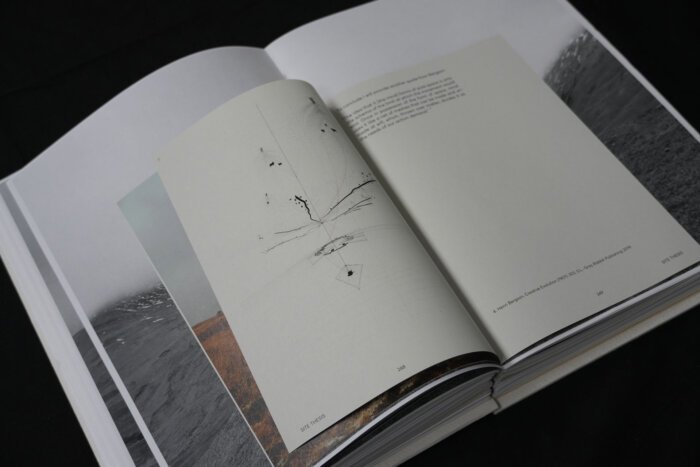
Alisa has been involved in teaching and curatorial initiatives at the Architectural Association in London. She co-taught in the Visiting School “Film and Narrative Forensics: Rebuilding Series” in 2024-25. She also co-curated the Publishing and Film Forums at the AA in 2025 – a series of talks, lectures, and screenings featuring prominent industry professionals. She has worked as an architectural studio tutor at House for Home, a project for Ukrainian refugees at Het Nieuwe Instituut in Rotterdam, supported by the Dutch Creative Industries Fund.
Her professional experience includes work with the Office for Metropolitan Architecture (OMA) in Rotterdam and Nikitenkoteam in Kharkiv. Following the Russian invasion of Ukraine, she contributed as an architect to VSIMDIM, a project developing mobile housing units for temporarily displaced people.
She is a fellow of the LINA Architecture Platform, nominated by the Kosovo Architecture Foundation, with participation in 2026. Alisa studied at the Architectural Association School of Architecture in London and the Kharkiv School of Architecture, Ukraine.
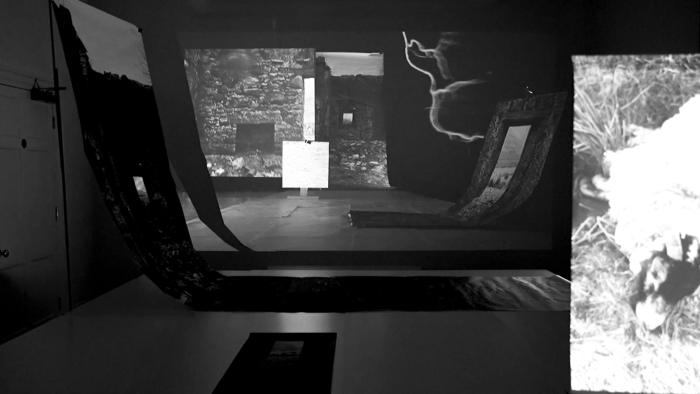
Through film, the practice constructs subjective pasts, presents, and futures.
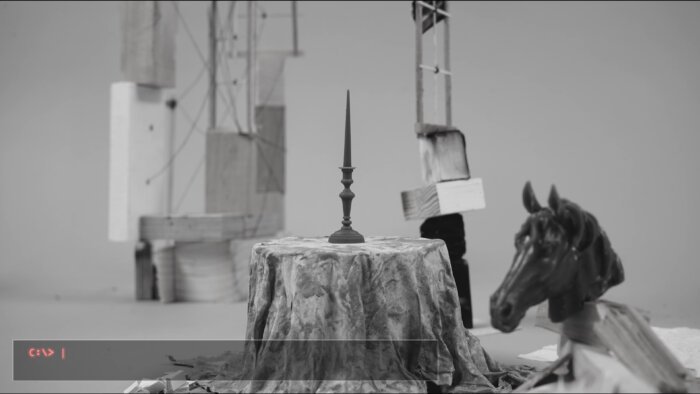
Rooted in architectural thinking, its interventions are system-based and site-specific. Film, photography, and photogrammetry are used to record fragments of reality that participate in the operation of a specific metaphysical system. These are translated through drawing and set-building, where juxtaposition reveals the system’s underlying structure. Iterative recomposition produces new arrangements that propose alternative modes of operation.
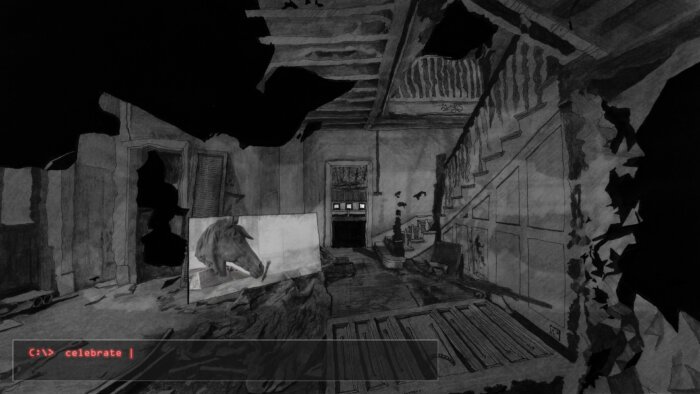
The recent project The House That Slowly Collapses, rethinks the idea of linier historical sequence. It is a proposal to go back into the past and visit the sites of our failures, recomposing a crystal: a speculative, spontaneously forming construct of the present.
Current work engages with dwelling as an act of mirroring the landscape, and as an essential condition for the human mind. By introducing an institution that imposes its own system of meaning onto the landscape, the work examines how controlled and constructed environments can empty human perception.
This approach is grounded in the earlier investigations of how space is perceived across multiple species. The explorations created worlds where the subjective spatial constructs of animals, plants, and humans merge into a composite whole that appears other than its parts, yet is composed of nothing beyond them.
Alisa will be co-mentoring a 5 day workshop together with a Young Palestinian Architecture Fellow as well as hold a keynote lecture.
AL /
Alisa Kutsenko është një artiste ukrainase me bazë në Londër. Puna e saj eksploron botët e ndërtuara dhe mënyrën se si realiteti ndërtohet, kontrollohet dhe ndërmjetësohet me kujdes. Duke vepruar në ndërthurjen e arkitekturës dhe imazhit në lëvizje, ajo rikompozon fragmente të këtyre botëve në vendosje të reja që zbulojnë strukturat e tyre të fshehura.
Ajo ka shkruar dhe drejtuar filmin e shkurtër dokumentar “2000 Tonnes of Aerated Concrete”, i cili trajton jetën e William Little, i njohur si “Mole Man” i Hackney-t, si dhe filmin e shkurtër të animuar “The House That Slowly Collapses”, një udhëtim nëpër shtresat e rrënojave të së kaluarës. Këta filma u prezantuan në ekspozita në Londër dhe Paris gjatë vitit 2025. Gjithashtu, ajo ka bashkëprodhuar filmin e shkurtër “A Dream of an Autodidact”, i cili shqyrton historinë kinematografike të Vjenës. Krahas punës së saj në film, Alisa ka kontribuar në ekspozita dhe projekte kërkimore në kontekste arkitekturore dhe artistike.
Alisa është angazhuar në iniciativa mësimdhënëse dhe kuratoriale në Architectural Association (AA) në Londër. Ajo ka bashkëudhëhequr programin “Film and Narrative Forensics: Rebuilding Series” gjatë viteve 2024–2025. Gjithashtu, në vitin 2025, ajo bashkëkuratoi forumet e botimeve dhe filmit në AA, një seri bisedash, ligjëratash dhe shfaqjesh filmike me profesionistë të njohur të industrisë. Ajo ka punuar gjithashtu si mentore në studio arkitekturore në projektin “House for Home”, i dedikuar refugjatëve ukrainas në Het Nieuwe Instituut në Rotterdam, i mbështetur nga Fondi Holandez për Industritë Kreative.
Përvoja e saj profesionale përfshin punën me Office for Metropolitan Architecture (OMA) në Rotterdam dhe Nikitenkoteam në Kharkiv. Pas pushtimit rus të Ukrainës, ajo kontribuoi si arkitekte në projektin VSIMDIM, i cili zhvillonte njësi të lëvizshme banimi për personat e zhvendosur përkohësisht.
Alisa është pjesë e Platformës së Arkitekturës LINA, e nominuar nga Kosovo Architecture Foundation, me pjesëmarrje në vitin 2026. Ajo ka studiuar në Architectural Association School of Architecture në Londër dhe në Kharkiv School of Architecture në Ukrainë.
Përmes filmit, praktika e saj ndërton të shkuara, të tashme dhe të ardhme subjektive. E rrënjosur në mendimin arkitekturor, ndërhyrjet e saj janë të bazuara në sisteme dhe të lidhura ngushtë me vendin ku zhvillohen. Filmi, fotografia dhe fotogrametria përdoren për të regjistruar fragmente të realitetit që marrin pjesë në funksionimin e një sistemi specifik metafizik. Këto më pas përkthehen përmes vizatimit dhe ndërtimit të skenografive, ku vendosja e elementeve në kontrast zbulon strukturën e brendshme të sistemit. Përmes rikompozimeve të vazhdueshme krijohen konfigurime të reja që propozojnë mënyra alternative të funksionimit.
Projekti i saj i fundit, “The House That Slowly Collapses”, rishqyrton idenë e një rrjedhe lineare të historisë. Ai propozon një rikthim në të kaluarën për të vizituar vendet e dështimeve tona, duke rikompozuar një “kristal” – një konstrukt spekulativ i së tashmes që formohet spontanisht.
Puna e saj aktuale merret me konceptin e banimit si një akt pasqyrimi të peizazhit dhe si një kusht themelor për mendjen njerëzore. Duke futur një institucion që imponon sistemin e vet të kuptimeve mbi peizazhin, ajo shqyrton se si mjediset e kontrolluara dhe të ndërtuara mund të zbrazin perceptimin njerëzor.
Kjo qasje mbështetet në hulumtimet e saj të mëhershme mbi mënyrën se si hapësira perceptohet nga specie të ndryshme. Këto eksplorime kanë krijuar botë ku konstruktet subjektive hapësinore të kafshëve, bimëve dhe njerëzve bashkohen në një tërësi të përbërë, e cila duket ndryshe nga pjesët e saj, por që nuk përmban asgjë përtej tyre.
Gjatë Festivalit të Arkitekturës së Kosovës 2026, Alisa do të jetë bashkë-mentore e një punëtorie 5-ditore së bashku me një Arkitekt të Ri Palestinezë( Young Palestinian Architecture Fellow), si dhe do të mbajë një ligjëratë kryesore (keynote lecture).
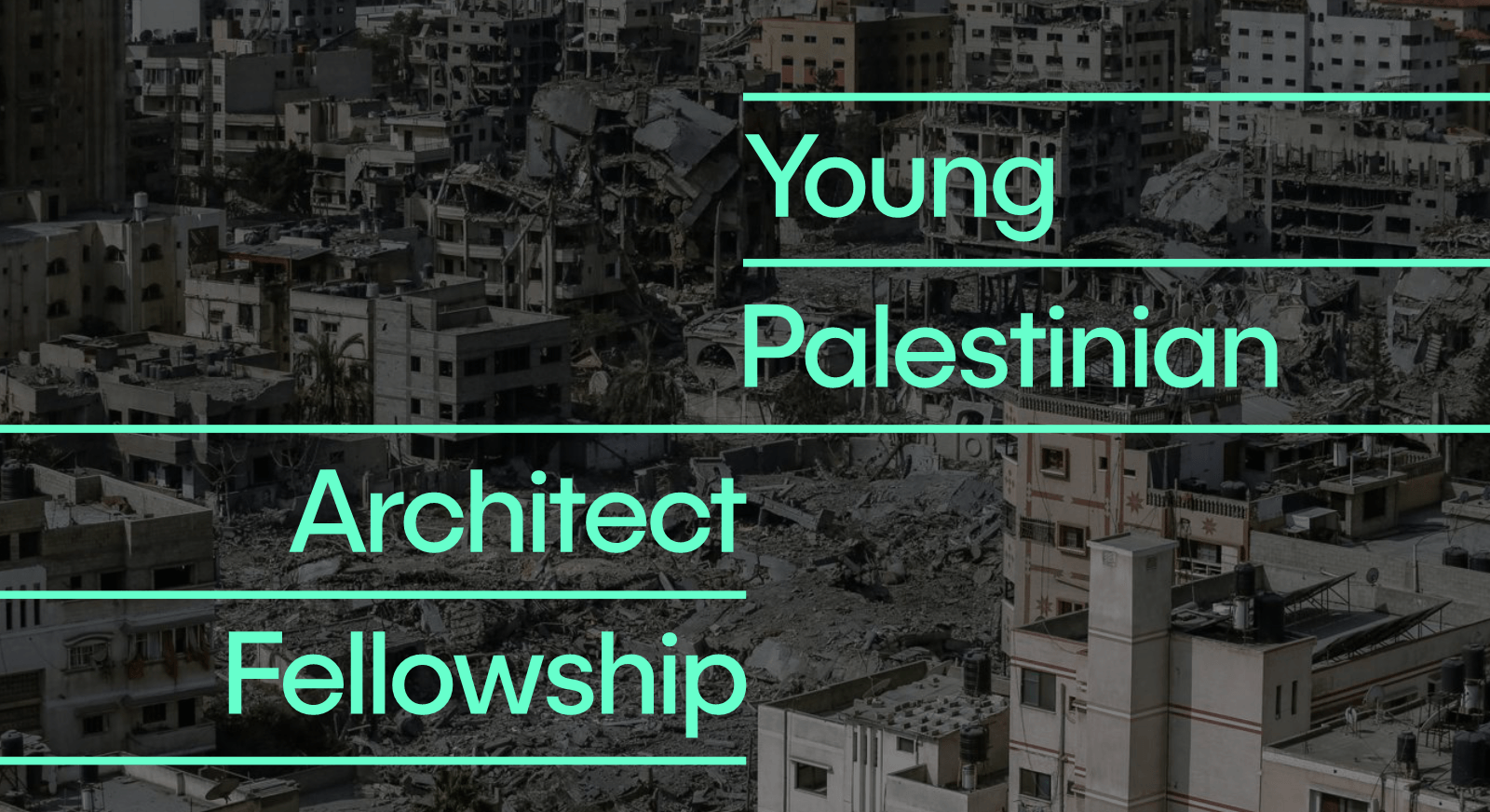
In collaboration with RIWAQ, we have selected 4 Young Palestinian Architect Fellows for 2026. The fellows which will be teaming up with the selected LINA 2025/26 fellows will be leading a 1 week workshops in Prishtina during the Kosovo Architecture Festival First week of July 2026. Our 2026 YPAF fellows are:
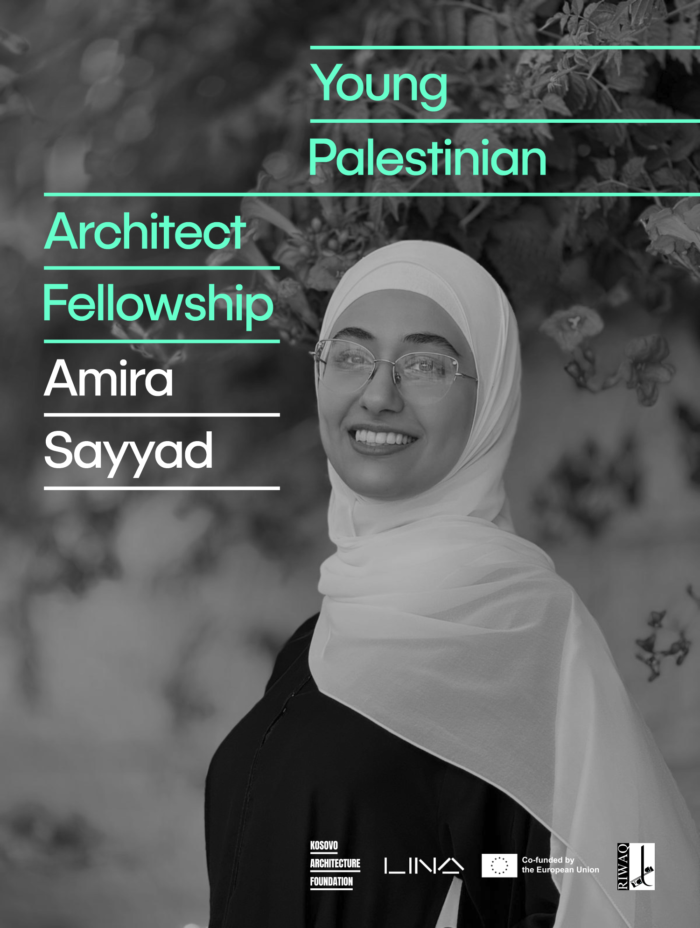
Amira Sayyad is a recent graduate in planning and design from Birzeit University based in Jerusalem. Her work explores memory, heritage, and the layered urban realities of Jerusalem through architecture, storytelling, and visual documentation. Interested in the relationship between space, identity, and lived experience, she approaches cities as places shaped by both physical environments and personal narratives. Alongside her academic work, Amira writes short stories and reflective pieces inspired by everyday life, city streets, and individual memory, treating writing as an extension of spatial practice. Through both visual and written forms, her work seeks to uncover overlooked stories and examine how people experience, remember, and connect to place, creating a dialogue between architecture, culture, and personal experience.
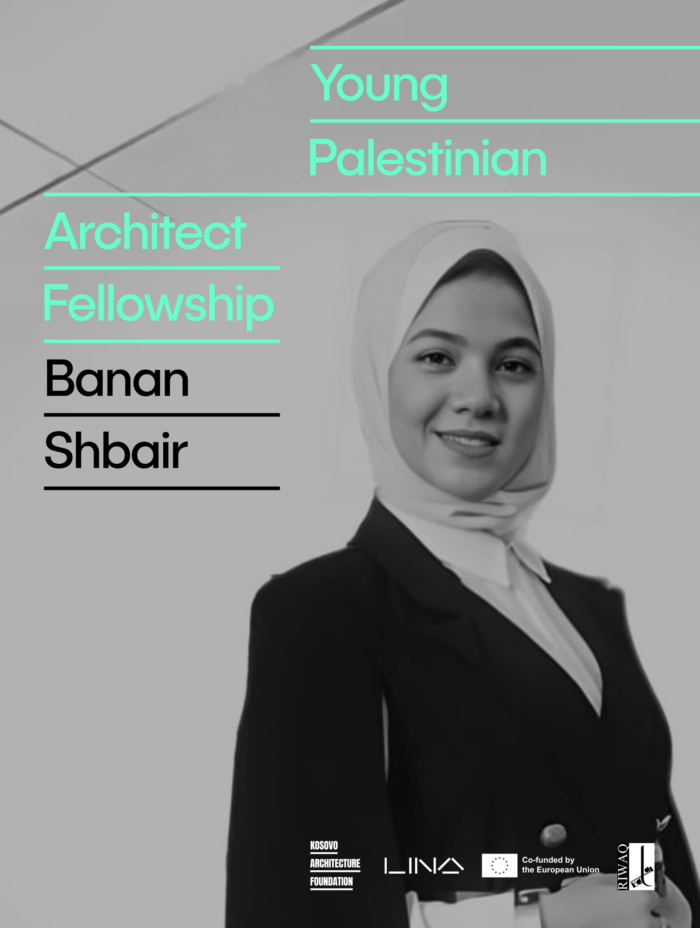
Banan Shbair is an architect from Gaza whose work focuses on humanitarian and field-based responses within displacement and post-crisis contexts. Through her experience in site management, monitoring and evaluation within NGOs, and shelter-related interventions, she has worked closely with displaced communities to improve temporary living conditions through safer and more adaptable housing solutions. Her interests center on post-crisis reconstruction, cultural heritage preservation, and human-centered design in fragile environments. Banan has also undertaken research and design studies on transitional housing strategies, examining how emergency shelters can evolve into long-term, community-oriented living environments. Grounded in both professional practice and lived experience, she approaches architecture as more than rebuilding physical structures—seeing it as a means to restore dignity, identity, and a sense of belonging for communities affected by crisis.
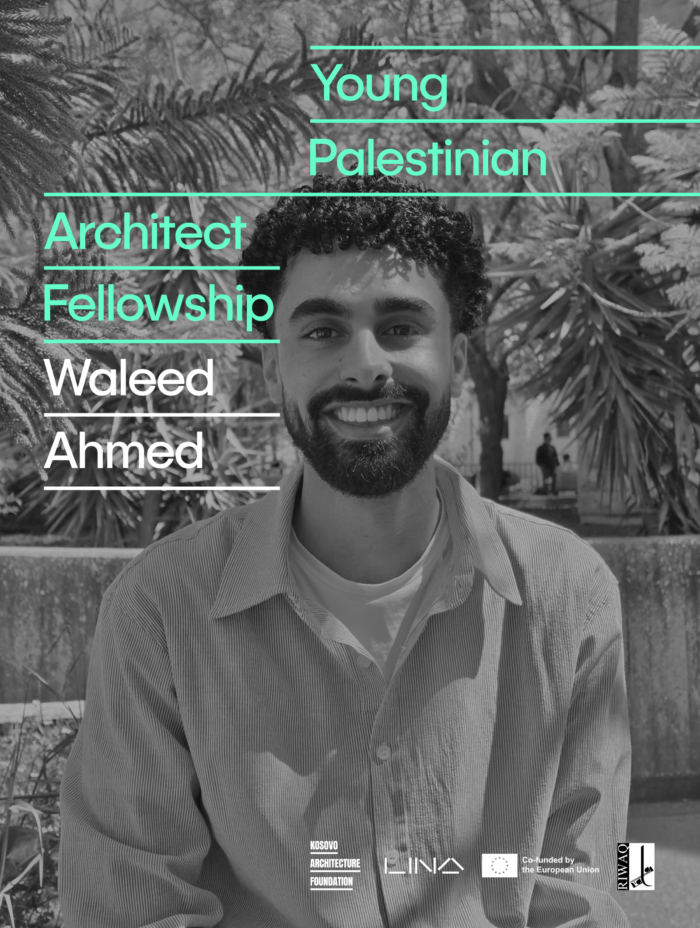
Waleed Ahmed is an architect who graduated from Birzeit University in 2023 and currently works there as a research and teaching assistant. His work explores and documents spatial injustice in Palestine through research and visual practices, including drawing, mapping, and spatial analysis. He is interested in developing critical and interdisciplinary approaches to architectural research. His academic and professional interests engage with the relationship between space, politics, and everyday life, examining how architecture can reveal and respond to broader social and territorial conditions. Through analytical and visual methods, he investigates the ways spatial systems shape experiences of place and influence communities. His work seeks to bridge research and design, using architecture as a tool for understanding complex realities and generating alternative perspectives. Waleed is particularly interested in the role of representation and critical inquiry in shaping more informed and socially engaged architectural practices across different social and political contexts today.
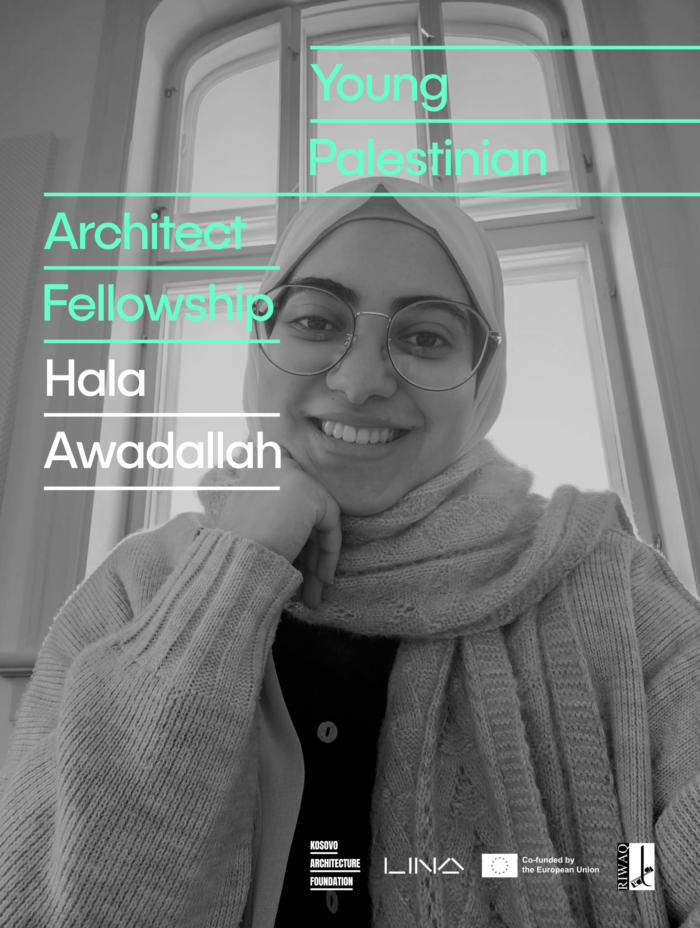
Hala Awadallah is an architect from Gaza currently pursuing a Master’s degree in Landscape Architecture for Global Sustainability at the Norwegian University of Life Sciences (NMBU), where her work explores the intersection of architecture, landscape, and crisis-driven urbanism. Drawing from her experiences in Gaza and Norway, her research and design interests focus on reconstruction, public space, water systems, environmental justice, and nature-based approaches for resource-constrained cities. She holds a Bachelor of Architectural Engineering from the Islamic University of Gaza, graduating with distinction, where her thesis project Safe Haven proposed a post-war shelter, school, and cultural center for orphaned children. Hala’s experience spans architectural education, reconstruction initiatives, heritage preservation, and professional design practice, reflecting a strong commitment to socially responsive and community-centered design.
Our international alliance is looking for emerging creatives working at the intersection of architecture and spatial practices to better our common future. All kinds of bold thinkers and practitioners are invited to apply with a proposal illustrating their ideas. Up to 22 individuals and teams will be selected to attend the LINA Forum (Barcelona, Spain, October 2026, co-produced with Fundació Mies van der Rohe) to create connections and initiate collaborations. All applicants are eligible to collaborate in the LINA Architecture Programme activities throughout the upcoming year.
The call is open until 3 August 2026 at www.lina.community.
The application process is straightforward: apply with a proposal outline (as a short text), up to 5 images to better understand it, a short CV, and an expression of interest of what you’d like to do within the programme. A proposal can be either completed work or a new idea.
For more information, reach out to the LINA Team at hello@lina.community or attend any of the Q&A sessions taking place in the coming months.
LINA is co-financed by Creative Europe, the European Union’s funding programme for the cultural and creative sectors. Participation of LINA Fellows from Switzerland is supported by Pro Helvetia.
WHO ARE WE!
LINA is a European architecture platform: a network of 35 institutions working at the intersection of architecture and other fields related to spatial culture. We support and promote emerging thinkers and practitioners. Our collective goal is to steer design and building processes towards regenerative practices and principles of de-growth.
We are a community of people working towards a united creative vision who find common ground in our inclusive values. Our network is a creative flow of co-creation, collaboration, and mentoring, both among member organisations and in tandem with emerging creatives. Being part of LINA means being part of an experience in which we create and curate relationships, and bring people together with plan and ambition.
PURPOSE OF THE CALL
We will select between 20 and 22 applicants (individuals or teams) from the open call, and they will become Spotlight LINA Fellows for 2026–2027.
– Spotlight LINA Fellows will be invited to join us in Barcelona, Spain in October 2026 to attend the LINA Forum.
– During conversation and exchange at the LINA Forum, Spotlight LINA Fellows will discuss potential collaborations in the LINA Architecture Programme activities with LINA Members.
– Selected outcomes of collaborations between LINA Members and LINA Fellows will be presented at the LINA Festival in Ljubljana in April 2028.
Applicants who are not selected as one of the Spotlight LINA Fellows are still eligible to become LINA Fellows.
– Any applicant to the LINA Open Call can potentially collaborate with a LINA Member, by direct invitation.
– All applications to this call will be published on the LINA website to create a showcase of practices and ideas.
WHO WE ARE LOOKING FOR
We welcome emerging creative voices and innovative spatial practitioners who question the status quo. We are looking for individuals and collectives: we can help amplify their new and bold ideas that aim to better our common future.
We are seeking those who want to participate in meaningful activities such as mentoring, facilitation, residencies, research, writing, exhibiting, public engagement, programming, and much more. Although travel is not always a necessity, we are looking for those interested in international collaboration and developing their professional network. We want to promote people who care for the future of our planet and who share our ethical values of curiosity, cooperation, pluralism, fairness, and responsibility.
EN
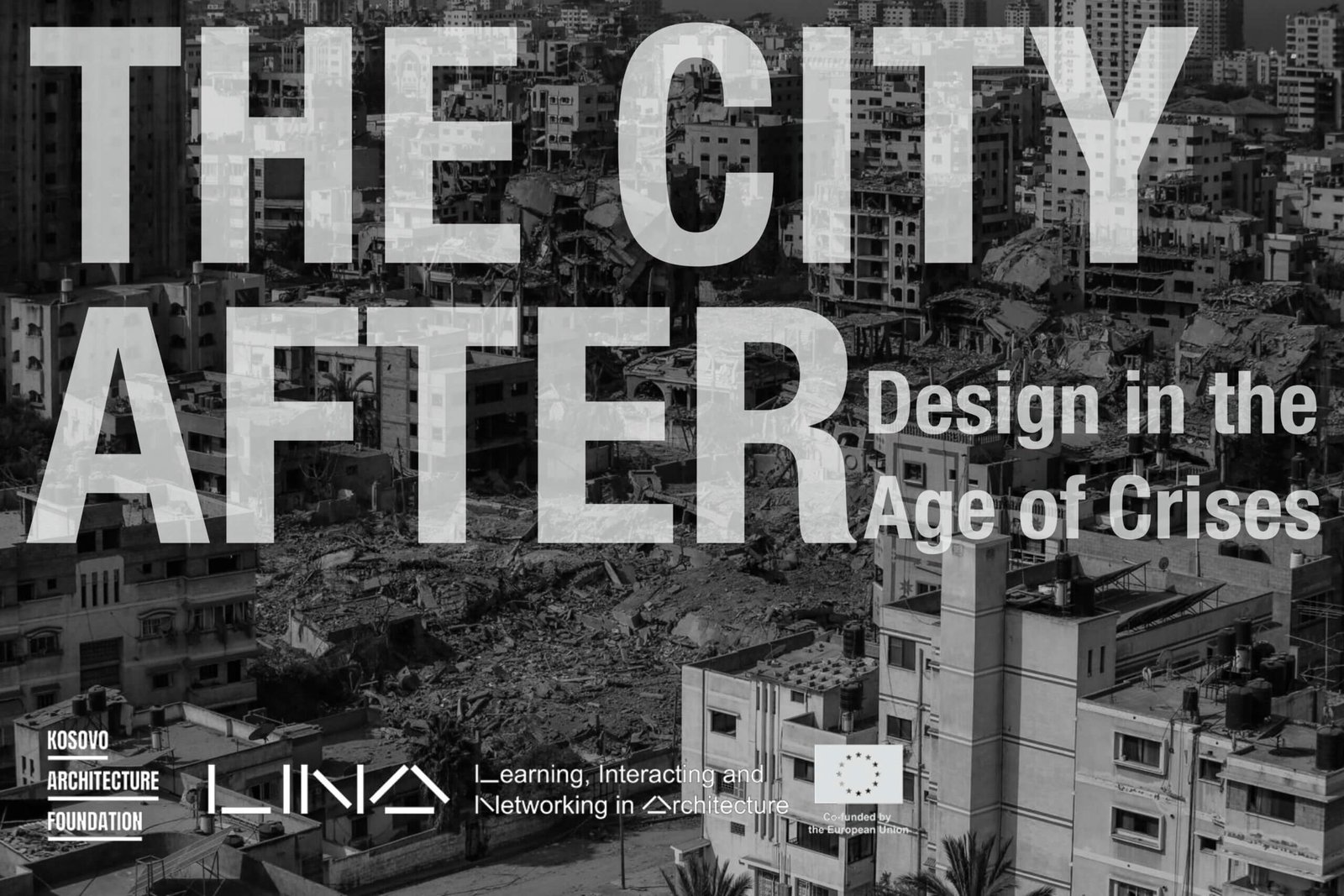
THE CITY AFTER
Design in an Age of Crises
Across the world, cities are increasingly shaped by crisis. Wars, climate disasters, economic instability, forced migration, and political upheaval are transforming the urban landscape with unprecedented speed and intensity. In this uncertain global context, architecture is confronted with a fundamental question: what comes after destruction, displacement, and disruption? What is the role of design when the future of the built environment can no longer be taken for granted?
The City After invites architects, urbanists, researchers, and citizens to reflect on the urgent task of rebuilding in an age defined by overlapping crises. Rather than focusing only on recovery, the theme asks how reconstruction can become an opportunity to rethink the social, spatial, and environmental foundations of urban life. What kinds of cities should emerge after conflict, disaster, or systemic breakdown? How can architecture contribute not only to physical reconstruction but also to collective healing, resilience, and new forms of civic life?
Across many regions of the world, the built environment is being reshaped by instability. Entire neighborhoods are damaged or abandoned, infrastructures are strained, and communities are displaced. In such conditions, rebuilding cannot simply aim to restore what existed before. Instead, reconstruction must grapple with deeper questions about justice, sustainability, memory, and the future of collective life.
KAF 2026 therefore positions architecture within a broader global dialogue about how our built environment will evolve in the aftermath of crises. Through workshops, lectures, exhibitions, and public discussions, the festival will explore how design can respond to instability with imagination, responsibility, and care. If crises increasingly define our era, architecture must help envision what comes next — and how the city after might become a more just, resilient, and hopeful place.
AL
Festivali i Arkitekturës në Kosovë 2026
THE CITY AFTER
Design in an Age of Crises
Në të gjithë botën, qytetet po formësohen gjithnjë e më shumë nga krizat. Luftërat, fatkeqësitë klimatike, paqëndrueshmëria ekonomike, migrimi i detyruar dhe trazirat politike po transformojnë peizazhin urban me një shpejtësi dhe intensitet të paparë. Në këtë kontekst të pasigurt global, arkitektura përballet me një pyetje themelore: çfarë vjen pas shkatërrimit, zhvendosjes dhe përçarjes? Cili është roli i dizajnit kur e ardhmja e mjedisit të ndërtuar nuk mund të merret më si e mirëqenë?
The City After (Qyteti Pas) fton arkitektët, urbanistët, studiuesit dhe qytetarët të reflektojnë mbi detyrën urgjente të rindërtimit në një epokë të përcaktuar nga krizat e mbivendosura. Në vend që të përqendrohet vetëm në rimëkëmbje, tema pyet se si rindërtimi mund të bëhet një mundësi për të rimenduar themelet shoqërore, hapësinore dhe mjedisore të jetës urbane. Çfarë lloje qytetesh duhet të shfaqen pas konfliktit, fatkeqësisë ose shkatërrimit sistemik? Si mund të kontribuojë arkitektura jo vetëm në rindërtimin fizik, por edhe në shërimin kolektiv, qëndrueshmërinë dhe format e reja të jetës qytetare?
Në shumë rajone të botës, mjedisi i ndërtuar po riformësohet nga paqëndrueshmëria. Lagje të tëra janë shkatëruar ose braktisur, infrastrukturat janë të mbingarkuara dhe komunitetet janë zhvendosur. Në kushte të tilla, rindërtimi nuk mund të synojë thjesht të rivendosë atë që ekzistonte më parë. Në vend të kësaj, rindërtimi duhet të përballet me pyetje më të thella në lidhje me drejtësinë, qëndrueshmërinë, kujtesën dhe të ardhmen e jetës kolektive.
KAF 2026 e pozicionon arkitekturën brenda një dialogu më të gjerë global rreth asaj se si do të evoluojë mjedisi ynë i ndërtuar pas krizave. Përmes punëtorive, ligjeratave, ekspozitave dhe diskutimeve publike, festivali do të hulumtoj se si dizajni mund t’i përgjigjet paqëndrueshmërisë me imagjinatë, përgjegjësi dhe kujdes. Nëse krizat e përcaktojnë gjithnjë e më shumë epokën tonë, arkitektura duhet të ndihmojë në parashikimin e asaj që vjen më pas – dhe se si qyteti pas saj mund të bëhet një vend më i drejtë, më i qendrueshëm dhe më shpresëdhënës.
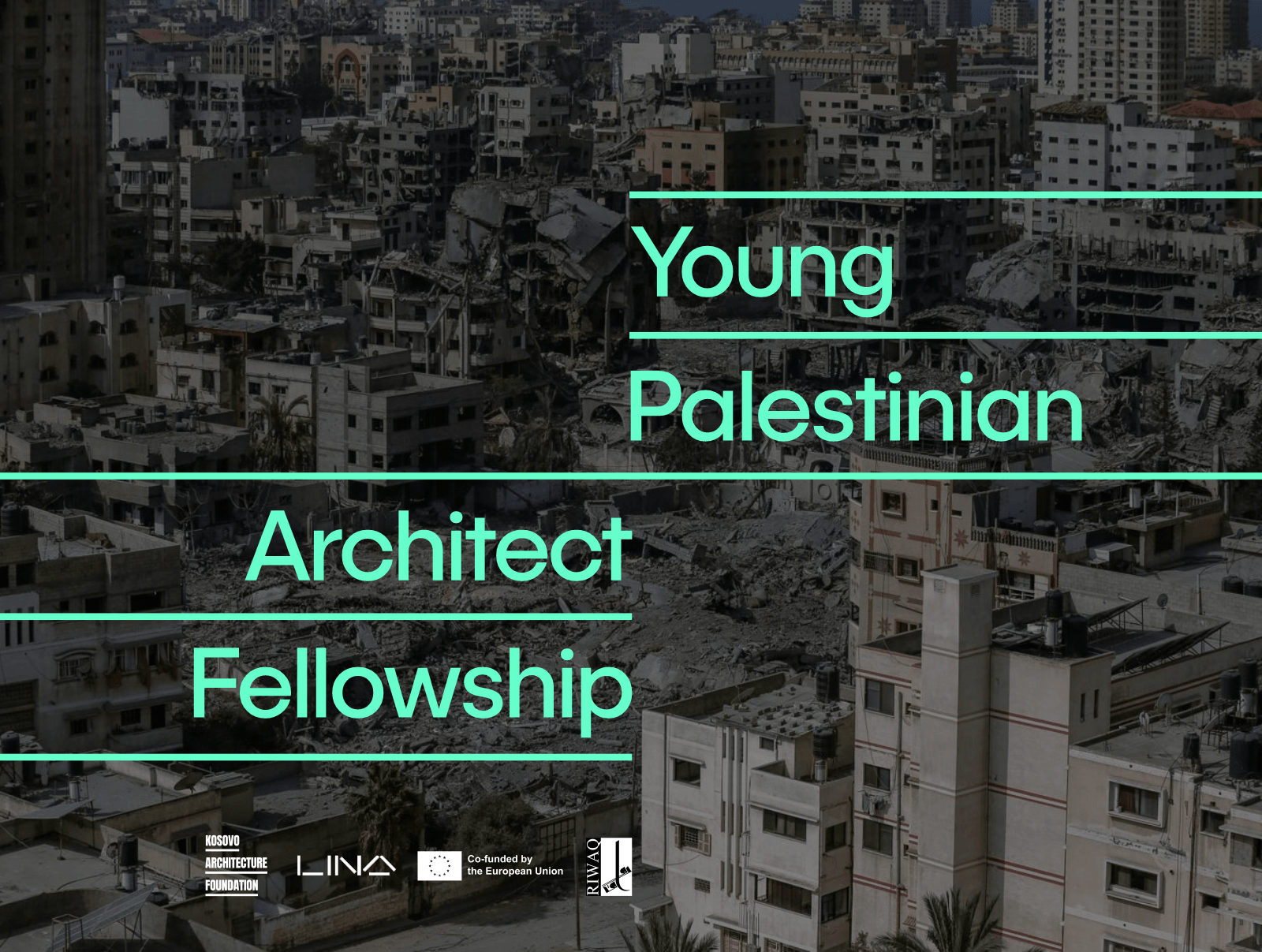
The Kosovo Architecture Foundation and RIWAQ cordially invite three Young Palestinian Architects to join a fellowship within the LINA architecture program, as part of the Kosovo Architecture Festival “The City After – Design in the Age of Crises” edition. The Palestinian fellows are invited to join a two months collaborative project between May-June, 2026, through a hybrid (online and face-to-face) program, including a one-week workshop in the city of Prishtina, Kosovo.
In collaboration with RIWAQ, the selected Palestinian fellows will have the opportunity to collectively develop a specific architectural project relevant to the Palestinian context, alongside three LINA fellows. Participants will develop the project online, followed by a face-to-face workshop in Kosovo, where selected fellows will present their work to the local public as part of the Kosovo Architecture Festival.
Applications are open until April 25,2026
Applicants must be Palestinian residents (West Bank, Jerusalem & Gaza) aged 24-30
Applicants must hold a minimum of Bachelor’s degree with focus on Design, Architecture, or Urban Planning.
Applicants must submit a 1-2 page bio, a portfolio and a proposed study topic for the fellowship to aya@riwaq.org by April 25, 2026.
The fellowship expenses are fully covered by the Kosovo Architecture Foundation (transport, accommodation, honorarium).
For questions, please contact us at aya@riwaq.org.
About KAF:
The Kosovo Architecture Foundation is one of the largest organizations of its kind in the SEE region. As one of the LINA founders and organizers of the Kosovo Architecture Festival (since 2013), KAF’s main focus is to present in front of the local public contemporary methodologies and visions in Architecture, Urbanism and Design, as well as increase the collaboration and knowledge exchange between local, European and Global young creatives.
About RIWAQ:
RIWAQ is a non-governmental, non- profit organization established in 1991, in Ramallah, Palestine. The main aim of RIWAQ was, and still is, the documentation, rehabilitation and development of the architectural heritage of Palestine through its main programs; the Restoration Program, the Regeneration of the 50 Most Significant Historic Centers, and the Community and Cultural Program.
About LINA:
LINA is a European platform connecting institutions with emerging practitioners and thinkers working at the intersection of architecture and spatial culture. It promotes emerging talent and aims to guide design and building processes toward regenerative practices and de-growth principles aligned with the European Green Deal.
Links:
www.kosovoarchitecture.org
riwaq.org
lina.community
+ Keynote Speakers